Introduction
DevOps has transformed the way modern organizations build, test, and deliver software. By combining development and operations practices, DevOps enables faster releases, improved collaboration, and better system reliability. However, simply adopting DevOps tools or creating CI/CD pipelines does not automatically guarantee success.
Many organizations struggle with DevOps implementation because they unknowingly follow DevOps anti-patterns---bad practices that slow down development, increase risk, and reduce efficiency. These mistakes can prevent teams from achieving the full benefits of DevOps.
Understanding DevOps mistakes to avoid is essential for teams that want to build scalable, reliable, and high-performing software delivery systems.
In this guide, we will explore common DevOps anti-patterns, why they occur, real-world examples, and practical strategies to avoid them. Whether you are a beginner learning DevOps or a professional managing software infrastructure, understanding these pitfalls will help you build better DevOps processes.
What Are DevOps Anti-Patterns?
Understanding DevOps Anti-Patterns
DevOps anti-patterns are inefficient practices or mistakes that contradict DevOps principles and prevent teams from achieving automation, collaboration, and continuous delivery.
Instead of improving productivity, these practices often lead to:
- Slow deployments
- Poor collaboration between teams
- Increased system failures
- Complex infrastructure management
- Lack of automation
Recognizing these patterns early allows organizations to fix their DevOps processes before they become deeply embedded.
Why DevOps Anti-Patterns Occur
DevOps mistakes often occur because organizations misunderstand the purpose of DevOps.
Some common causes include:
- Treating DevOps as a tool instead of a culture
- Poor communication between development and operations teams
- Lack of automation strategies
- Inadequate monitoring and testing
- Resistance to organizational change
Addressing these issues is critical for building an effective DevOps environment.
Common DevOps Mistakes to Avoid
1. Treating DevOps as Just a Tool
One of the biggest DevOps mistakes to avoid is assuming that DevOps is simply a set of tools.
Many organizations install tools like:
- Jenkins
- Docker
- Kubernetes
- GitLab
But without cultural change, these tools do not solve underlying workflow problems.
Why This Is a Problem
DevOps is primarily about collaboration and processes, not just automation tools.
When teams focus only on tools, they often neglect communication, shared responsibility, and workflow improvements.
How to Fix It
Focus on:
- Team collaboration
- Shared ownership of infrastructure
- Continuous improvement processes
Tools should support DevOps culture---not replace it.
2. Lack of Automation
Automation is the backbone of DevOps. However, many organizations still rely heavily on manual processes.
Manual tasks often include:
- Infrastructure configuration
- Software deployments
- Testing procedures
- Monitoring checks
Manual processes slow down development and increase the risk of human error.
Solution
Implement automation across the DevOps pipeline:
- Infrastructure as Code (IaC)
- Automated testing
- CI/CD pipelines
- Automated monitoring alerts
Automation improves speed, consistency, and reliability.
3. Ignoring Infrastructure as Code
Managing infrastructure manually is a major DevOps anti-pattern.
Without Infrastructure as Code, environments become inconsistent.
Common problems include:
- Different configurations across servers
- Difficult environment replication
- Deployment errors
Best Practice
Use tools such as:
- Terraform
- Ansible
- AWS CloudFormation
These tools allow teams to define infrastructure using code, ensuring consistency across environments.
4. Poor Monitoring and Observability
Another common DevOps mistake to avoid is neglecting monitoring and observability.
Without proper monitoring, teams cannot detect issues until users report them.
This results in:
- Long downtime periods
- Poor user experience
- Slow incident response
How to Improve Monitoring
Implement modern observability tools such as:
- Prometheus
- Grafana
- Datadog
- New Relic
Monitor key metrics including:
- System performance
- Error rates
- Application latency
- Infrastructure health
5. Large and Risky Deployments
Deploying large batches of changes at once is a risky DevOps anti-pattern.
Large deployments often cause:
- Complex debugging
- Higher failure rates
- Longer recovery times
DevOps Best Practice
Use small, frequent deployments.
Benefits include:
- Easier troubleshooting
- Faster rollbacks
- Reduced system risk
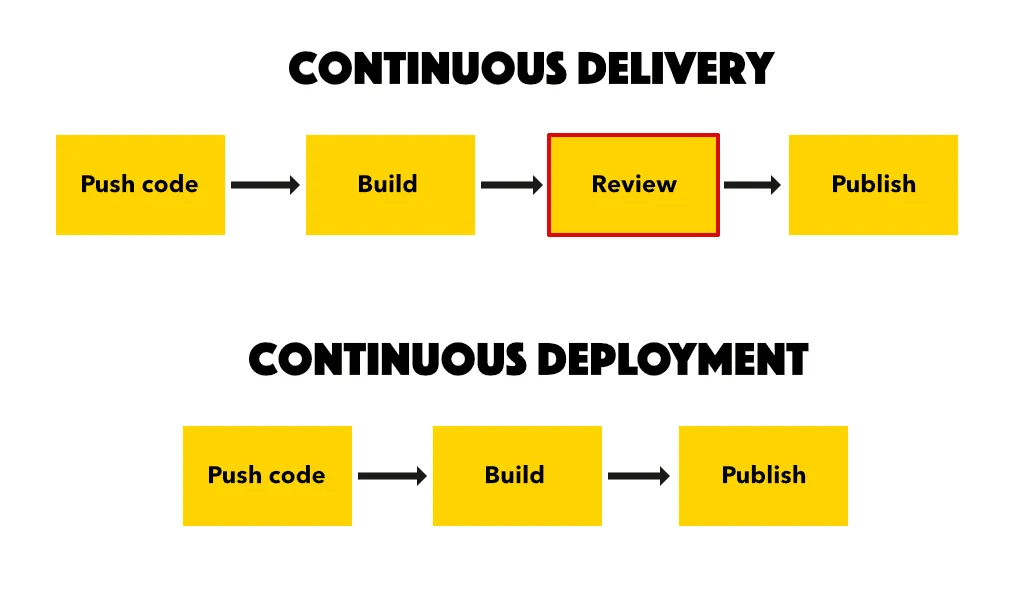
Continuous deployment helps teams release updates quickly and safely.
6. Lack of Collaboration Between Teams
DevOps was created to eliminate silos between development and operations teams. However, many organizations still maintain separate teams with limited collaboration.
This leads to problems such as:
- Slow communication
- Deployment conflicts
- Lack of accountability
Solution
Encourage cross-functional teams where developers and operations engineers share responsibilities.
Practices that improve collaboration include:
- Shared dashboards
- Regular stand-up meetings
- Joint incident response procedures
7. Ignoring Security in DevOps
Security is often treated as a separate phase in software development.
This creates a DevOps anti-pattern where security checks occur only after development is complete.
This approach leads to:
- Security vulnerabilities
- Delayed releases
- Expensive fixes
DevSecOps Approach
Integrate security directly into the DevOps pipeline.
Examples include:
- Automated security scans
- Dependency vulnerability checks
- Container security testing
Security should be part of every stage of development.
8. Overly Complex CI/CD Pipelines
While CI/CD pipelines are essential in DevOps, overly complex pipelines can become difficult to manage.
Problems include:
- Slow builds
- Frequent pipeline failures
- Difficult troubleshooting
Best Practice
Keep CI/CD pipelines simple and efficient.
Focus on:
- Fast build times
- Clear pipeline stages
- Automated testing
- Minimal manual approvals
A well-designed pipeline should accelerate development, not slow it down.
9. Lack of Documentation
Another common DevOps mistake is poor documentation.
Without documentation, teams struggle to understand:
- Infrastructure setup
- Deployment procedures
- Incident response plans
This becomes especially problematic when new team members join.
Solution
Maintain clear documentation for:
- Infrastructure architecture
- CI/CD workflows
- Deployment strategies
- Recovery procedures
Documentation improves team productivity and reduces confusion.
10. Not Learning from Failures
Failures are inevitable in complex software systems.
However, some organizations treat failures as isolated incidents rather than learning opportunities.
DevOps Best Practice
Conduct post-incident reviews to analyze failures.
Focus on:
- Root cause analysis
- Process improvements
- Preventing future incidents
Continuous learning is a core DevOps principle.
Real-World Example of DevOps Anti-Patterns
Consider a startup deploying its application manually every few weeks.
Problems include:
- Manual deployment errors
- Frequent downtime
- Slow feature delivery
After adopting DevOps best practices, the company:
- Implemented CI/CD pipelines
- Automated infrastructure provisioning
- Added monitoring and alert systems
Results included:
- Faster releases
- Fewer system failures
- Improved developer productivity
This example demonstrates how avoiding DevOps mistakes can dramatically improve software delivery.
Actionable Tips to Avoid DevOps Mistakes
Here are practical tips for building a strong DevOps culture.
Start with Automation
Automate repetitive tasks such as testing, deployment, and infrastructure provisioning.
Implement Continuous Integration
CI ensures that code changes are automatically tested and integrated.
Monitor Everything
Observability tools provide real-time insights into system performance.
Promote Collaboration
Encourage communication between developers, operations teams, and security experts.
Adopt Infrastructure as Code
Managing infrastructure through code ensures consistency and scalability.
Future of DevOps Best Practices
DevOps continues to evolve as software development becomes more complex.
Future trends include:
- AI-driven DevOps automation
- Platform engineering
- GitOps workflows
- Cloud-native DevOps strategies
Organizations that avoid common DevOps anti-patterns will be better prepared to adopt these innovations.
Summary
DevOps has revolutionized modern software development, but success requires more than just adopting new tools.
Many organizations struggle due to DevOps mistakes such as lack of automation, poor monitoring, and weak collaboration between teams.
Understanding and avoiding these anti-patterns allows organizations to build efficient DevOps pipelines and deliver reliable software faster.
Conclusion
DevOps is not just a technology shift---it is a cultural transformation that changes how teams build and manage software.
Avoiding common DevOps anti-patterns helps organizations improve collaboration, reduce deployment risks, and accelerate software delivery.
By focusing on automation, observability, security, and continuous improvement, teams can unlock the full potential of DevOps and create resilient software systems that scale effectively.
Whether you are just starting your DevOps journey or refining existing workflows, understanding these DevOps mistakes to avoid will help you build a stronger and more efficient development environment.
FAQs
What are DevOps anti-patterns?
DevOps anti-patterns are inefficient practices that contradict DevOps principles, such as manual deployments, poor monitoring, and lack of collaboration.
Why do DevOps implementations fail?
DevOps implementations often fail because organizations focus only on tools instead of culture, automation, and collaboration.
What is the most common DevOps mistake?
One of the most common mistakes is treating DevOps as just a set of tools rather than a cultural transformation.
How can teams avoid DevOps mistakes?
Teams can avoid DevOps mistakes by implementing automation, improving collaboration, adopting Infrastructure as Code, and integrating security into development workflows.
What role does automation play in DevOps?
Automation reduces manual work, improves consistency, and enables faster deployments, making it a critical component of successful DevOps practices.