Introduction
Imagine deploying an application without managing servers.
No patching operating systems. No provisioning virtual machines. No scaling headaches.
Just write code, push changes, and let the cloud handle the rest.
This is the power of a serverless devops pipeline.
As organizations move toward cloud-native architectures, serverless computing is transforming how DevOps teams build, test, deploy, and scale applications. Traditional CICD pipelines designed for virtual machines and containers are evolving into lightweight, event-driven, automated serverless workflows.
In this complete guide, you will learn:
- What a serverless DevOps pipeline is
- How it differs from traditional pipelines
- Core components of serverless CICD
- Step-by-step implementation
- Tools and platforms involved
- Best practices and security considerations
- Real-world use cases
Whether you're a beginner exploring DevOps or a professional modernizing cloud infrastructure, this guide will help you master serverless DevOps pipelines.
What Is a Serverless DevOps Pipeline?
A serverless devops pipeline is a CICD workflow built around serverless computing services rather than traditional server-based infrastructure.
Instead of deploying applications on:
- Virtual machines
- Dedicated servers
- Container clusters
Serverless pipelines deploy code to:
- Functions as a Service platforms
- Managed cloud services
- Event-driven architectures
The pipeline itself may also run in serverless environments.
Understanding Serverless Computing in DevOps
Serverless computing allows developers to run code without managing infrastructure.
Popular serverless platforms include:
- AWS Lambda
- Azure Functions
- Google Cloud Functions
These services automatically handle:
- Scaling
- Provisioning
- Availability
- Maintenance
In DevOps, serverless computing reduces operational overhead significantly.
Traditional Pipeline vs Serverless DevOps Pipeline
Traditional CICD S erverless DevOps Pipeline
Requires server provisioning No server management Static scaling Auto-scaling Higher infrastructure maintenance Managed cloud services Long-lived compute resources Event-driven execution Higher cost for idle servers Pay-per-execution model
Serverless pipelines improve efficiency and reduce operational complexity.
Key Components of a Serverless DevOps Pipeline
To build an effective serverless DevOps pipeline, you need several core components.
1. Source Control Integration
Every pipeline begins with version control.
Git-based systems like:
- GitHub
- GitLab
- Bitbucket
Trigger serverless workflows when code is pushed.
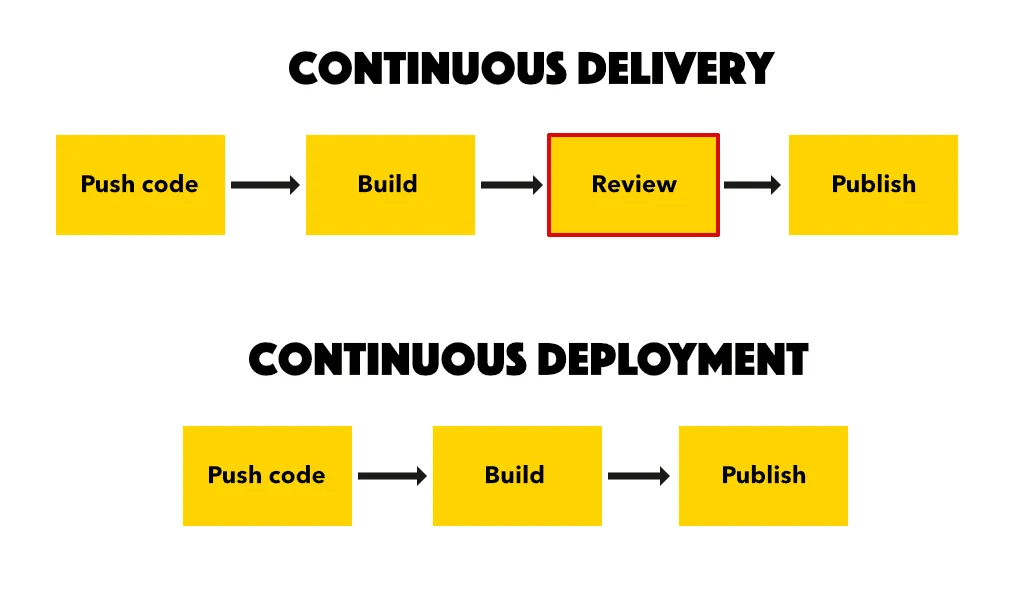
Push → Trigger → Build → Deploy.
2. Serverless Build Process
Instead of running builds on dedicated servers, use managed build services such as:
- AWS CodeBuild
- GitHub Actions
- Azure DevOps Pipelines
These services run build jobs on demand.
No server provisioning required.
3. Automated Testing in Serverless Pipelines
Testing is essential in any DevOps pipeline.
Include:
- Unit tests
- Integration tests
- Security scanning
- Linting
Tests run automatically whenever new code is committed.
Automation ensures deployment safety.
4. Infrastructure as Code
Infrastructure must be defined programmatically.
Use tools such as:
- AWS CloudFormation
- Terraform
- Serverless Framework
Infrastructure as Code ensures repeatability and version control.
5. Deployment to Serverless Environment
Deployment targets include:
- AWS Lambda
- Azure Functions
- Google Cloud Functions
Deployments may be triggered automatically after successful builds.
Zero manual steps.
Step-by-Step: Building a Serverless DevOps Pipeline
Let's walk through a practical implementation.
Step 1: Define Your Application
Example:
- Node.js API function
- Python data processing function
- Event-driven backend service
Keep functions small and modular.
Step 2: Set Up Source Repository
Create a Git repository and configure:
- Branch protection rules
- Pull request workflows
- Automated checks
Code changes trigger the pipeline.
Step 3: Configure CI Workflow
Example using GitHub Actions:
- On push to main
- Run tests
- Package function
- Deploy to cloud
Pipeline runs only when needed.
Step 4: Deploy Infrastructure as Code
Use Terraform or CloudFormation to define:
- Functions
- API Gateway
- IAM roles
- Storage services
Infrastructure should be version-controlled.
Step 5: Enable Monitoring and Logging
Serverless environments require visibility.
Implement:
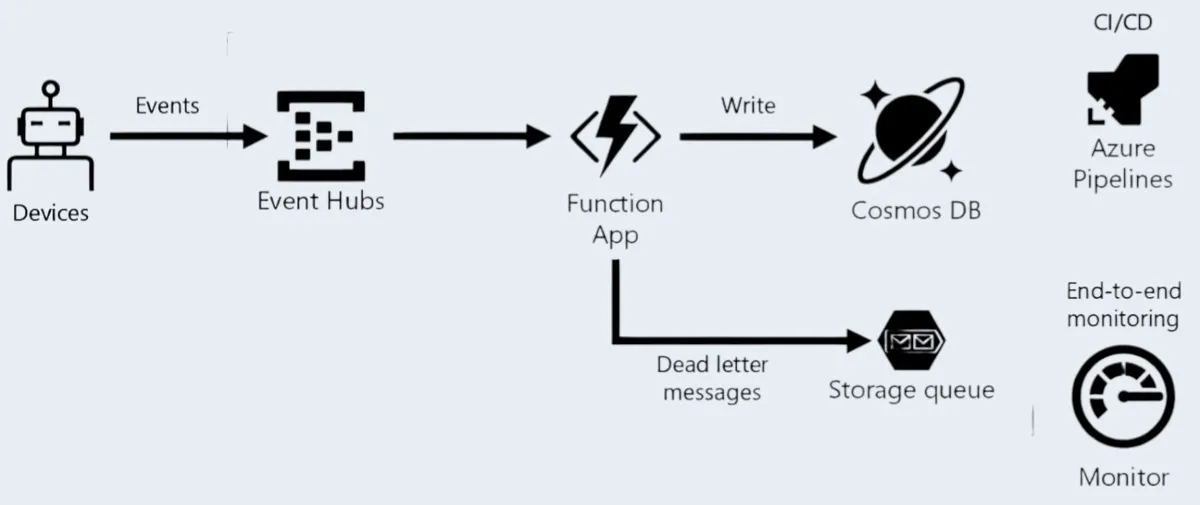
- CloudWatch logs
- Application monitoring
- Error tracking
Monitoring ensures reliability.
Benefits of Serverless DevOps Pipelines
1. Reduced Infrastructure Management
No need to maintain build servers or runtime servers.
2. Cost Efficiency
Pay only for execution time.
Idle resources do not generate cost.
3. Automatic Scalability
Serverless services scale based on demand automatically.
4. Faster Deployment Cycles
Event-driven pipelines reduce delays.
5. Improved Reliability
Managed cloud platforms provide high availability.
Real-World Use Case
Imagine an e-commerce application.
- Developer commits code
- GitHub triggers CI
- Tests execute
- Lambda function deployed
- API Gateway updated
- Monitoring enabled
All without provisioning servers.
That is the power of a serverless DevOps pipeline.
Security Considerations in Serverless Pipelines
Security remains critical.
1. Least Privilege Access
Grant minimal permissions to functions.
2. Secure Secrets Management
Use:
- AWS Secrets Manager
- Azure Key Vault
Never hardcode secrets.
3. Automated Security Scanning
Integrate:
- Dependency scanning
- Static code analysis
Security must be automated.
Challenges of Serverless DevOps Pipelines
While powerful, they have challenges.
Cold Starts
Serverless functions may have initial latency.
Debugging Complexity
Distributed architecture makes tracing harder.
Vendor Lock-In
Cloud-specific services reduce portability.
Monitoring Complexity
Requires advanced observability tools.
Understanding these challenges helps teams design better pipelines.
Best Practices for Serverless DevOps Pipelines
- Keep functions small and focused
- Use Infrastructure as Code
- Automate everything
- Monitor aggressively
- Implement canary deployments
- Maintain rollback strategies
Best practices ensure long-term stability.
Serverless DevOps in the Future
The future of DevOps includes:
- Event-driven architectures
- Edge computing
- AI-assisted deployments
- Automated remediation
Serverless DevOps pipelines align perfectly with these trends.
Short Summary
A serverless DevOps pipeline automates building, testing, and deploying applications using serverless cloud services. It reduces infrastructure overhead, improves scalability, lowers cost, and accelerates delivery cycles.
Strong Conclusion
The world of DevOps is shifting toward automation, efficiency, and scalability.
Serverless computing removes infrastructure burdens.
A well-designed serverless devops pipeline empowers teams to:
- Deploy faster
- Scale automatically
- Reduce costs
- Focus on innovation
Serverless is not just a trend.
It is a transformation.
If you want modern DevOps excellence, mastering serverless pipelines is essential.
Frequently Asked Questions
It is a CICD workflow built using serverless cloud services instead of traditional server infrastructure.