
Introduction
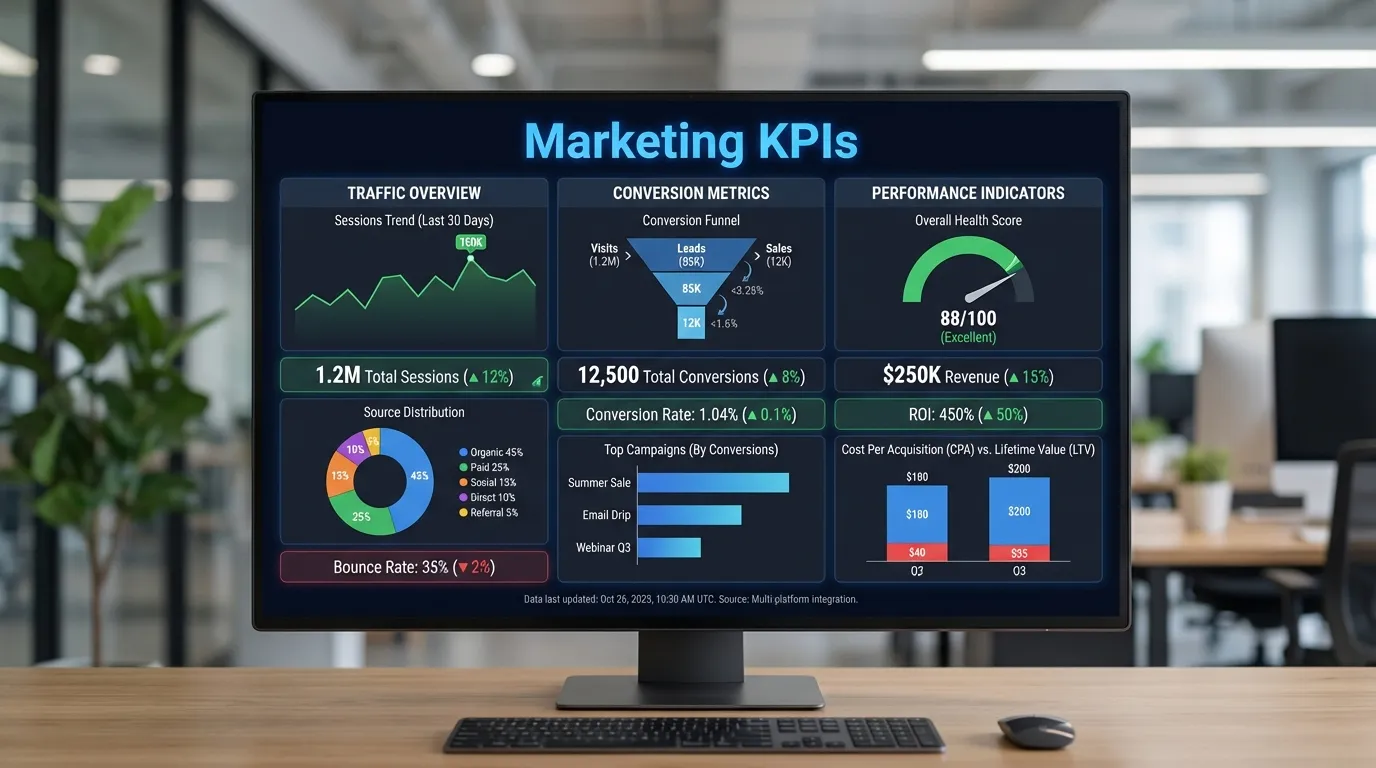
Digital marketing is no longer about guesswork — it’s about data-driven decisions. Whether you're running paid ads, creating content, building email campaigns, or managing social media, your success depends on how well you interpret the numbers behind your strategy.
Here’s the truth:
Even the best marketing campaigns fail if you don’t measure the right metrics.
With dozens of KPIs available, marketers often track everything… yet understand nothing. That’s why focusing on the most impactful digital marketing metrics is key to maximizing ROI, improving performance, and making smarter marketing decisions.
In this blog, you’ll learn:
- The top 5 digital marketing metrics you must track
- How each metric works and why it matters
- Real examples and step-by-step insights
- Actionable tips to improve performance
- How these metrics influence business growth
By the end, you’ll know exactly how to measure success with confidence — and optimize your marketing like a pro.
What Are Digital Marketing Metrics?
Digital marketing metrics are measurable values that help marketers evaluate the performance of their campaigns, content, ads, and overall strategies.
Simply put:
Metrics = Proof of what’s working and what needs improvement.
They help marketers:
- Understand customer behavior
- Measure campaign success
- Allocate budget wisely
- Improve conversion rates
- Increase ROI
- Optimize strategies
Tracking the right metrics ensures you don’t waste time or money on ineffective marketing activities.
The Top 5 Metrics Every Digital Marketer Should Track
1. Website Traffic and Traffic Sources
Website traffic shows how many people visit your site, while traffic sources show where they come from.
Why Traffic Matters
Traffic determines:
- Awareness
- Visibility
- Brand reach
- Lead potential
But traffic alone isn’t enough — understanding where it comes from is crucial.
Types of Traffic Sources
## Organic Traffic
Visitors who find you through Google searches.
Shows SEO strength.
## Direct Traffic
People who type your URL manually or come via bookmarks.
## Referral Traffic
Visitors who come from external websites.
## Social Traffic
Traffic from platforms like Instagram, Facebook, LinkedIn, YouTube, etc.
## Paid Traffic
Visitors coming through ads (Google Ads, Meta Ads, LinkedIn Ads, etc.).
Example
If your blog suddenly increases in organic traffic, it means your SEO efforts are working.
If referral traffic is high, guest posting or backlinks are performing well.
How to Improve Website Traffic
- Publish SEO-optimized blogs
- Strengthen backlinks
- Improve on-page SEO
- Promote content on social media
- Run strategic paid ads
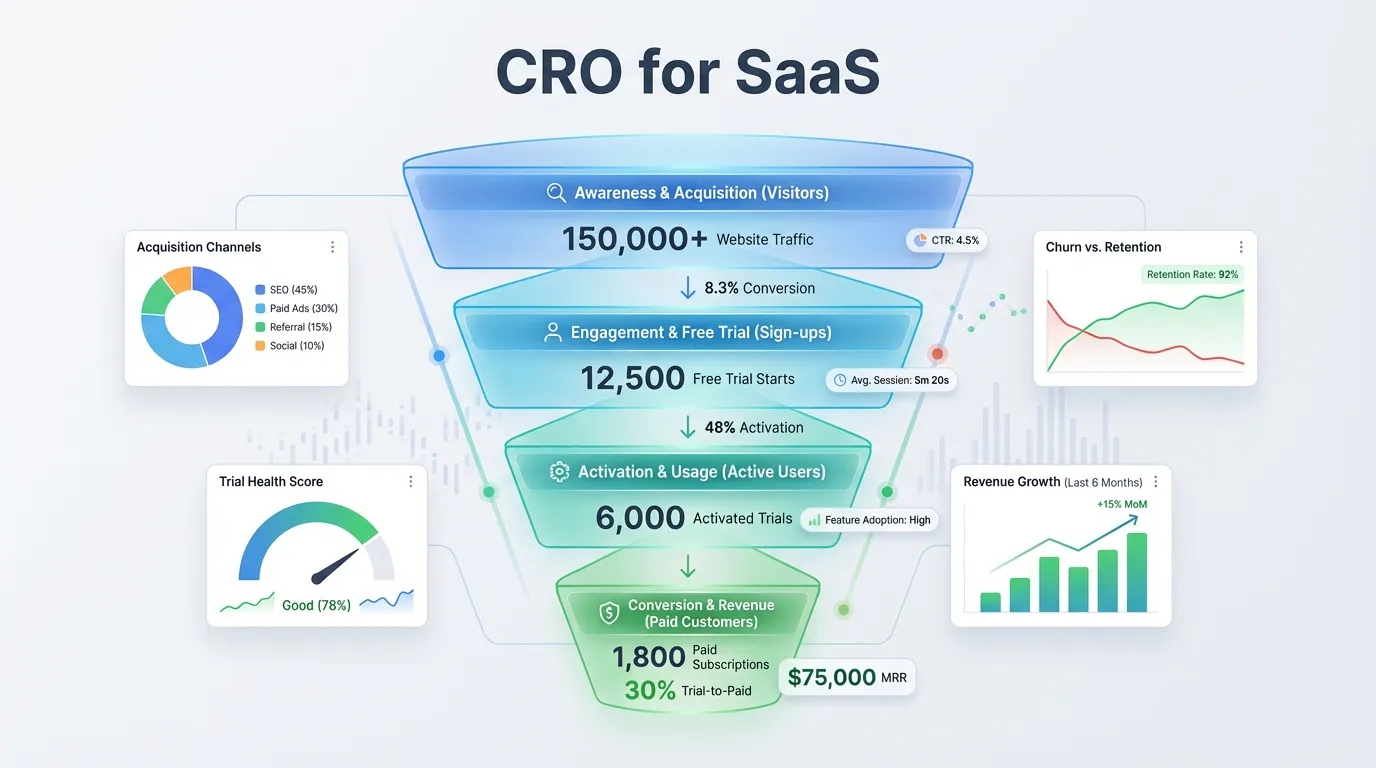
2. Conversion Rate (CR)
Conversion Rate measures how many visitors take your desired action, such as:
- Buying a product
- Filling a form
- Downloading an ebook
- Signing up for a newsletter
- Booking a call
Formula
Conversions / Total Visitors × 100
Why Conversion Rate Matters
You could have thousands of visitors, but if no one converts, your marketing is failing.
CR shows:
- Funnel effectiveness
- Website usability
- Message clarity
- Offer attractiveness
Example
If 1000 visitors come to your landing page and 50 convert:
CR = 50 / 1000 × 100 = 5%
Ways to Improve Conversion Rate
- Improve landing page design
- Add clear CTAs
- Use A/B testing
- Reduce distractions
- Improve page loading speed
- Strengthen your offer
3. Customer Acquisition Cost (CAC)
CAC shows how much it costs to acquire a new customer.
Formula
Total Marketing Spend / Number of New Customers
Why CAC Is Crucial
High CAC = you're paying too much to get customers.
Low CAC = your marketing is efficient and profitable.
Example
If you spent ₹50,000 on ads and got 100 customers:
CAC = ₹50,000 / 100 = ₹500 per customer
Factors Affecting CAC
- Paid ad strategy
- Landing page performance
- Target audience quality
- Sales funnel
- Brand awareness
How to Reduce CAC
- Improve ad targeting
- Strengthen retargeting
- Optimize sales funnel
- Use email automation
- Create organic content to reduce dependency on paid ads
4. Customer Lifetime Value (CLV)
CLV measures how much revenue a customer generates throughout their relationship with your brand.
CLV helps you understand long-term value — not just immediate purchases.
Why CLV Matters
- Helps predict profitability
- Guides pricing strategy
- Influences marketing budget
- Improves retention strategy
Formula (Simple Version)
Average Purchase Value × Number of Purchases Per Customer
Example
If a customer spends ₹1,000 per order and orders 5 times:
CLV = ₹1,000 × 5 = ₹5,000
If CLV > CAC
You’re profitable.
If CLV < CAC
You're losing money.
Ways to Improve CLV
- Offer subscriptions
- Create loyalty programs
- Send personalized emails
- Upsell and cross-sell
- Build stronger customer relationships
5. Return on Investment (ROI)
ROI measures how effective your marketing efforts are.
It shows whether your campaigns are generating profit or losses.
Formula
(Revenue – Cost) / Cost × 100
Why ROI Is the Most Important Metric
Every business must know if their marketing is worth the money spent.
ROI helps you:
- Evaluate ads
- Measure campaign success
- Optimize budget allocation
- Make data-driven decisions
Example
If you spend ₹10,000 and earn ₹30,000:
ROI = (30,000 – 10,000) / 10,000 × 100 = 200%
How to Improve ROI
- Target the right audience
- Improve ad creatives
- Use retargeting
- Invest in high-performing channels
- Reduce unnecessary spending
Additional Metrics Worth Tracking
Although the top 5 metrics are essential, the following also offer valuable insights:
Click-Through Rate (CTR)
Measures how many people click your ad/email vs. how many view it.
Bounce Rate
Shows how many users exit your site without interacting.
Engagement Rate
Crucial for social media performance.
Cost Per Click (CPC)
Important for paid advertising.
Email Open Rate
Indicates email marketing effectiveness.
How These Digital Marketing Metrics Work Together
Understanding each metric is good — but combining them unlocks powerful insights:
- High traffic + low conversion rate → Landing page problem
- High CAC + low CLV → Unprofitable business model
- Good CTR + poor ROI → Wrong landing page or weak offer
- High engagement + low sales → Awareness is high, intent is low
Data tells a story — your job is to interpret it correctly.
How to Track Digital Marketing Metrics (Tools)
1. Google Analytics
Tracks traffic, conversions, user flow, behavior, demographics.
2. Google Search Console
Shows keyword performance, impressions, clicks, SEO metrics.
3. Meta Ads Manager
Tracks CPC, CTR, reach, ROAS, and ad performance.
4. Email Marketing Tools
Mailchimp, ConvertKit, HubSpot — for open rate, CTR, automation metrics.
5. CRM Systems
HubSpot, Zoho, Salesforce — for CAC, CLV, pipeline tracking.
Real-World Example: Combining Metrics for Growth
Imagine a brand selling online courses.
Scenario
- High website traffic
- Low conversion rate
- High bounce rate
- High CAC
- Moderate CLV
Fix
- Optimize landing page
- Improve email nurturing
- Create upsells to improve CLV
- Reduce CAC with organic content
Result
- Higher conversion rate
- Lower marketing cost
- Increased profitability
This is how smart tracking leads to business growth.
Short Summary
Digital marketing metrics help marketers understand performance, optimize strategies, and increase ROI. By focusing on:
- Website Traffic
- Conversion Rate
- Customer Acquisition Cost
- Customer Lifetime Value
- ROI
…you gain complete control over your marketing success.
Conclusion
In digital marketing, numbers reveal the truth. By tracking the right metrics, you can:
- Identify what works
- Fix what doesn’t
- Spend smarter
- Earn more
- Grow faster
The top marketers aren’t the ones who work the hardest — they’re the ones who measure and optimize intelligently.
Start tracking these 5 key metrics today, and your marketing performance will transform dramatically.