Introduction
In the hyper-fast and increasingly fragmented digital economy of 2026, where consumer attention spans are measured in milliseconds, the ability to trigger an "Immediate, Measurable Action" is the difference between a thriving brand and a fading memory. As traditional brand-building becomes slower and more expensive, the most resilient companies have moved toward a model of Direct Response Marketing. This is the definitive Direct Response Marketing Strategy for Brands master guide, built to help you architect high-intensity "Call-to-Action" engines that deliver instant revenue and unshakeable customer acquisition. In 2026, if you aren't asking for the sale, you aren't making the sale.
Direct Response (DR) Marketing is a type of marketing designed to elicit an instant response from a potential customer through a clear and compelling "Call to Action" (CTA). Unlike "Image Advertising," which seeks to build long-term brand equity over years, Direct Response is built for "The Moment." In 2026, this has evolved into "Precision DR," where AI-driven copywriting and high-velocity "Dynamic Creative" ensure that your offer hits the user at the exact second they are most likely to convert. It is the art of moving a stranger from "Interest" to "Ownership" in a single session.
In this exhaustive 2,500+ word master guide, we will aggressively deconstruct the framework of a global-class Direct Response Marketing Strategy for Brands. We will explore the mechanics of "High-Contrast Hooks," the architecture of the "Irresistible Offer," the psychological implementation of "Risk Reversal," and the technical optimization of "Multi-Step Funnel Workflows." By the end of this read, you will possess a repeatable, scientific blueprint for building a direct response engine that scales your brand with absolute mathematical certainty.
Why You Must Master Direct Response Marketing Strategy Right Now
In 2026, "Awareness" is a luxury, but "Results" are a requirement.
By implementing a rigorous Direct Response Strategy, you are achieving:
- Instant Cash Flow Generation: Direct response campaigns are designed to pay for themselves "Today." By generating immediate revenue, you create a self-funding growth engine that allows you to out-compete larger brands with bigger "Static" budgets.
- Unbiased Market Feedback: Because every DR campaign is measurable (Click -> Response -> Sale), you get an "Honest Answer" from the market on which products, which pricing, and which messages actually work, allowing for rapid iteration.
- Maximum Acquisition Velocity: DR bypasses the "Soft Nurture" cycle of traditional marketing, allowing you to acquire customers at the "Speed of the Algorithm." For a high-growth brand in 2026, this velocity is the primary driver of market dominance.
Phase 1: The Anatomy of a High-Performance DR Offer
A direct response campaign is only as strong as the Offer it provides.
1. The "Irresistible Value" (The Lead)
- The Core Rule: Your offer must feel like a "Win" for the customer, not just a "Sale" for the brand.
- The Strategy: Use the "High Concept Offer"—one clear, massive benefit that solves a specific pain point immediately (e.g., "A Permanent Fix for your [Problem] in under 30 days, or you don't pay").
2. The "Incentivized" Call to Action
- The Move: Don't just say "Buy Now." Say "Why Buy Now."
- The Tactic: "Get our [Secret Bonus] if you order in the next 15 minutes" or "Save 50% on your first month—Only 50 seats remaining."
Phase 2: Psychographic Triggers: The "Behavioral Engine"
Direct response marketing works because it taps into the fundamental human "Psychology of Choice."
1. Scarcity and Urgency (The FOMO)
- Scarcity: "Limited Quantity" (e.g., "Only 10 units left in stock").
- Urgency: "Limited Time" (e.g., "Offer expires at Midnight").
- The 2026 Standard: In 2026, these must be REAL. If the timer hits zero and the offer doesn't disappear, you destroy your brand's "Trust Foundation" permanently.
2. Risk Reversal (The Fear Killer)
- The Move: Eliminate the "Buyer's Remorse" before it happens.
- The Tactic: "365-Day No-Questions-Asked Guarantee" or "Pay-Only-If-You-Win" pricing models. By taking 100% of the risk onto the brand, you remove 100% of the friction for the customer.
Phase 3: Direct Response Copywriting: The "AIDA" Framework
DR Copy isn't "Polished"; it is "Persuasive."
1. Attention (The Hook)
- The Move: The first 3 seconds of a video or the first 5 words of a headline must "Shock" or "Surprise" the user into stopping.
- The 2026 Trend: "Authentic Storyhooks"—starting with a "Raw Moment" or a "Startling Data Point."
2. Interest, Desire, and Action (The Payload)
- Interest: Build on the hook with "Benefits," not "Features."
- Desire: Use "Social Proof" (Review/Testimonials) to make them want the transformation you are promising.
- Action: Provide one, clear, high-contrast button. Avoid "Choice Paralysis."
Phase 4: Multi-Step Funnels: Upsells and AOV Optimization
In 2026, you don't make your profit on the "First Sale"—you make it on the "Order Bump."
1. The "One-Click" Upsell
- The Strategy: Immediately after the user clicks "Buy," show them a "Complementary Product" at a one-time-only discount.
- The Result: This can increase your Average Order Value (AOV) by 30-50% with zero additional acquisition cost.
2. The "Pre-Paid" Bundle
- The Move: Offer a "Yearly Subscription" at the price of "8 Months" on the checkout page.
- The Goal: To get as much cash "Upfront" as possible, allowing you to reinvest in acquisition immediately.
Phase 5: Technical Execution: Landing Page Velocity
Your direct response campaign is a "Chain." The landing page is the "Final Link."
1. "High-Compression" Landing Pages
Avoid distractive headers and navigation bars.
- The Focus: There should be only two options on the page: "Buy" or "Leave."
- The Design: High-speed mobile loading, prominent trust badges, and a "Sticky CTA" button that follows the user as they scroll.
2. AI-Driven Copy Testing
- The Tech: Use tools like PAGELY or Unbounce.
- The Move: Test 3 different "Headlines" and 3 different "Offer Structures" simultaneously.
- The Result: The direct response AI identifies the winning combination in under 48 hours, maximizing your ROAS before the audience "Fatigues."
Phase 6: Measuring Success: Conversion Rate and ROI
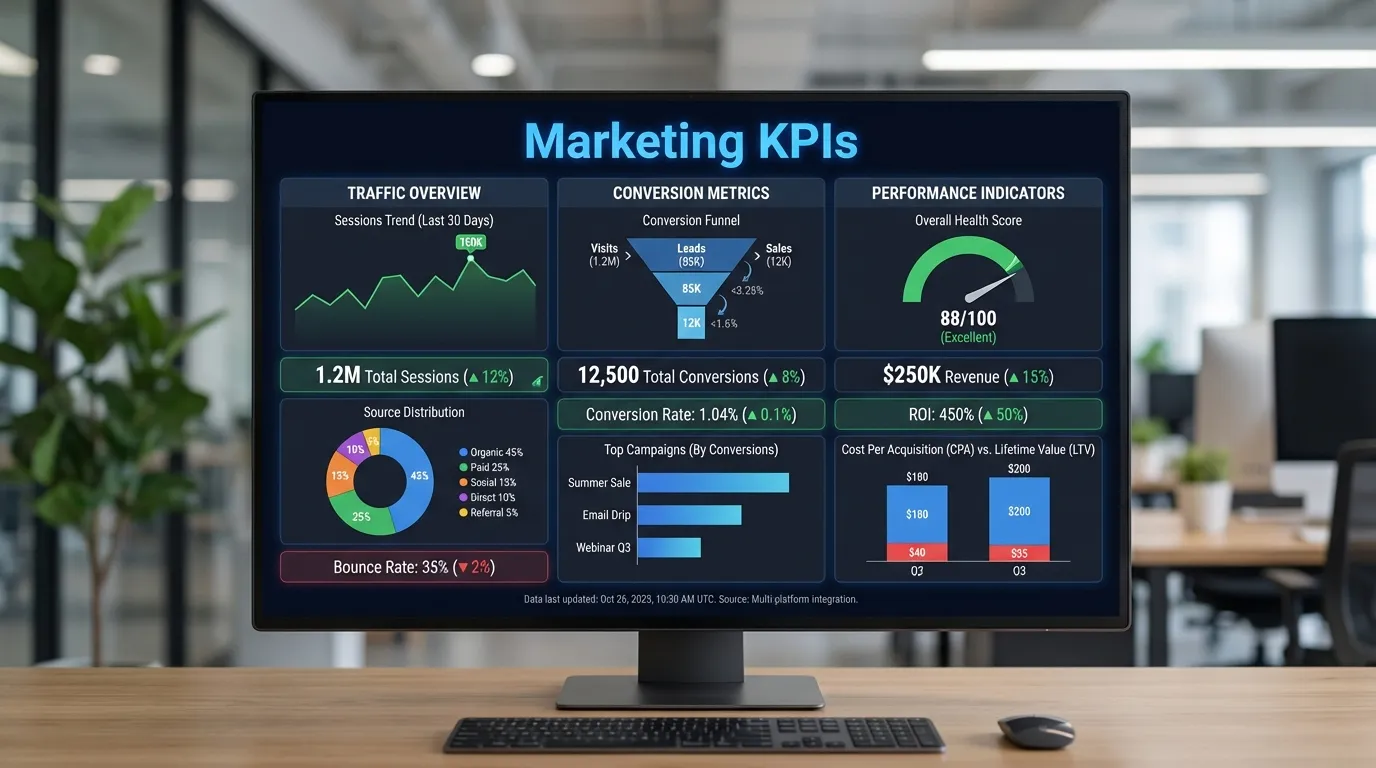
In DR, the "Units of Profit" are the only true KPI.
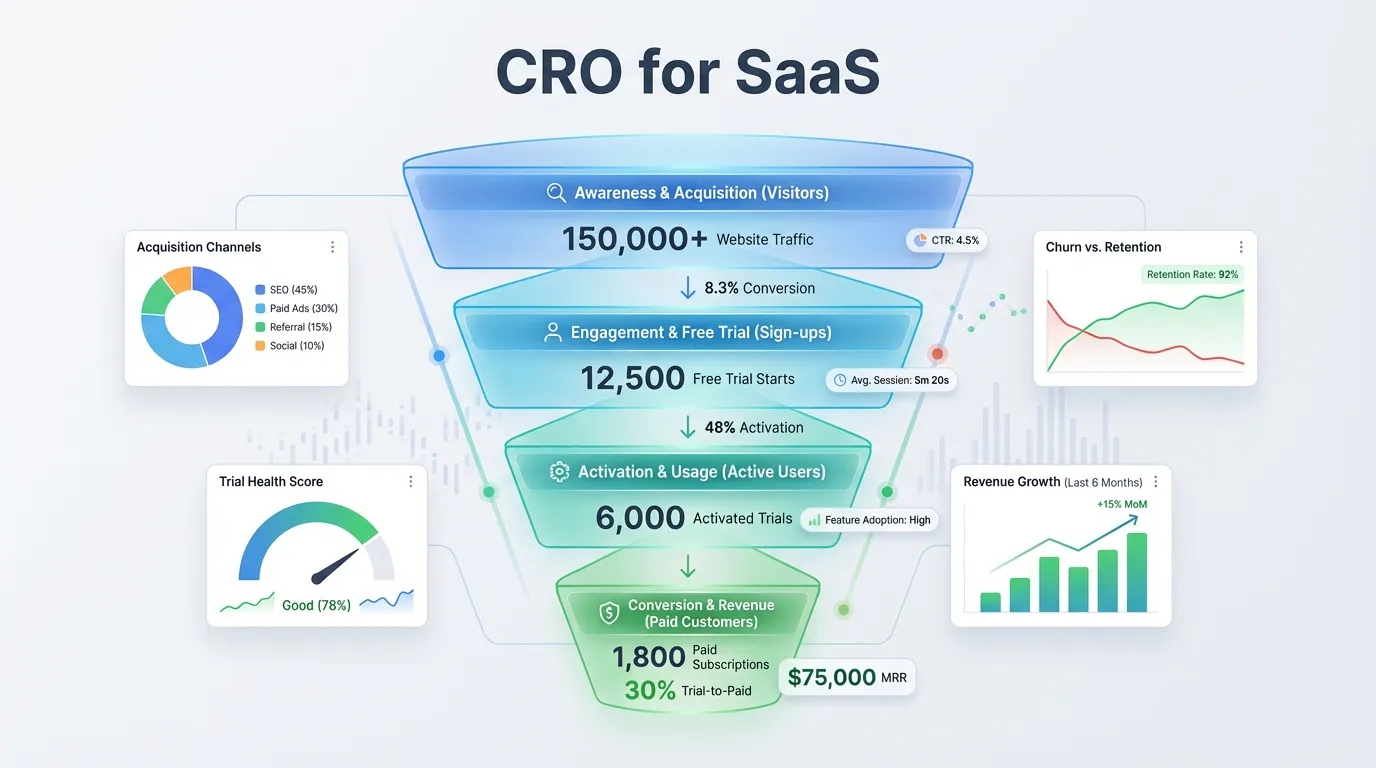
1. Conversion Rate (CR)
- The Metric: Total Sales / Total Visitors.
- The Benchmarks: A 2-3% CR is "Healthy"; a 5%+ CR is "Elite." If your CR is below 1%, your "Offer" or your "Landing Page" is broken.
2. ROI on Ad Spend (ROAS)
- The Move: Calculate your "Breakeven ROAS."
- The Action: If your ROAS is above breakeven, keep spending. If it drops below, immediately pivot your "Creative" or your "Audience" until the math works again.