Introduction
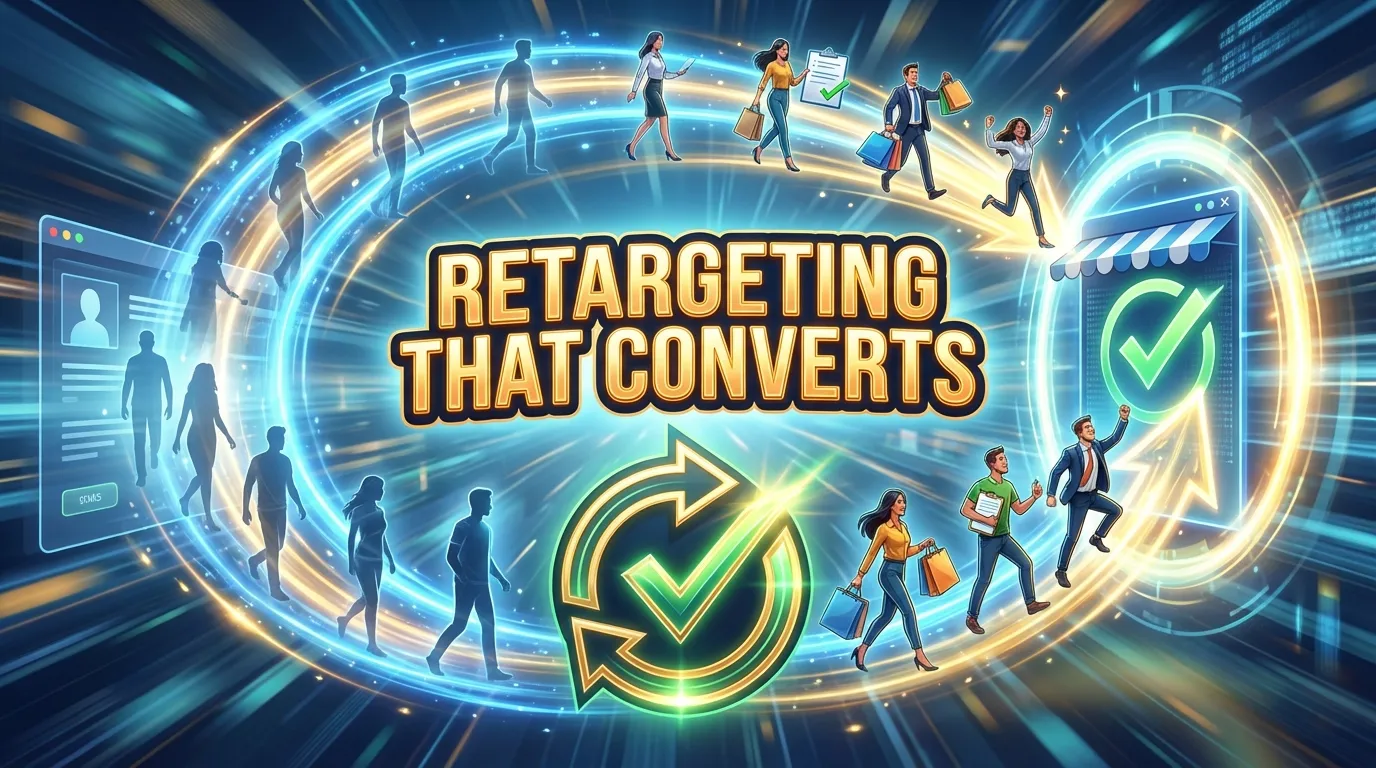
In the sophisticated digital marketing ecosystem of 2026, the traditional concept of "Retargeting"—simply showing an ad to someone who visited your website—is no longer an "Expert" strategy; it is the "Baseline." Because 95% of first-time visitors will leave your site without making a purchase, your "Revenue Growth" now entirely depends on your ability to implement Advanced Retargeting Techniques That Convert. It is the difference between letting a lead walk out the door and turning them into a lifelong brand advocate.
Advanced retargeting is the art and science of utilizing specific user behaviors—such as time spent on a page, "Add to Cart" events, and even "Scroll Depth"—to deliver a highly personalized, context-aware marketing message. In 1026, where "Privacy-First" data collection has made standard cookies unreliable, your ability to "Match" a user across devices through first-party data is the ultimate competitive advantage. Whether you are selling $50 sneakers or $50,000 enterprise software, this guide will provide the definitive blueprint for "Follow-Up Mastery."
In this exhaustive 2,500+ word master playbook, we are going to look at exactly how to build a high-performance retargeting engine. We will explore sequential "Storytelling" sequences, the mechanics of server-side Conversion APIs (CAPI), dynamic product personalization, and the psychological "Overload" thresholds of your audience. By the end of this read, you will have the knowledge to create a retargeting funnel that doesn't just "Chase" users around the web, but "Convinces" characters in your brand's story to finally take action.
Why You Must Master Advanced Retargeting Techniques That Convert
The primary reason retargeting fails at scale is Boredom. If a user has seen your "10% Off" coupon ad 15 times and hasn't clicked, they aren't going to click the 16th time. They have "Ad Fatigue."
In 2026, the algorithm "Targers" your audience based on their most recent "Signal." To win, your retargeting must be "Dynamic." It must change based on what the user did today, not what they did three weeks ago. Advanced retargeting is how you "Walk" a customer through the funnel, answering their specific objections in real-time.
Phase 1: Beyond Simple Page Visits (Event-Based Segmenting)
Stop retargeting "All Website Visitors." This is the fastest way to waste your budget. Instead, segment your audience by their Intensity of Intent.
1. High-Intent Segmenting (The "90% Scroll" Rule)
If a user scrolled to the very bottom of your long-form sales page but didn't buy, they are "Highly Qualified."
- The Ad: Instead of a generic ad, show them a "Deep-Dive Testimonial" or a "Frequently Asked Questions" video. They have already read your pitch; they just need one more "Social Proof" signal to close the deal.
2. The "Cart Abandoners" (The Money Zone)
This is your highest ROI audience.
- The Strategy: Use a "3-Stage" Cart Abandonment loop.
- Day 1: A "Helpful" ad (e.g., "Did your order get interrupted?")
- Day 3: A "Social Proof" ad (e.g., "See what 100 other customers said about this item").
- Day 7: A "Scarcity/Incentive" ad (e.g., "Your 10% coupon expires in 24 hours").
Phase 2: Sequential Retargeting (The "7-Day Story Arc")
Do not show the same ad for 7 days. Show a "Sequence." This is the "Netflix" approach to retargeting.
- Days 1-2 (Awareness Refresh): "Remind" them of the core benefit they were looking at.
- Days 3-4 (Trust Building): Show them a "Case Study" or a "Behind-the-Scenes" video of your product being made.
- Days 5-7 (Direct Offer): Only now do you give the "Cold, Hard Offer."
- The Benefit: By the time they see the "Discount," they have already seen your "Testimonials" and "Value." The discount becomes the "Final Trigger," not the "Only Reason" they are buying.
Phase 3: First-Party Data & Server-Side Tracking (The CAPI Era)
In 2026, the browser cookie is effectively dead. If you rely on a standard "Pixel," you are likely missing 30-40% of your conversion data due to iPhone privacy settings and ad blockers.
- The Solution: You must implement a Server-Side Conversion API (CAPI). Instead of the "Browser" sending the data to Meta/Google, your "Server" sends it directly. This "Hardens" your data, ensuring that your retargeting audiences are 100% accurate and that you aren't bidding on "Ghost" events that never actually happened.
Phase 4: Dynamic Creative Retargeting (DCR) for E-Commerce
For brands with more than 10 products, manual retargeting is impossible. You must use Dynamic Product Ads (DPA).
- The Strategy: Google and Meta will "See" that a user looked at a "Blue Suede Shoe" and will automatically generate a custom ad showing that exact shoe, along with "Matching Socks" or "Shoe Cleaner."
- The 2026 Twist: Don't just show the product. Use "Dynamic Overlays." Automatically add a "Best Seller" or "Free Shipping" badge to the image to increase the Click-Through Rate (CTR).
Phase 5: Frequency Management and "Burn-Out" Protection
Nothing kills a brand faster than "Stalking." If your frequency is 15.0 per week, you are making your audience hate you.
- The Cap Rule: For "Warm" retargeting (30-day visitors), keep your frequency between 3.0 and 5.0 per week.
- The "Burn" Rule: Once a user converts, use a "Purchase Event" to immediately Exclude them from your prospecting and retargeting campaigns. Nothing is more annoying to a customer than seeing a "10% Off" ad the day after they paid "Full Price."
Phase 6: Cross-Channel Omnipresence (The "Surround Sound" Effect)
In 2026, retargeting is a "Multi-Channel" sport. If a user visits your site via a Google Search ad, retarget them on Meta. If they click a Facebook ad but leave, retarget them on YouTube.
- Why? Seeing your brand on "Different Platforms" creates the illusion of being a "Massive, Global Industry Leader." Even if you are a two-person team in a garage, a user who sees you on the Web, Social, and Video will perceive you as the "Safe Choice."