Introduction
In the hyper-competitive digital landscape of 2026, the concept of a "newsletter" is effectively dead. Modern consumers no longer tolerate broad, broadcast-style communications that fail to acknowledge their specific needs, behaviors, and current state of mind. This is the era of the Advanced Email List Segmentation Techniques, where "Personalization" is replaced by "Individualization." If you are still segmenting your list solely by "Industry" or "Geographic Location," you are utilizing 2012 tactics in a 2026 economy.
The shift toward advanced segmentation is powered by the integration of real-time behavioral data and AI-driven propensity modeling. Today, the goal is to group users not just by who they are, but by what they are about to do. By understanding the subtle nuances of intent—from the frequency of their login sessions to the specific product categories they browse but don't buy—you can craft messages that feel like a private conversation rather than a marketing campaign. For any brand looking to scale in 2026, advanced segmentation is the single most powerful lever for increasing revenue while simultaneously decreasing unsubscribe rates.
In this exhaustive 2,500+ word master guide, we will aggressively deconstruct the technical frontier of Advanced Email List Segmentation Techniques. We will explore RFM analysis, predictive churn segmentation, the power of "Zero-Party Data" preference centers, and the implementation of real-time behavioral triggers. By the end of this read, you will possess a repeatable, data-driven framework for delivering the right message to the right segment, at the right time, every single time.
Why You Must Master Advanced Email List Segmentation Techniques Right Now
The "Batch and Blast" approach is now a primary trigger for AI-driven spam filters. Inbox providers like Google and Microsoft prioritize mail from senders who demonstrate high engagement rates.
By implementing Advanced Email List Segmentation Techniques, you are achieving:
- Massive Increases in Open and Click Rates: Deeply relevant subject lines grounded in specific user behavior can increase open rates by over 100%, and click-through rates by up to 300%.
- Drastic Reduction in Churn: By identifying "At-Risk" segments before they disengage, you can trigger automated "Nurture Loops" that save high-value customers who would otherwise be lost.
- Superior Data Intelligence: Segmentation is the ultimate teacher. By observing how different micro-segments respond to different offers, you gain an "Architectural Understanding" of your market that your competitors cannot match.
Phase 1: RFM Analysis (Recency, Frequency, Monetary)
RFM is the "Old Reliable" of segmentation, but in 2026, it has been supercharged by real-time automation.
1. The Three RFM Pillars
- Recency: How long has it been since their last purchase or engagement? (The strongest predictor of future engagement).
- Frequency: How many times have they purchased or logged in within a specific period?
- Monetary: How much total revenue have they generated for your business?
2. The Segment Map
- Champions: High R, High F, High M. These are your VIPs. They should receive "First Look" access and personalized appreciation notes.
- Loyal Shoppers: High F, Mid M. These users trust you. Focus on "Cross-selling" and "Upselling."
- At-Risk: Low R, High F/M. These were your best customers but have gone quiet. They need an aggressive "Re-activation" offer immediately.
Phase 2: Behavioral and Intent-Based Segmentation
This is where you move from "What they bought" to "How they act." Behavioral segmentation looks at the "Micro-Signals" of interest across your entire digital ecosystem.
1. Website Interaction Segments
- Category Browsers: Users who have viewed more than 3 products in a specific category (e.g., "Men’s Running Shoes") but haven't added to cart.
- Cart Abandoners: The highest intent segment. They require a multi-stage "Recovery Sequence."
- Deep Content Consumers: Users who have read 80% of a specific technical guide. These are "High Intent" leads that should be moved into an educational sales funnel.
2. Email Activity Segments
- Search-Query Segments: If your email tool integrates with your site's internal search, segment users based on the specific keywords they are searching for (e.g., "Enterprise Pricing").
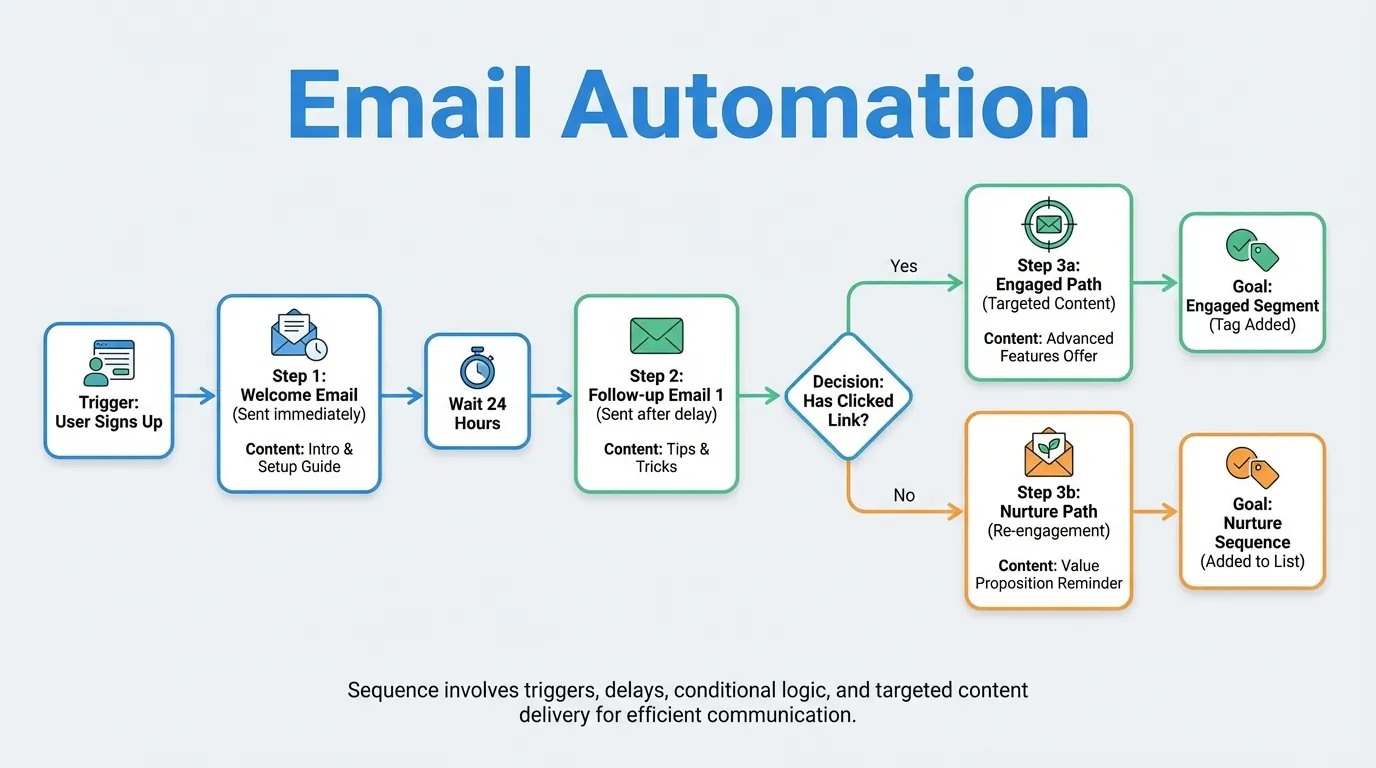
- Link-Click Intent: Segment people based on the type of link they click in a newsletter (e.g., did they click a "Case Study" or a "Discount Code"?).
Phase 3: Zero-Party Data and Preference Centers
In a privacy-first world, the best data is the data the user gives you for free because they want a better experience.
1. The Interactive Preference Center
Instead of a simple "Unsubscribe" page, offer a "Manage My Preferences" page.
- Frequency: Let them choose (Daily, Weekly, Monthly).
- Topic: Let them select their specific interests (SEO, PPC, Social Media).
- Role: Ask for their job title or business size.
2. Quiz-Based Segmentation
Use a "Welcome Quiz" to immediately bucket new subscribers.
- The Workflow: "Are you a Beginner, Intermediate, or Advanced marketer?"
- The Result: You now have three completely different onboarding sequences that are 100% relevant to the user's current knowledge level.
Phase 4: AI-Driven Predictive Segmentation
In 2026, your segmentation should be forward-looking. AI can analyze millions of data points to predict future behavior.
1. Propensity-to-Buy Segments
AI models can flag users who are "Mimicking" the behavior of previous customers right before they bought (e.g., a specific combination of page views and email opens).
- The Action: Trigger a "Limited Time" offer specifically for this "High Propensity" segment to push them over the finish line.
2. Churn Propensity Segments
Identify users who are slowly disengaging—those whose open rates are dropping or who haven't visited the site in 20 days.
- The Action: Move them into a "Customer Satisfaction" loop or offer them a "One-on-One" consultation to rebuild the relationship before they hit the "Unsubscribe" button.
Phase 5: Psychographic and Lifecycle Stage Segmentation
Segmenting by where someone is in their "Journey" is critical for message resonance.
1. The Awareness Stage Segment
These users know they have a problem but aren't sold on your solution yet.
- Content: Educational, "How-To" guides, and industry reports.
2. The Decision Stage Segment
They are currently comparing you to 2-3 other competitors.
- Content: Case studies, ROI calculators, and feature comparison tables.
3. The Advocate Stage Segment
Your happiest customers.
- Content: Information on your "Referral Program," "User-Generated Content" requests, and invitations to speak at your webinars.
Phase 6: Implementation and High-Velocity Automation
Advanced segmentation is only valuable if it is automated. You cannot manually manage 50 micro-segments.
1. Dynamic Content Mapping
Instead of sending 50 different emails, send ONE email that uses "Dynamic Blocks."
- The Technical Logic:
IF User_Segment = 'VIP' THEN SHOW 'Free Shipping Code' ELSE SHOW 'Standard Offer'. - The Benefit: This dramatically reduces the workload for your marketing team while maintaining 1:1 relevance.
2. Continuous Re-Segmentation
Segments should be fluid. As soon as an "At-Risk" user opens an email, they should be automatically moved back into the "Active" segment. This "Real-time Orchestration" ensures that your messaging always reflects the user's most recent interaction.