Introduction
It is universally recognized as the single most expensive, budget-draining mistake in all of digital advertising: paying a premium to show a million-dollar ad creative to a user who has absolutely zero intention of purchasing your product.
Imagine you are the marketing director for a high-end, bespoke luxury watch brand. You spend tens of thousands of dollars on a breathtaking, cinematic video. You hire the absolute best direct-response copywriters and elite videographers in the world to craft the perfect hook. Then, you eagerly launch your campaign, and the algorithm (whether it's Google, Meta, or TikTok) aggressively shows that premium ad to a 16-year-old student actively searching for budget-friendly quartz watches on a massive discount.
The result is catastrophic: Your "Click-Through Rate" (CTR) is functionally zero, your "Cost Per Click" (CPC) is skyrocketing due to low relevance scores, and your hard-earned marketing budget is being enthusiastically incinerated in real-time. This terrifying scenario is exactly why you need to transition away from basic marketing and comprehensively master Advanced Audience Targeting in Paid Ads.
In the "Golden Age" of early digital ads (circa 2015), targeting was incredibly simple and slightly invasive: you statically chose an "Interest" (like "Rolex Watches") and a specific "Demographic" (like "Men, Ages 25-45") and your campaign was successfully built. But in 2026, the entire digital game is vastly, fundamentally different. We now live and operate in a strict "Privacy-First" ecosystem defined by the death of third-party cookies, Apple's rigid iOS data restrictions, AI-driven "Broad" audiences, and hyper-complex "Predictive Machine Learning Modeling." To truthfully be a top 1% elite media buyer, you must completely abandon simple demographics. You must begin targeting complex "Behavioral Intent," deep "Psychographic Profiles," and sophisticated "Algorithmic Lookalikes."
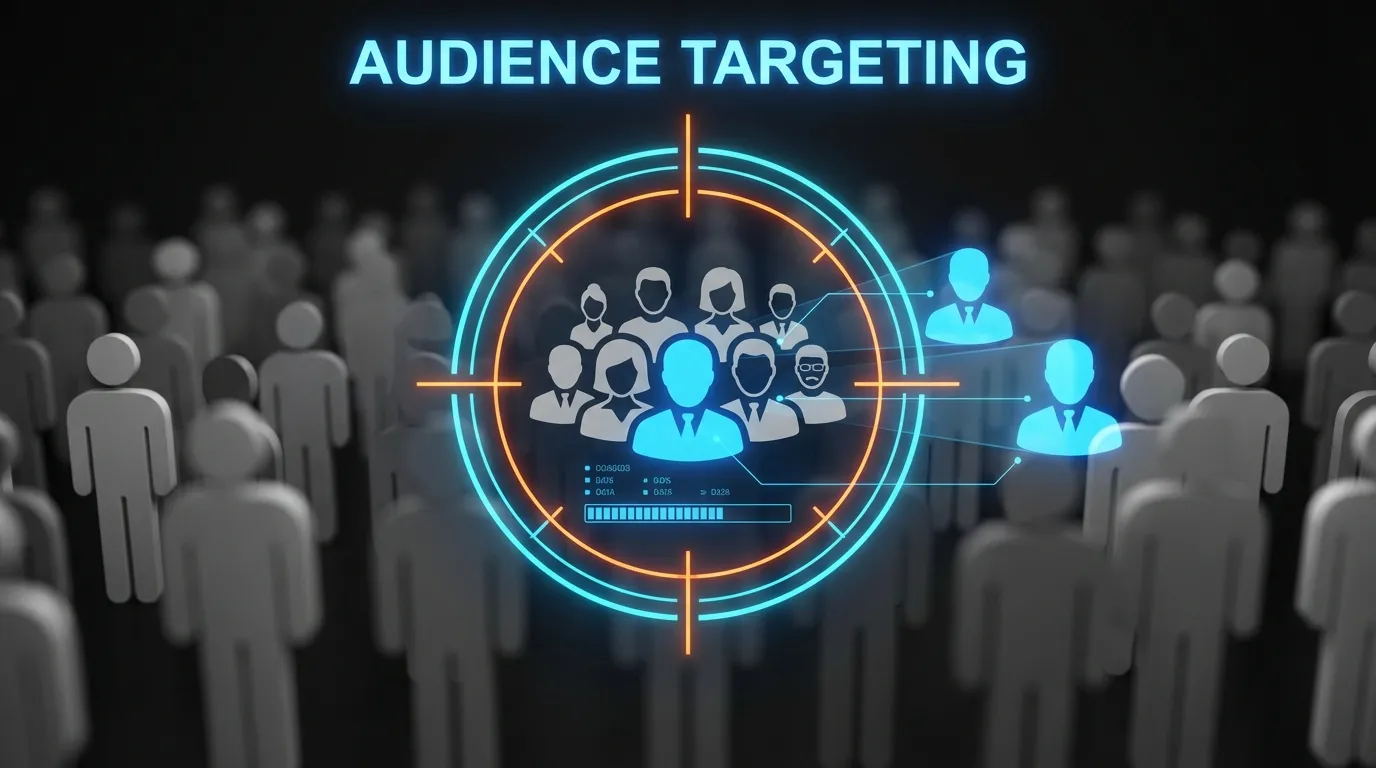
In this highly comprehensive, deeply detailed guide, we will aggressively break down the complex mechanics of elite, enterprise-level audience construction. We will deeply explore the "Targeting Paradox," properly dissect the immense power of "Custom Search Intent," and reveal exactly how to rigidly leverage AI frameworks (like Meta's Advantage+ and Google's Performance Max) to algorithmically find high-LTV customers you didn't even logically know existed. By the very end of this extensive read, you will have the complex discipline of advanced audience targeting in paid ads perfected down to a rigorous, precise science, confidently ensuring that every single cent of your daily ad spend is ruthlessly directed exclusively towards the users who are algorithmically most verified and likely to convert.
The Strategic Psychology of Advanced Audience Targeting in Paid Ads
Before we ever get bogged down into the technical settings and dashboard toggles, we absolutely must understand the underlying psychological and data-driven "Who."
The legacy, outdated way of targeting strictly asked, "Who is this person?" (Age 32, Female, living in a specific New York Zip Code). The modern, Advanced Audience Targeting in Paid Ads framework strictly asks, "Why is this person here right now, and what are they trying to achieve?" (Immediate Intent, Rapid Behavioral Shifts, and critical Life Stages).
Global search engines and massive social platforms now possess enough unified data points to accurately "Predict" a user's literal next move. If a mobile user starts actively searching for "Best Beach Wedding Venues," liking posts from bridal boutiques, and heavily pinning "Tropical Honeymoon Destinations," the algorithm definitively knows they are extremely likely to be aggressively in the market for a "Custom Diamond Ring" or "International Travel Insurance" within the next 48 to 72 hours. This is the raw power of "Search Intent" seamlessly combined with real-time "Predictive Behavior."
To successfully win auctions in 2026, you must forcefully learn to "intercept" the specific user at the exact localized moment their passive intent suddenly boils over into actionable, purchase-ready intent.
Step 1: The "Targeting Paradox" — Broad vs. Narrow
One of the single biggest, most contentious debates in modern media buying circles and agency slack channels is whether it is ultimately more profitable to be "Ultra-Specific" or aggressively "Wide-Open."
1. The "Narrow" (Legacy Interest-Based) Approach
Definition: Manually restricting your ad impressions to users based on highly specific interests, past behaviors, precise industry job titles, and tight demographic bounds.
- The Pro: For brand new ad accounts with zero pixel data, this provides high immediate "relevance," giving the algorithm guardrails and occasionally resulting in a low initial Cost Per Lead (CPL) simply because you aren't showing ads to everyone.
- The Con: Severe, rapid "audience fatigue," skyrocketing CPMs (Cost Per Mille), and absolute inability to scale vertically. Once you’ve blasted your ad to the 50,000 specific people who actively follow the "Robb Report" or "Luxury Watches CEO," your campaign performance will violently crash because you ran out of fresh humans. You over-restricted the AI.
2. The "Broad" (Algorithm-Based) Approach
Definition: Completely removing all manual interest targeting, age limits, and gender locks, literally relying entirely on the AI platform to independently find your customers strictly based on your "Creative (Video/Image)" and your historical "Pixel Event History."
- The Monumental Breakthrough: Modern, trillion-parameter AI models (specifically like Meta's Advantage+ Shopping Campaigns (ASC) and Google's Performance Max (PMax)) are currently vastly more accurate and faster than a human media buyer at finding your exact ideal customers. By bravely going entirely "Broad," you release the algorithmic constraints. You allow the AI to locate hyper-profitable "Hidden Pockets" of buyers that you would have absolutely never thought to include in a manual interest list.
Step 2: Mastering Lookalike Audiences (LALs) and First-Party Seed Data
A pristine "Lookalike Audience" has historically been the most powerful, easily scalable tool within any robust Advanced Audience Targeting in Paid Ads strategy. It elegantly tells the platform: "Here are the email addresses of my 1,000 absolute best customers; mathematically analyze their thousands of data points, and go out into the internet and find me 1,000,000 completely new people who look, act, and buy exactly like them."
The Absolute "Seed Quality" Rule
The efficiency, conversion rate, and ultimate ROAS (Return on Ad Spend) of your Lookalike is exactly 100% dependent entirely on the pristine quality of your "Seed List." Garbage data in equals highly expensive garbage data out.
- Stop Erroneously Using "All Website Visitors" as a Seed: Statistically, 90% to 95% of your standard website visitors will bounce and never buy from you. If you build a Lookalike modeled on "Visitors," your billion-person Lookalike will be actively modeled on 90% window-shoppers. Your campaigns will fail instantly.
- Start Using "High-LTV (Lifetime Value) Value-Based Customers" as a Seed: Log into your CRM or Shopify. Carefully export the specific list of your top 10% or 20% of highest-spending, repeat-buyer customers. Upload this elite "Value-Based Seed," to Meta or Google. The algorithm will now intensely analyze what makes a "High-Spender" unique (predicting household income, brand affinities, purchase velocity) and specifically hunt for other "High-Spenders," rather than just cheap "Clickers."
Advanced Multi-Platform Cross-Pollination
Elite marketers do not let data live in silos. Take your massive "Winning" Google search audience data (e.g., people who actually clicked on and converted from your paid search ad for "Buy Rolex Online") and aggressively upload that precise list to build a custom "Search Intent Lookalike" audience natively inside your Meta Ads Manager. This effectively allows you to aggressively follow the high-intent "Search Demand" across entirely different social platforms seamlessly, creating an omni-channel net.
Step 3: Navigating In-Market vs. Affinity Audiences in Google Ads
Google Ads provides a genuinely massive, often misunderstood competitive advantage with its highly segmented "In-Market" and "Affinity" behavioral groupings. Properly distinguishing the difference between the two is absolutely critical for effectively deploying Advanced Audience Targeting in Paid Ads without wasting colossal sums of venture capital.
1. Affinity Audiences (The Long-Term "Awareness" Play)
These are vast groups of users who have clearly demonstrated a highly consistent, very long-term interest in a broad topic based on years of browsing history, YouTube watching habits, and app downloads (e.g., "Golf Enthusiasts," "Avid Investors," or "High-Fashionistas").
- The Strategic Use Case: Exclusively use this broad segment for highly visual, Top-of-Funnel (TOFU) YouTube or Display awareness campaigns. You are cheaply building "Brand Salience" and long-term memory structures with millions of people who are statistically likely to generally care about your niche, even if they aren't buying today.
2. In-Market Audiences (The Immediate "Conversion" Play)
These are tight, highly volatile groups of users who are algorithmically verified to be actively and heavily researching a very specific product purchase right at this exact micro-moment (e.g., "In-Market for a 30-Year Fixed Mortgage" or "In-Market for Enterprise CRM Software").
- The Algorithmic Secret: Alphabet (Google) confidently knows they are in-market precisely because the user has rapidly visited a competitor's pricing page, watched four unboxing reviews on YouTube, compared specs on a tech blog, and read a "Top 10" buying guide all within the last furious 48 hours. These are your absolute "Hottest," most urgent leads. Bid aggressively on them.
Step 4: Psychographic Targeting and Deep "Values-Based" Segments
While Demographics definitively tell you a target user is an "Unmarried 35-year-old male renting an apartment in central London," Psychographics aggressively tell you the why: he "Deeply values environmental sustainability," "Subscribes to minimalist design aesthetics over flashy luxury," and "Is a staunch remote-work evangelist." In modern advertising, the why dictates the purchase far more than the who.
Leveraging Timely Behavioral Triggers
In a properly configured Advanced Audience Targeting in Paid Ads framework, you can seamlessly target users fundamentally based on highly disruptive "Life Events":
- "Recently Moved / Purchasing a Home": Absolute perfection for aggressive marketing of home security systems, high-end furniture, broadband internet setups, and localized repair services. The wallet is already open.
- "Starting a New Executive Job": Incredibly perfect for B2B subscription software, professional executive coaching, high-end tailored apparel, and premium credit cards.
- "Upcoming 1-Year Anniversary": Perfectly timed for luxury watch gifts, massive floral arrangements, and international resort travel packages.
The Power of Layering "AND" Logic (The Boolean Intersection)
The vast majority of lazy advertisers simply use lazy "OR" logic (Target people who like playing Golf OR reading about Luxury Watches). Advanced, mathematical advertisers exclusively use "AND" logic inter-sections (Target people who like Golf AND who concurrently also like Luxury Watches AND are frequently International Travelers). This highly restrictive "Intersection" actively ensures that you are spending money to hit the exact, hyper-relevant center of your "Ideal Customer Profile" Venn diagram.
Step 5: First-Party Data Integration (Zero-Party Data)
As browser cookies actively die off due to privacy legislation (GDPR, CCPA) and Apple's App Tracking Transparency (ATT), the most valuable asset your company owns is no longer your Facebook Pixel—it is your owned, First-Party CRM data.
- Offline Conversions API (CAPI): Implementing the Meta Conversions API or Google Enhanced Conversions is no longer optional; it is mandatory for survival. When a user clicks an ad, purchases your product in your physical retail store, or speaks to your sales rep on the phone, you must securely ping that transaction data directly back to the algorithm's server. This securely enriches the AI's targeting model without relying on fragile browser cookies, explicitly training the algorithm on what a "real world" buyer actually looks like.
- Zero-Party Data Collection: Actively run interactive quizzes or post-purchase surveys on your landing pages (e.g., "What is your main hair care concern?"). Take these highly specific answers (Zero-Party Data the user willingly gave you) and proactively use them to build dynamic, perfectly personalized retargeting segments.
Step 6: The "Predictive Audience" AI and Machine Learning
The absolute newest, most terrifyingly accurate frontier of Advanced Audience Targeting in Paid Ads is utilizing raw "Predictive Modeling." Massive platforms like Google Analytics 4 (GA4) and Meta can now rapidly identify aggressive "Churn Risks" or highly lucrative "High-Probability Future Buyers" days before they ever even add a product to your cart.
Utilizing GA4 "Predictive Segments"
If you have enough transactional volume tracked in Google Analytics 4, the system will automatically unlock "Predictive Audiences." You can effortlessly create a highly dynamic audience strictly comprised of "Users statistically likely to make a heavy purchase in the next 7 days."
- The Execution Strategy: Seamlessly sync this hyper-predictive audience list directly to your active Google Ads search campaigns. Diligently give this highly specific, magical audience segment a massive +50% or +100% "Bid Adjustment." You are essentially bypassing the normal auction dynamics and explicitly telling Google's bidding robot to "Spend out of your mind to ensure we win the top spot for these highly-probable buyers, because they are mathematically guaranteed to convert."
Step 7: Exclusionary Targeting — What You Absolutely Don't Want
Sometimes, the single greatest targeting decision you will ever make is the aggressive implementation of heavy "Exclusions." To comfortably scale an Advanced Audience Targeting in Paid Ads strategy into the millions of dollars, you must violently ensure you aren't leaking money on negative ROI or "Low-Quality" users.
Building Your Comprehensive "Waste" List
- Your Existing Loyal Customers: Unless you are specifically running an aggressive "Cross-Sell" or "Up-Sell" campaign, you must ruthlessly exclude your "Recent Purchasers" from your expensive Top-of-Funnel "Acquisition" campaigns. Do not pay Meta $5 to show an ad to someone who just bought your product yesterday.
- Frustrated Support Seekers: Actively target and exclude users who frequently visit your
/customer-support/,/contact-us/, or/login/portal pages. They absolutely aren't there to buy a new subscription package; they are there simply because they forgot their password or have a billing issue. Exclude them immediately. - Low-Integrity Traffic (The "Bouncers"): Forcefully exclude users who rapidly click your ad and spend less than 3 total seconds on your site. By creating a "Bouncer Exclusion List," you dramatically help purify your Pixel. This actively prevents the algorithm from accidentally building future Lookalikes modeled on internet click-bots or accidental fat-finger clicks.
The Ultimate Future of Targeting: Privacy-First Personalization
As we conclude this massive Advanced Audience Targeting in Paid Ads playbook, it is profoundly important to always remember that the highly unpredictable "Human Element" definitively remains the primary variable of financial success.
With the absolute death of the third-party cookie, the major platforms are rapidly and permanently moving entirely away from creepy "Browser-Based Stalking Tracking" and heavily migrating toward vast "Data Modeling, Contextual AI, and Walled Gardens." This sounds incredibly intimidating, but it is a massive competitive opportunity for brands that adapt.
When you consistently and securely provide the ad platforms with massive volumes of "Clean Server-Side Conversions" and heavily enriched "High-Value First-Party CRM Data," you are effectively giving the robotic AI the pure "Fuel" it desperately needs to precisely find your highly profitable customers in a totally privacy-compliant way. Elite targeting is no longer maliciously about "Stalking" a poor user uncomfortably across the web; it is entirely about "Understanding" a user's psychological intent so intimately well that your premium ad feels like a highly timely, incredibly helpful, and personalized recommendation rather than a cheap intrusion.
Comprehensive Executive Summary
- Advanced advertising targetings forcefully mandates moving completely away from simple demographics and pivoting directly into deep intent-based, life-event, and behavioral audience algorithmic segments.
- The famous "Targeting Paradox" explicitly highlights the massive industry shift away from narrow, restricted interest-based audiences toward incredibly broad, unconstrained AI-driven targeting like ASC and PMax.
- Algorithmic Lookalike audiences are strictly and mathematically only as good as the raw "Seed Data" (CRM emails/server pixel events) used to actively generate them; always aggressively focus on exporting your highest-LTV customers.
- Deep In-Market Google audiences strategically allow you to aggressively target massive groups of verified users who are confirmed to be actively comparing products right at this exact micro-second.
- Heavy Exclusionary targeting is absolutely mandatory in large-budget accounts to violently prevent massively wasting budget on returning existing customers, lost support traffic, or bot-level bouncers.
Final Conclusion
Comprehensively mastering the deeply technical art of Advanced Audience Targeting in Paid Ads is unquestionably the definitive "unfair advantage" in a highly saturated, exceedingly competitive digital market. It empowers your brand to confidently spend significantly less while earning drastically more by methodically ensuring your finely-crafted message perfectly lands in the exact right hands at the most statistically profitable, emotionally vulnerable moment.
As the machine learning algorithms become unfathomably more powerful, your primary organizational role as a media buyer fundamentally shifts away from acting as a "Manual Media Controller" pressing buttons, to becoming a "Strategic Data Business Provider." By intensely focusing on collecting high-quality first-party survey data, boldly leveraging predictive AI GA4 models, and ruthlessly excluding non-converting dead weight, you permanently build a highly resilient, privacy-safe digital advertising engine that scales completely effortlessly across absolutely any platform on earth. Your perfect customer is absolutely out there searching right now; now you possess the advanced tactical tools required to ruthlessly find them.
Frequently Asked Questions (FAQs)
1. Is manual "Interest Targeting" still actually worth the effort in 2026? Yes, but strictly only for completely "New Ad Accounts" or highly restricted "Small Budgets." For a brand new Meta or TikTok account with absolutely zero historical pixel data, tight interest targeting is a brilliant way to forcibly "teach" the initially dumb algorithm exactly who your target customer is. However, once you cross the threshold of 500+ or 1,000+ localized sales, the "Broad" AI will mathematically almost always wildly outperform your manual interests. At scale, manual interests severely cap your growth.
2. Exactly how many verified people should ideally be in my "Lookalike Seed List"? Google and Meta officially recommend uploading an absolute bare minimum of 1,000 users for a high-quality Lookalike generation. However, 1,000 highly verified "Repeated High-Cart Purchasers" is vastly, infinitely superior to uploading 10,000 cheap "Newsletter Email Subscribers" who have never spent a dime. Extreme data quality over sheer quantity is the unbreakable rule for seed lists.
3. What is the fundamental, actionable difference between an "Affinity" and an "In-Market" audience in Google? An "Affinity" audience represents a user who is a long-term, passive fan of a broad topic (e.g., someone who has watched car racing videos for a decade). An "In-Market" audience is someone aggressively searching for a "2026 SUV Lease Near Me" right this very second. In-market audiences categorically always hold a phenomenally higher conversion rate for direct-response sales campaigns and demand higher auction bids.
4. Should I permanently exclude my "Existing Purchasers" from literally all my ad campaigns? Definitely not. You should selectively and strictly only exclude them from your expensive "Net-New Acquisition" campaigns so you don't waste budget acquiring a customer you already own. You should absolutely have a specifically designed, dedicated "Retention and LTV" campaign aggressively targeting exclusively your existing customers with "New Product Line Launches," "Subscription Refill Reminders," or "Loyalty Discounts."
5. How do I actually technically target users purely based on their core "Psychographic" internal values? You actually accomplish this primarily through your "Visual Creative and Copywriting," not necessarily a dashboard toggle. If you want to aggressively target wealthy "Minimalists," ensure your ad features vast clean white space, simple copy, and a highly premium aesthetic design. If you want to efficiently target "Budget-Conscious" bargain hunters, aggressively put the massive "75% OFF" or "Clearance Price" flashing front-and-center. In the AI-driven world of 2026, "The Creative itself is the Targeting." The algorithm sees who stops to watch your specific creative, and it goes out to find millions more people with those same values.
6. What are Advantage+ Shopping Campaigns (ASC) and why are they considered advanced? ASC is Meta's flagship, fully-automated machine learning campaign structure. It completely removes the advertiser's ability to manually dictate detailed age, specific interests, or precise placements. You simply provide Meta with a massive budget and a large catalog of 50+ diverse creatives, and the AI furiously tests every combination across every demographic in real-time, instantly shifting budget to the exact localized pockets of highly profitable users an advertiser could never manually find.
7. How do I survive the death of Third-Party Cookies for my retargeting strategies? You survive and thrive by immediately transitioning to Server-Side Tracking via the Conversions API (CAPI). Instead of relying on a fragile browser pixel (which Apple iOS blocks) to track a user, your actual backend server (like Shopify) directly communicates the highly secure purchase data straight to Meta or Google's server. This securely maps the data back to the user without ever needing a vulnerable browser cookie.
8. Are B2B audiences fundamentally different to target than B2C audiences? Massively different. B2B (Business-to-Business) buying cycles are often 6 to 18 months long and involve large purchasing committees, whereas B2C (Business-to-Consumer) is often highly emotional, immediate impulse buying. In B2B, advanced targeting heavily utilizes LinkedIn's highly specific "Job Title," "Company Size," and "Seniority" targeting, combined with Account-Based Marketing (ABM) strategies to persistently blanket a specific company's IP address with thought-leadership ads until they convert.
Meta Title
Advanced Audience Targeting in Paid Ads: The Master 2026 Strategy Playbook
Meta Description
Master the ultimate Advanced Audience Targeting in Paid Ads strategies. Deeply learn about algorithmic lookalikes, predictive GA4 models, first-party data integrations, and elite broad AI targeting.
Authoritative References for Further Reading
- https://en.wikipedia.org/wiki/Target_audience
- https://en.wikipedia.org/wiki/Behavioral_targeting
- https://en.wikipedia.org/wiki/Digital_marketing
- https://en.wikipedia.org/wiki/Lookalike_audience
- https://en.wikipedia.org/wiki/Psychographics
- https://en.wikipedia.org/wiki/Machine_learning
- https://en.wikipedia.org/wiki/General_Data_Protection_Regulation