
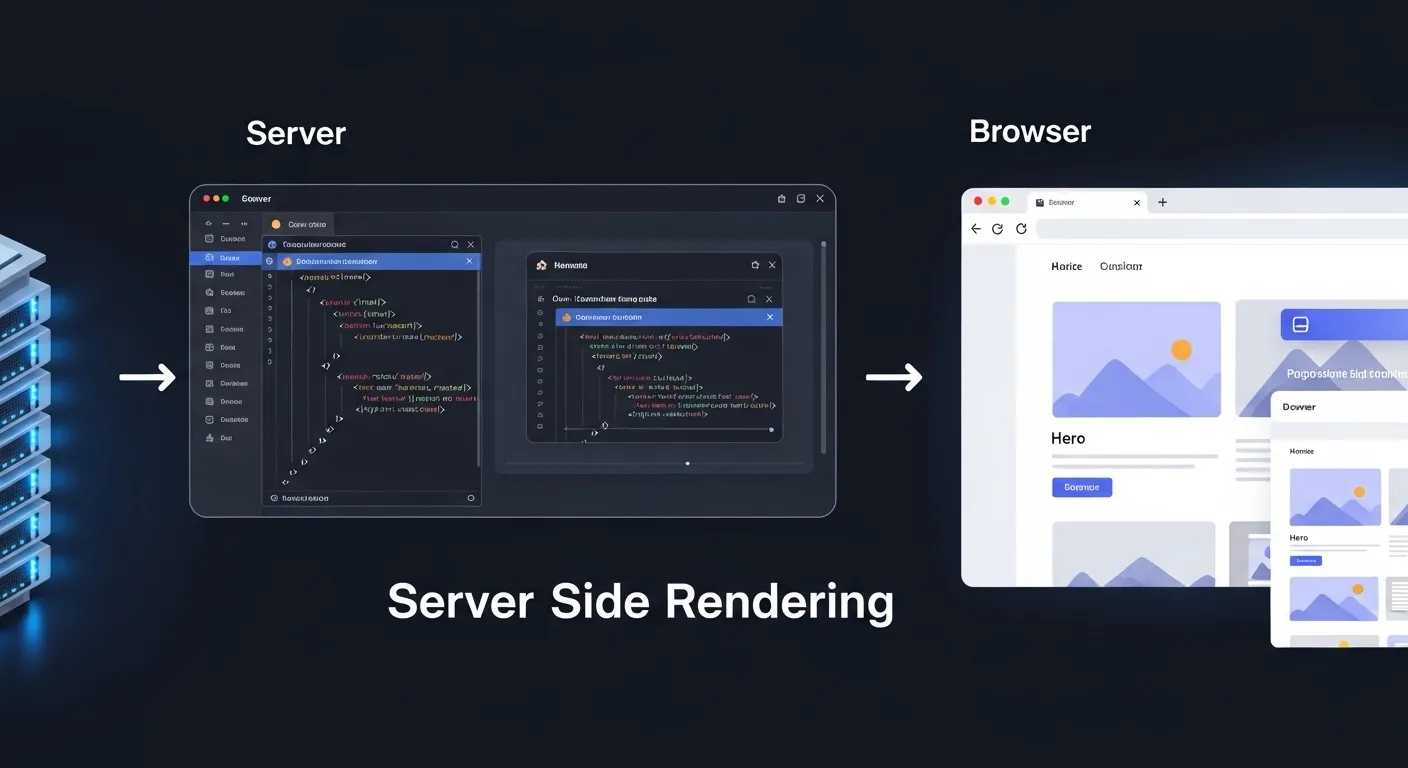
What Is SSR (Server Side Rendering)?
Introduction
Modern websites are expected to be fast, SEO-friendly, and instantly interactive. Users want pages to load immediately, search engines want readable content, and developers want scalable performance.
However, many developers encounter a common challenge when building modern JavaScript applications:
React apps load slowly for first-time visitors. Search engines sometimes struggle to index content. Initial page rendering feels delayed.
This is where Server Side Rendering (SSR) becomes extremely important.
Instead of rendering pages inside the browser, SSR renders them on the server first, then sends fully prepared HTML to the user.
In this complete ssr explained guide, you will learn:
- What SSR really means
- How Server Side Rendering works internally
- SSR vs CSR vs SSG comparison
- Real-world benefits and drawbacks
- How frameworks like Next.js use SSR
- SEO and performance advantages
- When developers should use SSR
By the end of this article, you will clearly understand why SSR is one of the most important concepts in modern web development.
What Is Server Side Rendering (SSR)?
Server Side Rendering is a technique where web pages are rendered on the server before being sent to the browser.
Simple Definition
SSR means HTML is generated on the server and delivered ready to display to the browser.
Traditional Website Rendering
Before modern JavaScript frameworks, websites used server rendering by default.
Classic Rendering Flow
1 User requests webpage 2 Server builds HTML page 3 Browser receives ready content 4 Page displays instantly
Languages commonly used:
- PHP
- Ruby
- ASP.NET
- Java servers
SSR is actually the original web architecture.
Client Side Rendering (CSR) Explained
Modern frameworks like React introduced Client Side Rendering.
CSR Workflow
1 Browser downloads JavaScript bundle 2 JavaScript runs in browser 3 App fetches data 4 Page renders dynamically
CSR provides rich interactivity but introduces initial loading delay.
SSR vs CSR Key Differences
| Feature | SSR | CSR |
|---|---|---|
| Rendering Location | Server | Browser |
| First Load Speed | Faster | Slower |
| SEO | Excellent | Limited |
| Interactivity | After hydration | Immediate |
| Server Load | Higher | Lower |
Understanding this difference explains why SSR returned in popularity.
Why SSR Became Popular Again
Single Page Applications improved user experience but created problems:
- Poor SEO indexing
- Slow first paint
- Blank loading screens
- Performance issues on low devices
SSR solves these problems by combining server rendering with modern frontend frameworks.
How Server Side Rendering Works
Step by Step SSR Process
1 User requests page 2 Server runs application code 3 Server fetches required data 4 HTML generated dynamically 5 Fully rendered page sent to browser 6 JavaScript hydrates page for interaction
The user sees content immediately.
Understanding Hydration
What Is Hydration?
After server sends HTML:
- Browser loads JavaScript
- JavaScript attaches event listeners
- Page becomes interactive
SSR provides fast content delivery while hydration enables interactivity.
SSR in Modern Frameworks
Popular SSR Frameworks
- Next.js
- Nuxt.js
- Angular Universal
- Remix
Next.js made SSR mainstream for React developers.
Example SSR Using Next.js
export async function getServerSideProps() { const data = await fetch("api data"); return { props: { data } }; }
Data is fetched on the server before rendering page.
Benefits of Server Side Rendering
Faster First Contentful Paint
Users see content instantly.
Improved SEO Performance
Search engines receive fully rendered HTML.
Better Social Media Sharing
Preview metadata loads correctly.
Improved Performance on Low Devices
Less processing required in browser.
SEO Advantages of SSR
Search engines crawl HTML content directly.
Benefits include:
- Faster indexing
- Better keyword visibility
- Improved rankings
- Enhanced metadata rendering
SSR is especially valuable for marketing websites and blogs.
SSR vs Static Site Generation (SSG)
| Feature | SSR | SSG |
|---|---|---|
| Rendering Time | Request time | Build time |
| Dynamic Data | Yes | Limited |
| Speed | Fast | Extremely Fast |
| Use Case | Dashboards | Blogs |
SSG prebuilds pages while SSR builds them dynamically.
When to Use SSR
SSR works best for:
- Ecommerce websites
- SEO heavy platforms
- News portals
- Dynamic dashboards
- Personalized pages
Use SSR when content changes frequently.
When NOT to Use SSR
Avoid SSR when:
- Application is purely internal
- SEO is unnecessary
- Static content rarely changes
- Server cost must remain minimal
CSR or SSG may be better alternatives.
Performance Considerations
SSR shifts work from browser to server.
Advantages
- Faster perceived load time
- Better accessibility
Tradeoffs
- Increased server computation
- Higher infrastructure costs
Performance planning is essential.
SSR Caching Strategies
Caching improves SSR performance.
Common methods:
- CDN caching
- API response caching
- Edge rendering
- Incremental Static Regeneration
Caching prevents repeated heavy rendering.
Security Benefits of SSR
SSR improves security because:
- Sensitive logic stays server side
- API keys remain hidden
- Reduced exposure to client attacks
Server environments provide better protection.
Challenges of Server Side Rendering
Common Challenges
- Server load increases
- Slower response under heavy traffic
- Hydration mismatches
- Deployment complexity
Developers must balance benefits and costs.
SSR and Modern Web Architecture
Modern applications combine rendering strategies:
- SSR for landing pages
- CSR for dashboards
- SSG for blogs
Hybrid rendering is now industry standard.
Real World SSR Use Cases
Companies using SSR strategies:
- Ecommerce platforms
- Content publishing systems
- SaaS marketing pages
- Online marketplaces
SSR ensures fast and SEO optimized experiences.
SSR vs SPA Architecture
Single Page Applications focus on interaction.
SSR focuses on initial performance and SEO.
Best practice combine both approaches.
Future of Server Side Rendering
Modern trends pushing SSR forward:
- Edge rendering
- Streaming SSR
- React Server Components
- Serverless deployments
SSR continues evolving with web performance innovations.
Short Summary
This ssr explained guide covered how Server Side Rendering works, its differences from CSR and SSG, performance benefits, SEO advantages, and practical implementation strategies used in modern web development.
Conclusion
Server Side Rendering bridges the gap between performance and interactivity.
It combines the reliability of traditional server rendered websites with the power of modern JavaScript frameworks.
Understanding SSR helps developers build faster websites, improve SEO rankings, and deliver superior user experiences.
If modern web development were a spectrum, SSR sits perfectly between static speed and dynamic flexibility.
Master SSR and you master modern frontend architecture.
Frequently Asked Questions
SSR renders webpages on the server before sending them to the browser.