
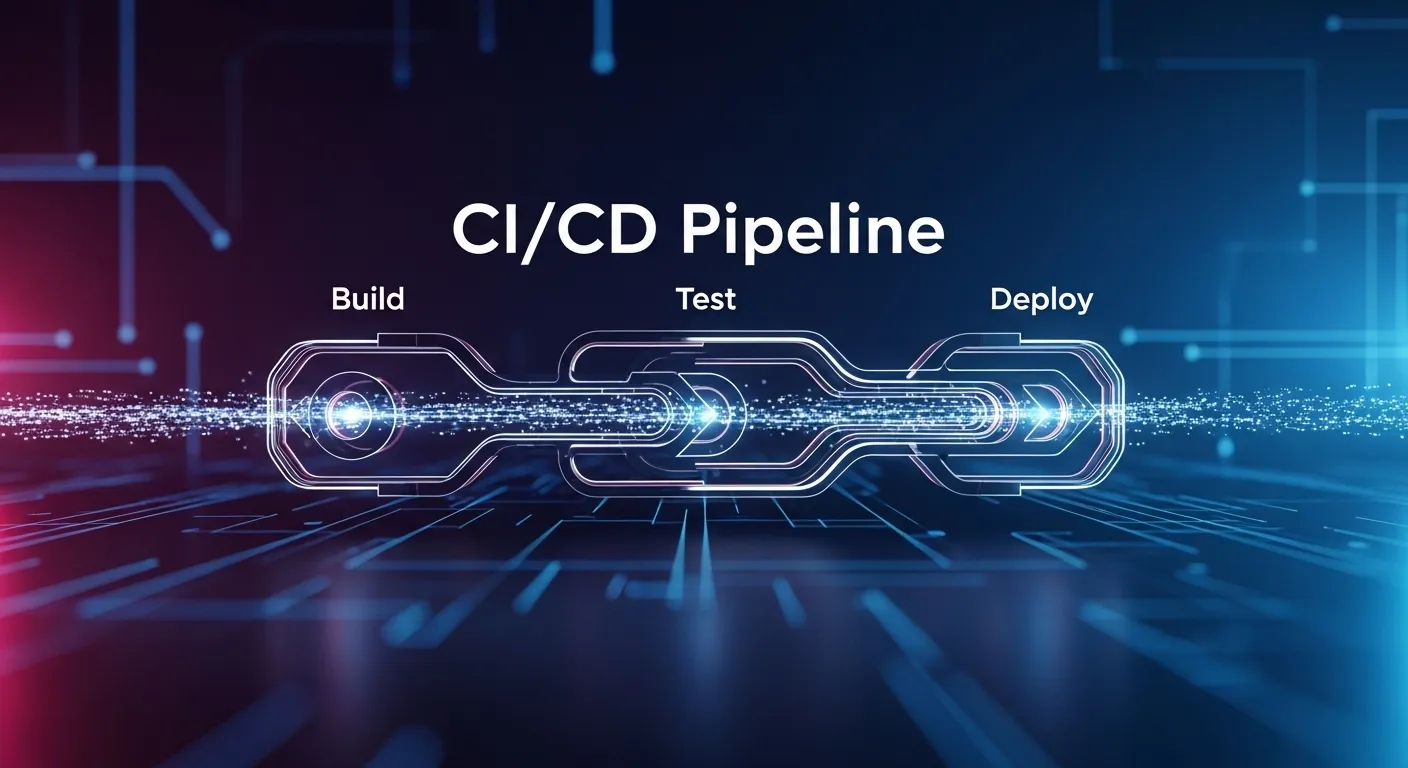
CI/CD for Full Stack Apps
Introduction
Imagine pushing code to GitHub and your application automatically builds tests and deploys itself to production without manual effort.
No FTP uploads.
No manual server restarts.
No late night deployment stress.
Welcome to the world of CI/CD.
Modern development teams rely heavily on automation to ship features faster while maintaining stability. For developers working with modern architectures implementing cicd full stack workflows is one of the most valuable skills today.
Full stack applications involve multiple moving parts:
- frontend applications
- backend APIs
- databases
- cloud infrastructure
- testing pipelines
Without automation deployments quickly become error prone and inefficient.
In this complete guide you will learn:
- What CI/CD means for full stack applications
- How CI and CD work together
- Tools used in modern DevOps pipelines
- Step by step CI/CD setup
- Deployment automation strategies
- Production level best practices
By the end you will understand how professional teams deploy full stack apps continuously and confidently.
What Is CI/CD
CI/CD stands for:
- Continuous Integration
- Continuous Delivery or Continuous Deployment
It is a DevOps practice that automates building testing and deploying software.
Continuous Integration
Developers frequently merge code into a shared repository.
Every update automatically triggers:
- build process
- automated testing
- code validation
CI prevents integration problems early.
Continuous Delivery
After successful testing code becomes ready for deployment automatically.
Deployment still requires approval.
Continuous Deployment
Every validated change goes directly to production without manual intervention.
This is full automation.
Why Full Stack Apps Need CI/CD
Full stack systems combine multiple layers.
Typical Full Stack Components
- React or frontend framework
- Node.js or backend server
- Database system
- Cloud hosting platform
Manual deployment across layers causes:
- version mismatch
- broken APIs
- downtime risks
CI/CD ensures consistency across the entire stack.
CI/CD Architecture for Full Stack Applications
A modern pipeline includes:
- Source Control Repository
- CI Server
- Automated Testing
- Build Process
- Deployment Environment
Each stage validates application quality.
CI/CD Workflow Overview
Step 1 Developer Pushes Code
Code pushed to Git repository.
Example platforms:
- GitHub
- GitLab
- Bitbucket
Step 2 Continuous Integration Trigger
Pipeline automatically starts.
Tasks executed:
- install dependencies
- run tests
- lint code
- build application
Step 3 Automated Testing
Testing ensures stability.
Common tests include:
- unit tests
- integration tests
- API tests
- UI tests
Failures stop deployment.
Step 4 Build Stage
Application compiled into deployable version.
Examples:
- React build folder
- Docker image
- server bundle
Step 5 Deployment Stage
Application deployed automatically to:
- staging environment
- production servers
Tools Used in CI/CD for Full Stack Apps
Source Control
- GitHub
- GitLab
- Bitbucket
CI/CD Platforms
- GitHub Actions
- GitLab CI
- Jenkins
- CircleCI
Containerization Tools
- Docker
- Kubernetes
Containers ensure environment consistency.
Cloud Deployment Platforms
- AWS
- Vercel
- Render
- Azure
- Google Cloud
Setting Up CI/CD for a Full Stack App
Step 1 Project Structure
Example MERN stack:
frontend
backend
database
Keep repositories organized.
Step 2 Create CI Workflow
Example GitHub Actions file:
name CI Pipeline

on push

jobs
 build
  runs-on ubuntu-latest
This triggers automation after every push.
Step 3 Install Dependencies
Frontend:
npm install
Backend:
npm install
Step 4 Run Automated Tests
npm test
Testing ensures reliability before deployment.
Step 5 Build Frontend
npm run build
Generated build becomes deployable artifact.
Step 6 Deploy Backend API
Deployment methods:
- SSH deployment
- Docker container deployment
- Cloud auto deploy
Using Docker in Full Stack CI/CD
Docker standardizes environments.
Benefits
- consistent deployments
- no dependency conflicts
- easier scaling
Example Docker workflow:
- Build Docker image
- Push image to registry
- Deploy container
Environment Variables Management
Never store secrets in code.
Use environment variables for:
- database credentials
- API keys
- JWT secrets
CI/CD platforms provide secure secret storage.
CI/CD Pipeline for MERN Stack
Typical flow:
- Push code
- Run backend tests
- Run frontend tests
- Build React app
- Build Node server
- Deploy API
- Deploy frontend
Automation guarantees synchronization.
Automated Testing Strategies
Unit Testing
Tests individual functions.
Integration Testing
Validates component interaction.
End to End Testing
Simulates real user behavior.
Testing reduces production failures.
Deployment Strategies
Blue Green Deployment
Two environments run simultaneously.
Switch traffic safely.
Rolling Deployment
Gradual update of servers.
Reduces downtime.
Canary Deployment
Release to small user group first.
Detect issues early.
Monitoring After Deployment
Deployment is not the end.
Monitor applications using:
- logging tools
- performance monitoring
- error tracking
Examples:
- Prometheus
- Grafana
- Sentry
Security in CI/CD Pipelines
Security must be automated.
Best practices:
- scan dependencies
- use secret managers
- restrict pipeline permissions
- enable audit logs
Secure pipelines prevent supply chain attacks.
Benefits of CI/CD for Full Stack Development
- Faster releases
- Fewer bugs
- Automated testing
- Reliable deployments
- Improved collaboration
CI/CD transforms development workflow.
Common CI/CD Mistakes
- skipping automated tests
- deploying directly to production
- hardcoding secrets
- ignoring rollback strategy
Avoid these to maintain stability.
CI/CD vs Traditional Deployment
| Feature | CI/CD | Manual Deployment |
|---|---|---|
| Speed | Fast | Slow |
| Reliability | High | Error prone |
| Automation | Full | Minimal |
| Scalability | Excellent | Limited |
Modern teams depend on CI/CD.
Real World CI/CD Examples
Netflix
Deploys thousands of updates daily.
Amazon
Automated pipelines enable rapid innovation.
Startups
Use CI/CD to ship features quickly.
Automation levels the playing field.
Future of CI/CD in Full Stack Development
Emerging trends include:
- GitOps workflows
- AI assisted deployments
- Serverless CI pipelines
- Infrastructure as Code
CI/CD continues evolving with cloud native development.
Short Summary
This cicd full stack guide explained CI and CD concepts automation workflows tools deployment strategies testing practices and security principles needed to build modern full stack pipelines.
Conclusion
CI/CD is no longer optional for full stack developers.
Automation ensures applications deploy faster safer and more reliably.
By integrating continuous integration and continuous deployment into your workflow you transform development from manual operations into an intelligent automated system.
Master CI/CD and you unlock true full stack productivity.
Frequently Asked Questions
CI/CD automates building testing and deploying full stack applications.