How to Build a Blog Website Using MERN
Introduction
Every developer eventually builds a blog project.
Why
Because a blog website combines authentication database management APIs frontend UI and real world content workflows making it one of the best full stack learning experiences.
If you want to become a professional developer creating a mern blog project is a powerful milestone.
Modern blog platforms like Medium Dev.to and Hashnode follow similar architectural principles. They allow users to create posts edit content manage profiles and interact with data dynamically.
In this complete guide you will learn
- What a MERN blog project looks like
- How MERN architecture works together
- Step by step blog development process
- Backend API creation
- React frontend integration
- Authentication and authorization setup
- Deployment and optimization strategies
By the end you will understand how to build a production ready blog website using the MERN stack.
What Is the MERN Stack
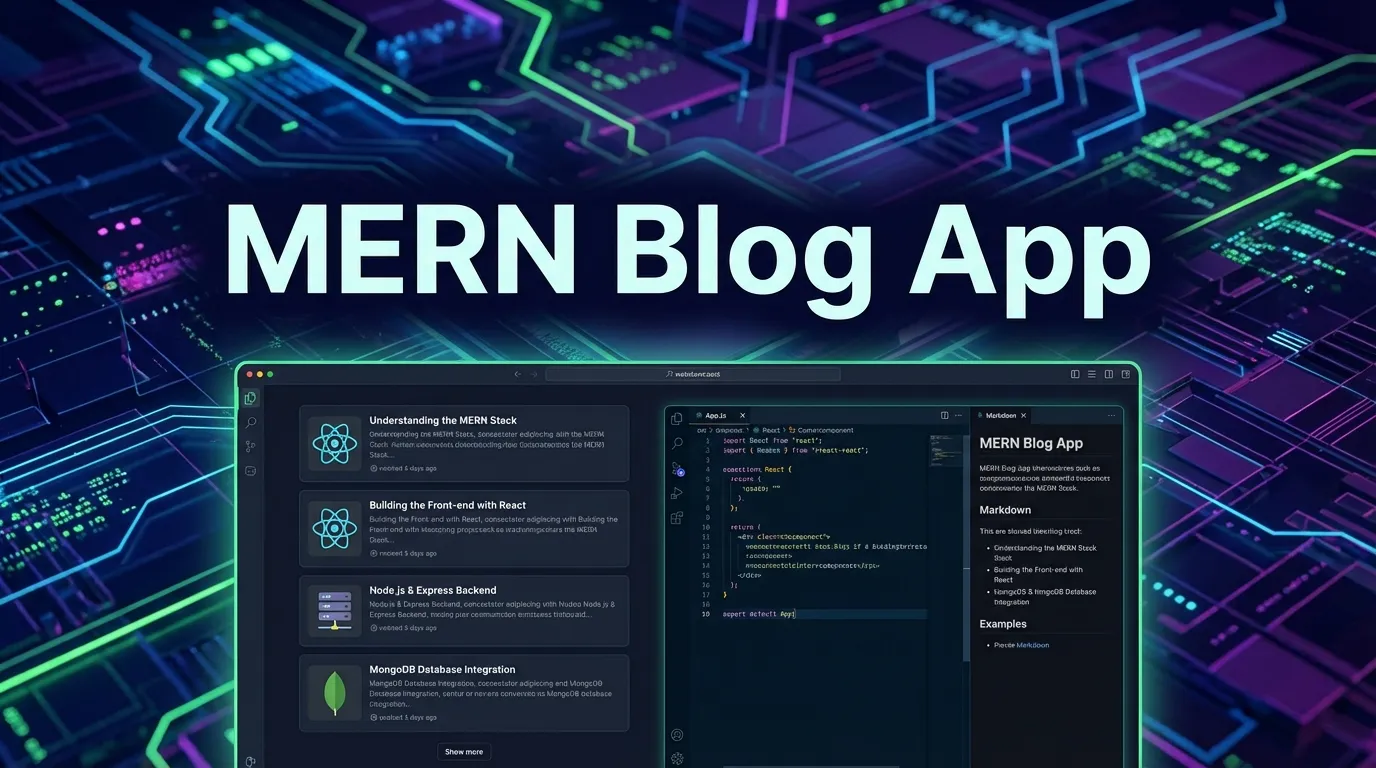
The MERN stack is a full stack JavaScript framework consisting of four technologies.
MongoDB
A NoSQL database storing blog posts as JSON documents.
Express.js
Backend framework used to build REST APIs.
React
Frontend library responsible for dynamic user interfaces.
Node.js
JavaScript runtime powering the backend server.
Using MERN allows developers to write JavaScript across the entire application.
Features of a MERN Blog Website
A modern blog system typically includes
- User authentication
- Create blog posts
- Edit and delete articles
- Rich text content display
- Comment system
- User profiles
- Admin dashboard
These features simulate real world production applications.
MERN Blog Project Architecture
A blog project follows layered architecture.
Frontend Layer
React handles
- Post listing pages
- Blog editor UI
- Authentication screens
Backend Layer
Node and Express manage
- API routes
- Business logic
- Authentication
- Data validation
Database Layer
MongoDB stores
- Users
- Blog posts
- Comments
- Categories
Separation of concerns ensures scalability.
Step 1 Setting Up the Backend Server
npm init -y
npm install express mongoose cors dotenv
Create a basic Express server.
const express = require("express");
const app = express();
app.use(express.json());
Backend setup prepares the foundation for APIs.
Step 2 Connecting MongoDB Database
mongoose.connect(process.env.DB_URL);
MongoDB stores blog data efficiently using document based schema.
Step 3 Designing Database Models
User Model
Stores username email password.
Blog Post Model
Contains title content author created date tags.
Schema design determines application performance.
Step 4 Creating Blog CRUD APIs
Create Blog Post
app.post("api posts", async(req,res)=>{
const post = await Post.create(req.body);
res.json(post);
});
Read Blog Posts
app.get("api posts", async(req,res)=>{
const posts = await Post.find();
res.json(posts);
});
Update Blog Post
app.put("api posts id", async(req,res)=>{
const post = await Post.findByIdAndUpdate(
req.params.id,
req.body,
{new:true}
);
res.json(post);
});
Delete Blog Post
app.delete("api posts id", async(req,res)=>{
await Post.findByIdAndDelete(req.params.id);
res.json({message:"Deleted"});
});
These APIs power the entire blog system.
Step 5 Implementing Authentication
JWT authentication flow
1 User registers
2 Password hashed
3 JWT token generated
4 Token stored on client
5 Protected routes verified
Authentication secures blog publishing.
Step 6 Authorization for Blog Actions
Authorization defines permissions.
Examples
- Author edits own post
- Admin deletes any post
- Visitor reads articles
Role based access control prevents misuse.
Step 7 Building React Frontend
npx create-react-app blog-client
Frontend responsibilities
- Display blog list
- Show individual post
- Provide editor interface
- Handle login and signup
React enables dynamic content updates.
Step 8 Creating Blog UI Components
Common components include
- Navbar
- BlogCard
- EditorForm
- CommentSection
- ProfilePage
Reusable components improve maintainability.
Step 9 Fetching Data Using APIs
axios.get("api posts") .then(res => setPosts(res.data));
API communication keeps frontend and backend synchronized.
Step 10 Blog Editor Implementation
Blog editors allow content creation.
Options
- Markdown editor
- Rich text editor
- WYSIWYG editor
Enhances writing experience.
Step 11 State Management in MERN Blog
Applications manage state for
- User authentication
- Blog posts
- Comments
- Loading states
Use React Context Redux Toolkit or Zustand.
Step 12 Image Upload System
Implementation steps
- Upload images to server or cloud
- Store image URL in database
- Render images dynamically
Cloud storage improves performance.
Step 13 Comment System Development
Workflow
1 User submits comment
2 Backend validates user
3 Comment saved in database
4 UI updates instantly
Interactive features boost retention.
Step 14 SEO Optimization for Blog Website
Best practices
- Dynamic meta tags
- Clean URLs
- Server side rendering
- Fast loading pages
SEO drives organic traffic.
Step 15 Performance Optimization
Backend optimization
- Database indexing
- Pagination
- API caching
Frontend optimization
- Lazy loading
- Code splitting
- Image optimization
Performance directly impacts user experience.
Step 16 Error Handling Strategy
Handle invalid requests database errors and authentication failures.
Centralized error middleware improves reliability.
Step 17 Deployment of MERN Blog Project
Frontend Vercel
Backend Render
Database MongoDB Atlas
CI CD pipelines automate deployment.
Step 18 Security Best Practices
- Hash passwords
- Validate input
- Use HTTPS
- Implement rate limiting
Security protects users and data.
Step 19 Real World Blog Features to Add
- Like system
- Bookmark posts
- Search functionality
- Categories and tags
- Dark mode
These features simulate production apps.
Step 20 Scaling MERN Blog Applications
- CDN caching
- Load balancing
- Microservices architecture
- Background jobs
Scalability planning ensures long term success.
Short Summary
This mern blog project guide explained how to build a complete blog website using MongoDB Express React and Node covering architecture CRUD authentication UI development SEO optimization and deployment workflows.
Conclusion
Building a blog website using MERN is one of the most effective ways to master full stack development.
It combines frontend engineering backend architecture database design authentication systems and real world user interaction into a single project.
By completing a MERN blog project developers gain practical experience that mirrors production applications used by startups and large companies.
Master this project and you move significantly closer to becoming a professional full stack developer.
Frequently Asked Questions
A full stack blog application built using MongoDB Express React and Node.