Feature Image Link: https://images.unsplash.com/photo-1555949963-aa79dcee981c
Introduction
Becoming a Full Stack Developer in 2026 is one of the smartest career moves you can make. With companies increasingly adopting cloud-native architectures, AI-driven workflows, and scalable applications, full stack development has evolved far beyond just “frontend + backend.” Today’s developers must understand UI frameworks, backend APIs, cloud deployment, databases, DevOps, testing, and even AI integration.
If you want a clear, modern, future-proof full stack roadmap, this guide will show you exactly what to learn step-by-step. By the end, you'll understand the full journey—from beginner foundations to advanced tools used by top developers in 2026.
Let’s dive into the ultimate Full Stack Roadmap 2026.
What Is Full Stack Development?
Full stack development means being capable of building complete web applications, including:
- Frontend (Client-side): What users see and interact with
- Backend (Server-side): Logic, APIs, authentication, server operations
- Database (Storage): Querying, managing, and securing data
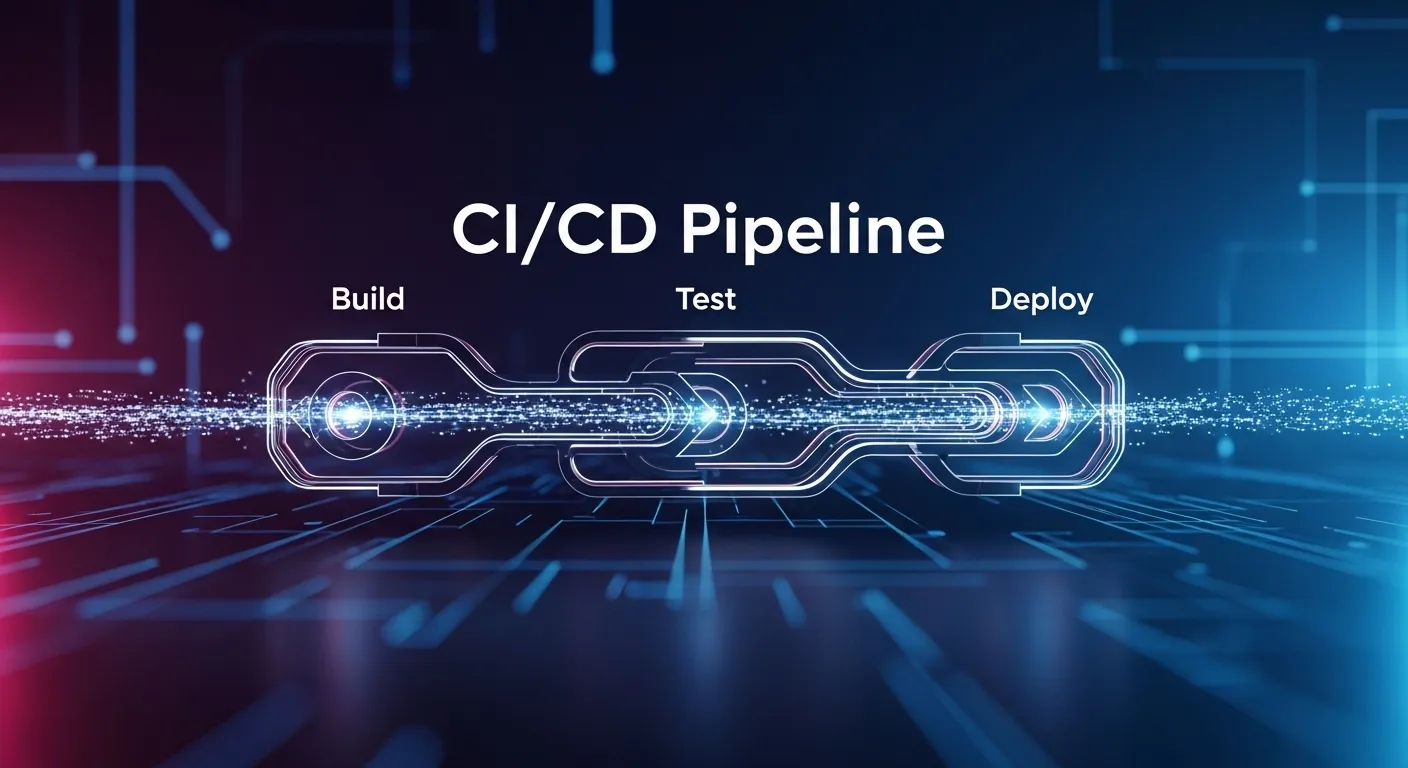
- Deployment & DevOps: Hosting, CI/CD, cloud infrastructure
A full stack developer has a strong understanding of how every layer works together.
Why Full Stack Development Is in High Demand in 2026
Industry Trends Driving Demand
- Rising demand for end-to-end developers
- Remote-first companies preferring multi-skilled engineers
- Increasing use of microservices, serverless architecture, and AI-powered apps
- Fast prototyping needed for startups
Salary Expectations
Full Stack Developers are among the highest-paid roles due to their versatility. Companies look for professionals who can work across entire systems, resulting in competitive salaries and global opportunities.
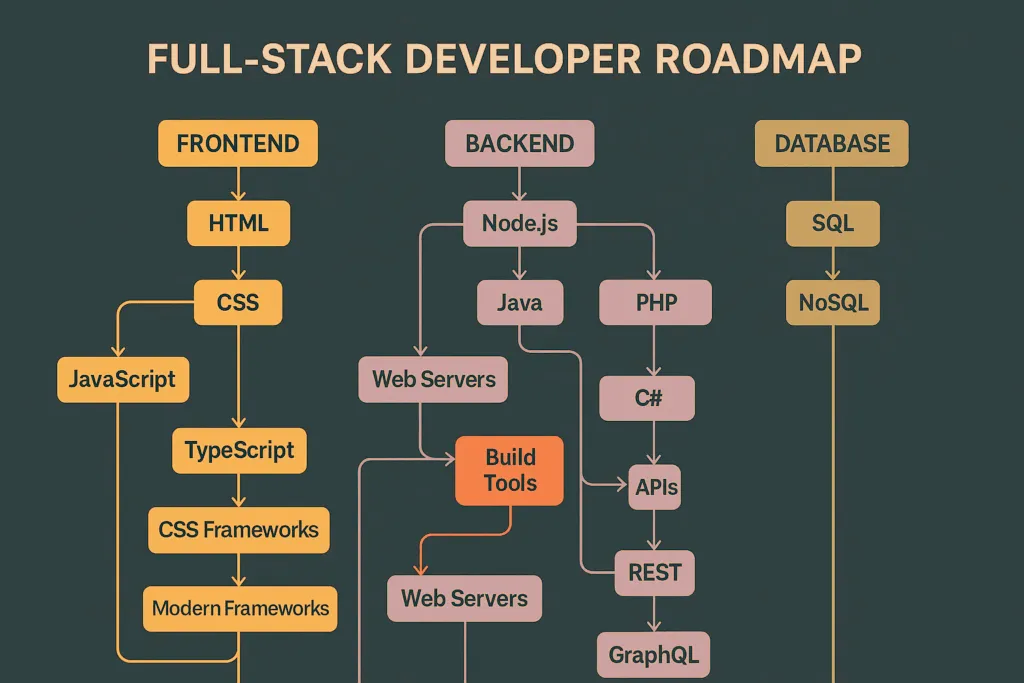
Full Stack Developer Roadmap 2026 (Step-by-Step)
Below is a detailed Full Stack Roadmap with explanations, examples, and actionable steps.
Step 1: Master the Fundamentals
HTML (HyperText Markup Language)
Learn:
- Page structure
- Semantic HTML
- Forms & validation
- Accessibility (A11y)
Example:
Use <header>, <main>, <footer> instead of div-only structures.
CSS (Cascading Style Sheets)
Learn:
- Flexbox & Grid
- Responsive design
- Animations & transitions
- CSS frameworks (Tailwind, Bootstrap)
Action Tip: Rebuild 5 websites from screenshots to improve CSS mastery.
JavaScript Core
Learn:
- Variables, functions, scopes
- DOM manipulation
- Async programming: callbacks, promises, async/await
- ES6+ features
Action Tip: Build a simple To-Do app using vanilla JS before moving to frameworks.
Step 2: Learn a Frontend Framework (React, Vue, or Angular)
React (Most Popular in 2026)
Key concepts:
- Components
- Hooks (useState, useEffect, useContext)
- State management (Redux Toolkit, Zustand)
- React Router
- Server Components (React 19)
Example:
Use React Query for API caching and faster performance.
Vue
Fast and beginner-friendly. Ideal for simplified SPAs.
Angular
Best for enterprise-level, large-scale applications.
Step 3: Deep Dive Into Backend Development
Choose one backend language in 2026:
- Node.js (JavaScript) → Most universal
- Python (Django/FastAPI) → Great for AI-backed applications
- Java (Spring Boot) → Enterprise-grade
- Go → High performance
Node.js + Express.js Roadmap
Learn:
- RESTful APIs
- Middleware
- Authentication
- Error handling
- File uploads
- Session management
Example:
Create APIs for login, signup, and profile update using JWT tokens.
Step 4: Learn Databases (SQL + NoSQL)
SQL Databases
- MySQL
- PostgreSQL
- SQLite
Learn:
- Joins
- Indexes
- Stored procedures
- Query optimization
NoSQL Databases
- MongoDB
- Firebase
- Redis
Use NoSQL when:
- Data structure is flexible
- App scales horizontally
Step 5: Version Control (Git + GitHub)
Learn:
- Git workflow
- Branching
- Pull requests
- Rebase and merge
- GitHub Actions basics
Action Tip: Push all your projects to GitHub to showcase your portfolio.
Step 6: Learn APIs & Web Architecture
Types of APIs
- REST API
- GraphQL
- WebSockets (real-time apps)
Core Web Architecture Concepts
- Client-server model
- MVC pattern
- Authentication vs authorization
- Load balancing
Step 7: Learn DevOps Basics (Essential in 2026)
Key DevOps Topics
- CI/CD
- Docker containers
- Kubernetes basics
- Cloud platforms (AWS, GCP, Azure)
Example:
Deploy a Node.js app using Docker + GitHub Actions on AWS EC2.
Step 8: Learn Testing (Important for 2026 Jobs)
Types of Testing
- Unit Testing
- Integration Testing
- E2E Testing
Tools:
- Jest
- Vitest
- Cypress
- Playwright
Action Tip: Write unit tests for user authentication APIs.
Step 9: Build Real-World Projects
Beginner Projects
- Weather app
- To-Do app
- Calculator
- Blog website
Intermediate Projects
- Ecommerce website
- Chat application (WebSockets)
- Expense tracker
Advanced Projects
- SaaS dashboard
- Social media app
- Real-time collaboration tool
Step 10: Learn System Design (Crucial for 2026 Interviews)
Key Concepts
- Scalability
- Horizontal vs vertical scaling
- Caching
- Load balancers
- Rate limiting
Example Problem
“Design Instagram Login System”
You must explain architecture, caching, DB design, and scaling strategy.
Step 11: Build Your Portfolio & Resume
Include:
- GitHub profile
- 6–10 real projects
- Hosted portfolio (Vercel, Netlify)
- Case studies for projects
Recruiters in 2026 want proof of practical skills, not just certificates.
Full Stack Developer Skills in 2026
Technical Skills
- React + Node.js
- REST + GraphQL
- Docker & CI/CD
- SQL/NoSQL
- Cloud basics
- API security
Soft Skills
- Problem-solving
- Communication
- System thinking
- Team collaboration
Full Stack Developer Roadmap 2026 (Quick Summary Checklist)
✔ HTML, CSS, JavaScript
✔ React or Angular or Vue
✔ Backend (Node.js/Python/Java/Go)
✔ Databases (SQL + NoSQL)
✔ Git + GitHub
✔ APIs
✔ DevOps basics
✔ Testing tools
✔ System design
✔ Build 10 real projects
✔ Create portfolio + resume
This roadmap ensures you're job-ready in 2026.
Short Summary
This blog provided a complete Full Stack Developer Roadmap for 2026, covering frontend, backend, databases, DevOps, testing, system design, and project building. By following this step-by-step guide, you can gain all the skills required to become an industry-ready Full Stack Developer.
Conclusion
The journey to becoming a Full Stack Developer in 2026 is challenging but incredibly rewarding. Whether you’re a student, beginner, or working professional, following this roadmap will give you the exact skills companies are hiring for. Take it step-by-step, build real projects, and stay consistent. With the right approach, you can become a high-demand full stack developer and unlock global career opportunities.
Frequently Asked Questions
Typically 6–12 months with consistent learning and building real projects.