Deploying MERN Apps on Render
Introduction
You built a full-stack MERN application. Your frontend works beautifully. Your backend API runs perfectly. MongoDB stores your data correctly.
Now comes the real challenge developers face:
How do you deploy your MERN app online so users can access it?
Deployment is where many beginners struggle. Managing servers, configuring environments, connecting databases, and handling production builds can feel overwhelming.
Fortunately, modern cloud platforms simplify deployment dramatically and Render has become one of the best platforms for hosting MERN stack applications.
In this complete guide on mern render deployment, you will learn:
- How MERN deployment works in production
- Why Render is ideal for full-stack apps
- Step-by-step deployment process
- Backend and frontend deployment strategy
- Environment variables and database setup
- Common mistakes and professional deployment tips
Whether you are a student, beginner developer, or professional preparing a portfolio project, this tutorial will help you deploy MERN applications confidently.
What Is the MERN Stack
MERN stands for:
- MongoDB database
- Express.js backend framework
- React.js frontend library
- Node.js runtime environment
The MERN stack allows developers to build complete JavaScript applications from frontend to backend.
How MERN Apps Work
1 React handles UI 2 Express manages API routes 3 Node.js runs server logic 4 MongoDB stores application data
Deployment connects all these layers into a live web application.
What Is Render
Render is a modern cloud hosting platform designed for developers.
It allows you to deploy:
- Web services
- Static sites
- Databases
- Background workers
- Full-stack applications
Why Developers Choose Render
- Free hosting tier
- Automatic deployments
- GitHub integration
- Easy environment setup
- SSL certificates included
- Simple UI dashboard
Render removes traditional DevOps complexity.
Understanding MERN Deployment Architecture
Development Environment
- React runs locally
- Node server runs locally
- MongoDB runs locally
Production Environment
- React becomes static build
- Node API runs as web service
- MongoDB hosted remotely
- Frontend communicates via API URL
Deployment transforms local apps into scalable cloud applications.
Preparing MERN App for Deployment
Folder Structure Example
- client folder for React
- server folder for Node and Express
- shared environment variables
Build React Application
npm run build
Serve React from Backend
app.use(express.static("client build"));
Creating Render Account
Step 1 Sign Up
- Visit Render website
- Sign up using GitHub account
Step 2 Push Code to GitHub
git add . git commit -m "mern deployment" git push origin main
Render will pull code automatically.
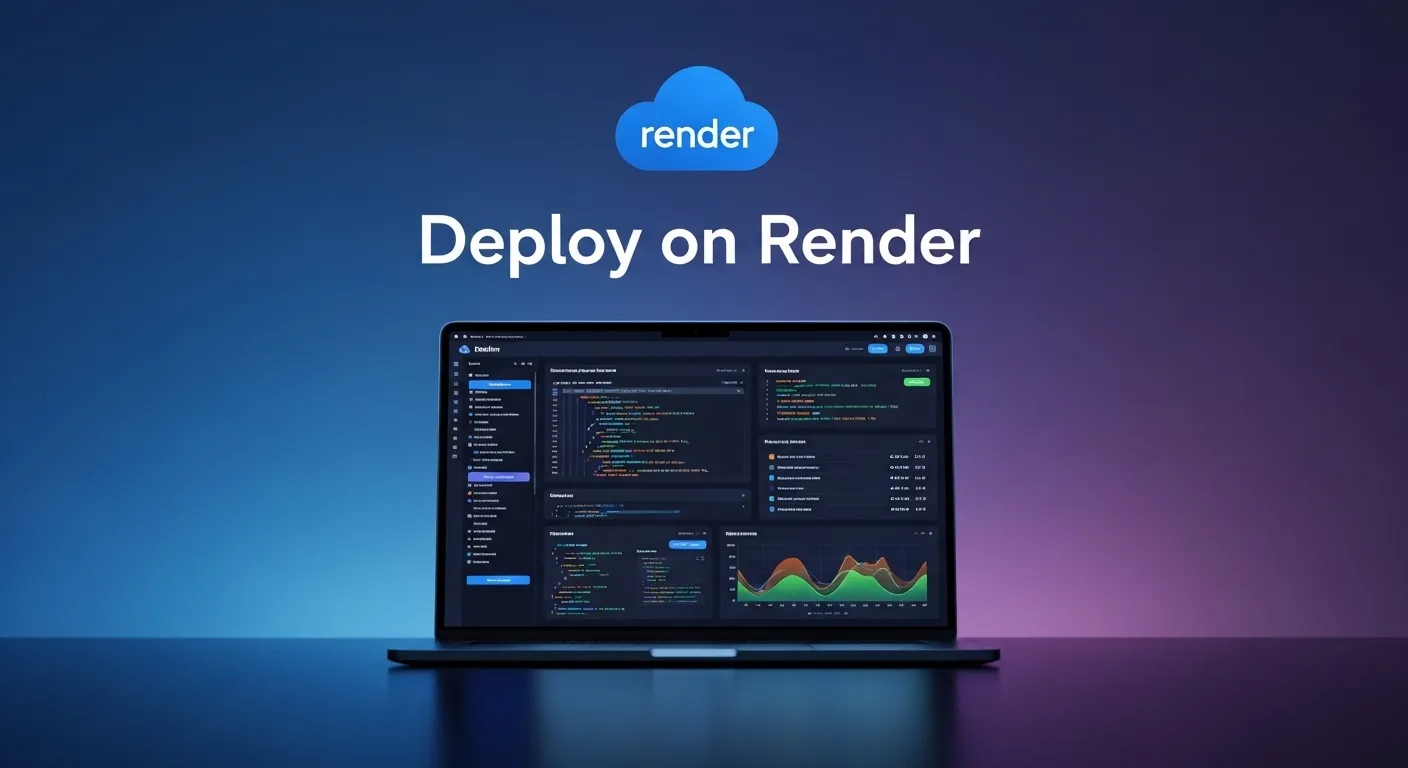
Deploying Backend on Render
Create Web Service
Inside Render dashboard:
1 Click New 2 Select Web Service 3 Connect GitHub repository
Configure Backend Settings
Build Command: npm install
Start Command: node server.js
Render installs dependencies automatically.
Setting Environment Variables
Add environment variables in Render dashboard:
MONGO_URI=your_database_url JWT_SECRET=your_secret
Environment variables secure production apps.
Connecting MongoDB Atlas
Step 1 Create MongoDB Atlas Cluster
- Create free cluster
- Create database user
- Allow network access
Step 2 Copy Connection String
Replace credentials and add to Render environment variables.
Deploying React Frontend on Render
Create Static Site
1 Click New Static Site 2 Select repository 3 Choose client folder
Frontend Build Settings
Build command: npm run build
Publish directory: build
Render automatically deploys optimized frontend files.
Connecting Frontend and Backend
Update API base URL inside React app.
https://your-backend.onrender.com
Handling CORS Configuration
app.use(cors({ origin: "frontend_url" }));
Automatic Deployment with GitHub
Every GitHub push triggers redeployment.
Benefits:
- Continuous deployment
- Faster workflow
- No manual uploads
Managing Environment Differences
Development
- Local database
- Local API URLs
Production
- Remote database
- Hosted API URLs
Performance Optimization for MERN Deployment
Backend Optimization
- Enable compression middleware
- Use caching strategies
- Optimize database queries
Frontend Optimization
- Lazy load components
- Minimize bundle size
- Use production builds
Optimized apps load faster and improve SEO performance.
Common MERN Render Deployment Errors
Application Crashes After Deployment
Usually caused by missing environment variables or incorrect start command.
Database Connection Errors
Check MongoDB IP whitelist and connection string.
Frontend Not Loading
Often due to wrong API URL configuration.
Render vs Other Deployment Platforms
| Platform | Difficulty | Free Tier | MERN Friendly |
|---|---|---|---|
| Render | Easy | Yes | Excellent |
| Heroku | Medium | Limited | Good |
| AWS | Advanced | Complex | Powerful |
| Vercel | Easy | Yes | Frontend Focus |
Render offers the best balance for beginners.
Security Best Practices
- Use HTTPS only
- Protect environment variables
- Validate API inputs
- Enable authentication middleware
- Avoid exposing secrets in frontend
Real World Use Cases
- Portfolio projects
- SaaS startups
- Admin dashboards
- Ecommerce platforms
- Learning projects
Render is production-ready.
Professional Deployment Tips
- Keep frontend and backend separate
- Use environment variables properly
- Monitor logs regularly
- Test production build locally
- Enable automatic deploys
Scaling MERN Apps on Render
As applications grow:
- Upgrade instance plans
- Use managed databases
- Add caching layers
- Implement load balancing
Render supports smooth scaling.
Short Summary
This mern render deployment guide explained how to deploy full-stack MERN applications using Render by setting up backend services, hosting React frontend, connecting MongoDB Atlas, configuring environment variables, and enabling automatic deployments.
Conclusion
Deployment transforms a project into a real product. Render simplifies DevOps so developers can focus on building features instead of managing infrastructure.
By mastering MERN deployment on Render, developers gain an essential professional skill required for freelancing, job interviews, and production development.
Frequently Asked Questions
Deploying MongoDB Express React and Node applications using Render hosting.