
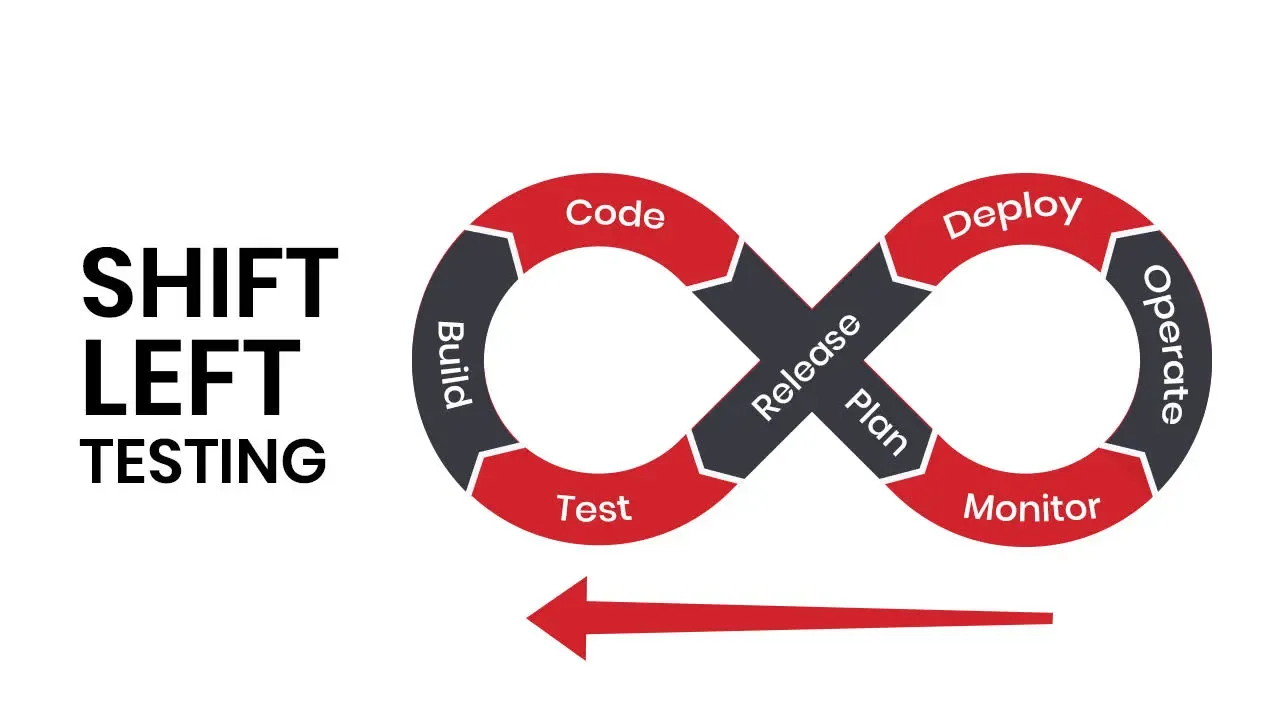
Software development has evolved dramatically over the last decade. Agile, DevOps, CI/CD pipelines, automation, and cloud testing have become standard practices in modern engineering teams. But one principle stands out as a true game-changer: Shift Left Testing.
Shift Left Testing helps teams test earlier, detect defects faster, improve quality, and reduce release risks—ultimately saving time, cost, and effort. When paired with the right shift left testing tools, organizations can dramatically speed up development while enhancing product reliability.
Whether you’re a QA beginner, software tester, developer, or IT professional, this guide will walk you through everything you need to know about Shift Left Testing—what it is, why it matters, how it works, best practices, and the top tools used by industry leaders.
Shift Left Testing is a development practice where testing activities are moved earlier (“shifted left”) in the SDLC. Instead of waiting for completed builds or UI screens, testing begins:
- During requirement analysis
- During design
- During development
- During early code creation
This helps teams find defects early, reduce rework, and release better software faster.
Why “Left”?
Visually, on the SDLC timeline:
Requirements → Design → Development → Testing → Deployment
|------------ LEFT ---------------|-------- RIGHT ----------|
Traditionally, testing was far to the right. Shift Left pushes quality activities left—towards the start.
| Area | Traditional Testing | Shift Left Testing |
|---|---|---|
| Testing Timing | End of SDLC | Early in SDLC |
| Bug Detection | Late | Early |
| Cost of Fixing Bugs | High | Low |
| Developer Feedback | Slow | Fast |
| Release Quality | Uncertain | Predictable |
| Automation | Optional | Essential |
| Responsibility | Mostly QA | Shared Dev + QA |
1. Traditional Shift Left
Moves testing earlier in waterfall.
2. Incremental Shift Left
Testing happens at each integration stage.
3. Agile/DevOps Shift Left
Testing starts at the beginning of every sprint.
4. Model-Based Shift Left
Testing begins at requirement modeling.
Top Shift Left Testing Tools
1. JUnit / NUnit / TestNG (Unit Testing Tools)
Why they matter:
-
Unit testing is the foundation of shift left.
-
These tools help developers:
-
Test individual methods
-
Catch logic errors early
-
Maintain code quality
Best for:
Java, C#, Kotlin, and enterprise applications.
2. SonarQube (Static Code Analysis)
What it does:
- Checks code quality
Detects security vulnerabilities
-
Enforces coding standards
-
Shows maintainability issues
Why it’s important:
Static analysis is the earliest form of testing.
3. Postman (API Testing)
Features:
-
Manual API calls
-
Automated API tests
-
Mock server support
-
CI/CD integration
Why it fits shift left:
APIs are tested before UI is built.
4. Rest Assured (Automated API Testing)
Why QA teams love it:
-
Easy integration with Java
-
Works with TestNG/JUnit
-
Perfect for CI/CD pipelines
Ideal for:
Microservices testing.
5. GitHub Actions / Jenkins / GitLab CI (CI/CD)
These tools power shift left by:
-
Running tests automatically
-
Blocking faulty code
-
Providing instant feedback
-
Enabling continuous testing
6. JMeter / Gatling (Performance Testing)
Why:
-
Performance issues become more expensive later.
-
Shift left performance testing catches bottlenecks early.
7. BrowserStack / LambdaTest (Cross-Browser Testing)
How they help:
-
Test UI early using cloud browsers
-
Run automation parallelly
-
Validate UI behavior before release
8. Cucumber / SpecFlow (BDD Testing)
Perfect for early requirement validation.
9. ESLint / PMD / Checkstyle (Code Review Tools)
Helps identify:
-
Vulnerable dependencies
-
Security risks
-
Library weaknesses
-
EARLY in SDLC.
10. OWASP Dependency-Check (Security)
Helps identify:
-
Vulnerable dependencies
-
Security risks
-
Library weaknesses
EARLY in SDLC.
Shift Left Testing Best Practices
✔ Start testing during requirements
✔ Test APIs before UI
✔ High coverage for unit tests
✔ Automate everything
✔ Integrate testing into CI/CD
✔ Use static analysis tools
✔ Test small and frequently
✔ Include performance early
Conclusion
Shift Left Testing is essential for modern development. By adopting early testing practices and leveraging tools that support this approach, teams build more reliable software, reduce rework, and release faster.
FAQs (Schema-Friendly)
1. What is Shift Left Testing?
Shift Left Testing moves testing activities earlier in the SDLC.
2. Why is Shift Left Testing important?
It reduces costs, speeds development, and improves quality.
3. Which tools support Shift Left Testing?
JUnit, Postman, SonarQube, Jenkins, Rest Assured, Cucumber, and more.
4. Is Shift Left Testing only for QA?
No, it involves developers, testers, DevOps, and business teams.
5. Does Shift Left eliminate final testing?
No—final testing still exists, but many defects are prevented early.


