
Software evolves fast. New features roll out, bugs get fixed, UI gets redesigned, and performance is improved. But every change introduces risk — the risk of breaking something that previously worked perfectly.
That’s where regression testing comes in.
Regression testing helps ensure that your software continues to function correctly even after code changes, enhancements, or system updates. It acts like a safety net, catching unexpected bugs before they reach your users.
In this detailed guide, you’ll learn:
- What regression testing is
- Why regression testing tools matter
- Types of regression testing
- Real-world examples
- How to perform regression testing
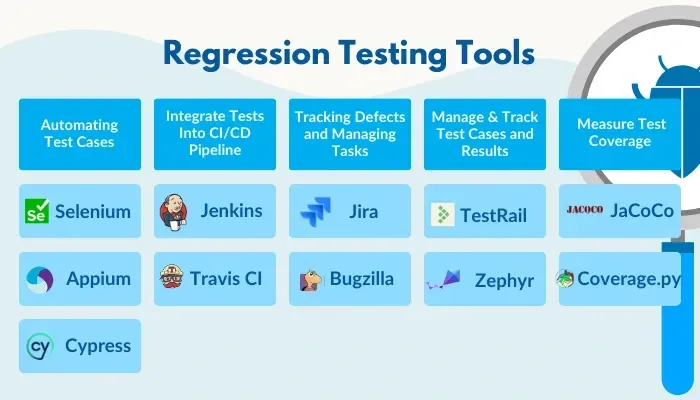
- Best tools to use
- Best practices and pitfalls
- FAQs, summary, and meta details
Let’s dive into one of the most essential components of software quality.
Regression testing is crucial because modern software is dynamic — features are constantly added and improved.
1. Prevents Old Functionality from Breaking
2. Saves Cost & Time
3. Essential for Agile & DevOps
4. Maintains User Trust
5. Improves Code Quality
1. Full Regression Testing
2. Partial Regression Testing
3. Unit Regression Testing
4. Selective Regression Testing
5. Retest-All Testing
Step 1: Identify Test Cases
Step 2: Prioritize
Step 3: Build a Regression Suite
Step 4: Manual or Automated Execution
Step 5: Log & Retest
Step 6: Maintain Your Suite
Manual vs Automated Regression Testing
| Manual Testing | Automated Testing |
|---|---|
| Slow | Fast |
| Human-prone | Accurate |
| Low initial cost | High initial setup |
| Hard to scale | Easy to scale |
Benefits of Regression Testing
- Ensures stability
- Reduces risk
- Improves customer satisfaction
- Saves time
- Speeds releases
Best Practices for Effective Regression Testing
- Focus on critical flows
- Keep suite lean
- Automate repetitive tests
- Use CI/CD
- Maintain traceability
- Fix flaky tests
Conclusion
Regression testing is the backbone of reliable software. It ensures stability amid constant updates and protects applications from unexpected failures. With proper tools, practices, and automation, teams can deliver high-quality software confidently and consistently.
FAQs
1. What is regression testing?
Testing to confirm new changes haven't broken existing functionality.
2. When is regression testing required?
After new features, bug fixes, refactoring, or system updates.
3. Which tools are best for regression testing?
Selenium, Cypress, Playwright, Katalon, TestComplete, BrowserStack.
4. Is regression testing the same as retesting?
No. Retesting verifies a fixed bug; regression checks overall impact.
5. Why automate regression testing?
Automation speeds execution and supports continuous delivery.


