
Introduction
In the world of automated testing, there's a big difference between a few standalone test scripts and a professional Automation Framework. A well-designed framework is more than just code; it's a structural foundation that promotes reusability, simplifies maintenance, and provides meaningful insights into the health of your application.
As organizations scale their testing efforts in 2026, a poorly architected framework will quickly become a liability—expensive to maintain and prone to flakiness. In this guide, we'll explore the essential principles of designing a world-class Playwright automation framework that can scale from 10 to 10,000 tests.
The Core Objectives of Framework Design
A great automation framework should aim for four key goals:
- Maintainability: When the UI changes, you should only have to update a single locator in a single file to fix all relevant tests.
- Scalability: Adding a new test should be a matter of minutes, not hours of setup.
- Readability: Tests should be written in a way that even non-technical stakeholders can understand the intent.
- Reliability: The framework should provide consistent results across local and CI environments.
1. Choosing the Right Language: TypeScript
While Playwright supports multiple languages, TypeScript is the industry standard for framework design in 2026. Its strong typing system catches errors at compile-time, provides excellent autocomplete (IntelliSense) for locators, and makes large-scale refactoring significantly safer.
2. Implementing the Page Object Model (POM)
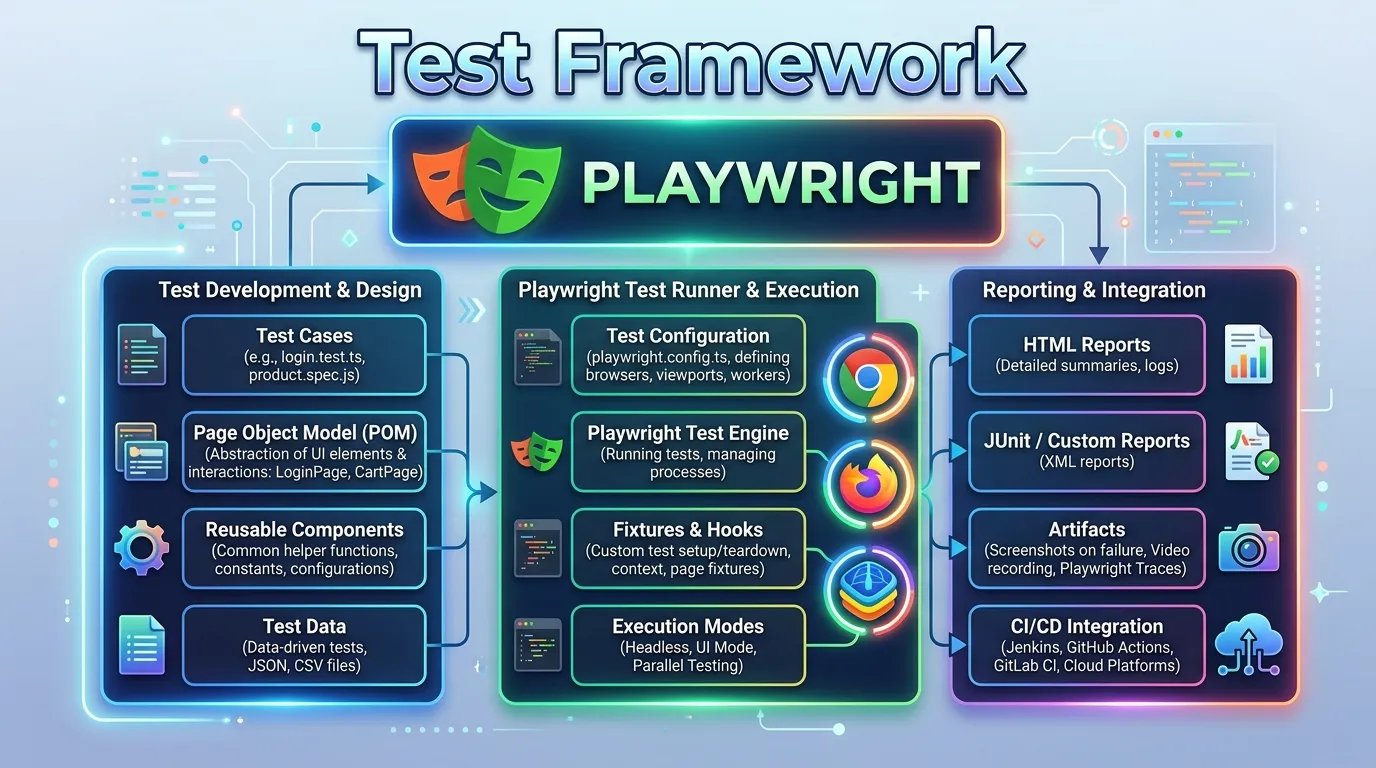
The Page Object Model remains the most effective pattern for organizing automation code. By separating your Locators (element definitions) and Actions (interaction logic) from your Tests (assertion logic), you create a clean hierarchy.
Framework Structure Example:
/pages: contains class files for each page (e.g.,LoginPage.ts)./tests: contains the actual.spec.tsfiles./utils: helper functions for dates, strings, or database calls./fixtures: custom Playwright fixtures for state management.
3. Data-Driven Testing (DDT)
Hardcoding data inside your tests is a recipe for maintenance nightmares. A professional framework should separate test logic from test data.
- External Data: Store test data in
.json,.csv, or.yamlfiles. - Environment Management: Use
.envfiles to switch between Dev, Staging, and Production URLs and credentials.
import testData from './data/user-profiles.json';

for (const user of testData) {
  test(`Should login with user: ${user.name}`, async ({ page }) => {
    // perform login
  });
}
4. Advanced State Management with Fixtures
Instead of using repetitive beforeEach hooks to log in or set up a cart, use Playwright Fixtures. Fixtures allow you to "inject" a specific state into a test only when it's requested. This keeps your test files lean and focused on the actual assertions.
5. Integrating Custom Reporting and CI/CD
A framework is only as good as the feedback it provides.
- HTML Reporter: Playwright's built-in reporter is excellent, but you can also integrate with Allure or ReportPortal for more advanced analytics.
- CI Sharding: Ensure your framework design supports sharding so that your tests can be distributed across multiple machines in your CI pipeline.
6. Error Handling and Logging
When a test fails, you need to know why—quickly.
- Custom Logs: Add meaningful log statements at critical points in your execution.
- Screenshot/Video Metadata: Ensure your framework automatically attaches screenshots and trace files to your test reports on failure.
Conclusion
Designing a Playwright framework is a strategic investment. By following these architectural principles, you're not just writing tests; you're building a software product whose purpose is to validate other software products. In 2026, where the speed of deployment is everything, a robust automation framework is your team's most powerful tool for maintaining quality at scale.
Frequently Asked Questions
Yes! Although Playwright provides alternatives like getByRole, the structural benefits of POM for organizing large amounts of locators are still unmatched.