
Introduction
In the rapidly evolving world of software development, the role of Quality Assurance (QA) has never been more critical. As users demand faster, more reliable, and more immersive web experiences, the tools we use to ensure that quality must keep pace. While older automation frameworks like Selenium laid the groundwork, Playwright has emerged as the clear leader for modern QA automation.
Playwright represents a step-change in how we interact with and test the web. In this guide, we'll explore the top benefits of using Playwright for your QA suite and how it empowers teams to deliver high-quality software with confidence in 2026.
1. Exceptional Speed and Efficiency
The most immediate benefit of Playwright is its raw speed. By communicating directly with browser engines via the DevTools protocol, Playwright eliminates the overhead of a separate WebDriver binary.
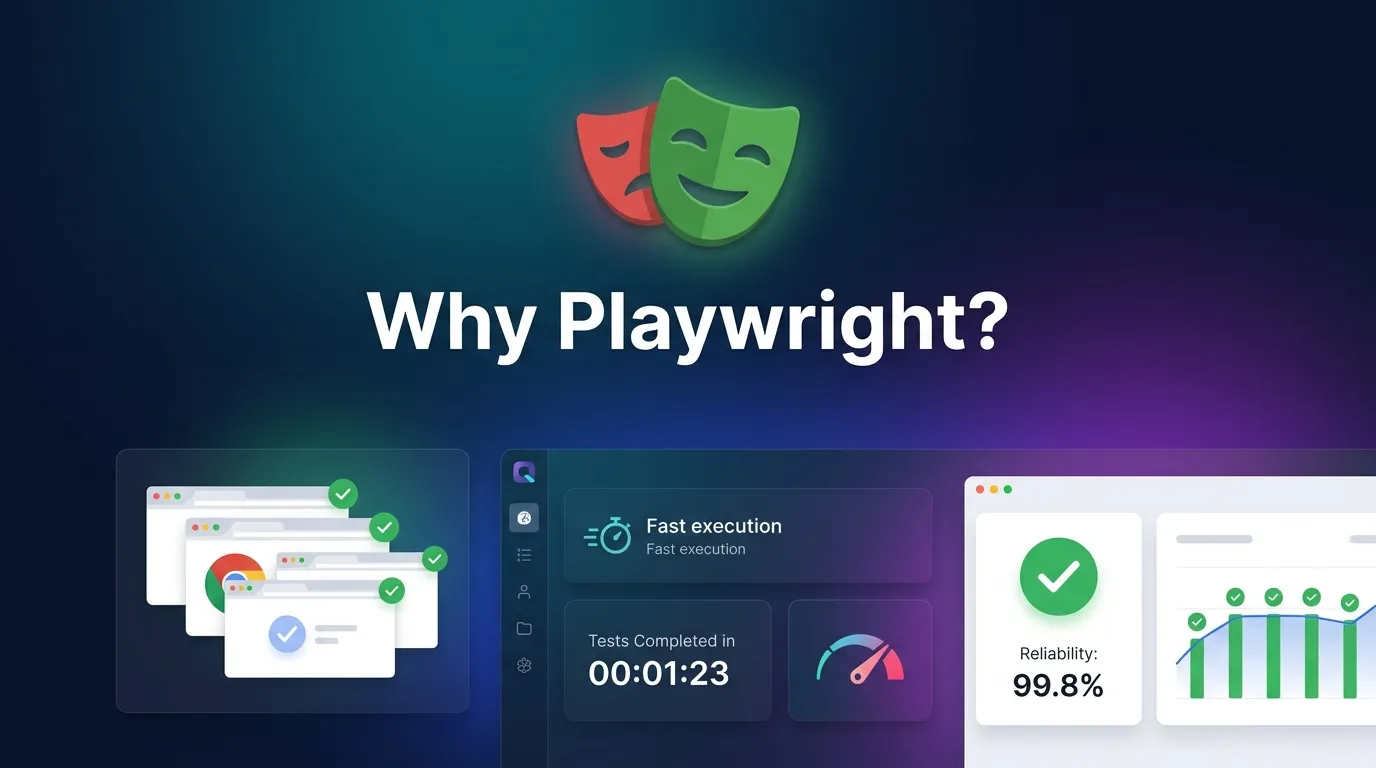
- Fast Execution: Tests run significantly faster than in Selenium, providing nearly instantaneous feedback to developers.
- Parallelism by Default: Playwright is built to run tests in parallel, allowing for massive scale and reduced total suite time in CI/CD pipelines.
2. Unmatched Reliability with Auto-waiting
The number one enemy of automation is flakiness—tests that fail intermittently for no apparent reason. Most flakiness is caused by race conditions between the browser and the test script.
Playwright's Solution: Playwright's Auto-waiting mechanism ensures that elements are visible, stable, and ready to receive events before any action is performed. This virtually eliminates the need for manual sleep or explicit wait commands, making your tests remarkably reliable.
3. Native Cross-Browser Support
Testing across different browsers is essential, but it used to be a technical nightmare. Playwright provides native support for all major browser engines, all within a single API.
- Unified Testing: Write a test once and run it on Chromium, Firefox, and WebKit (Safari) without modifying a single line of code.
- True Mobile Emulation: Playwright's device profiles allow you to accurately emulate mobile browsers to ensure your responsive designs are working across all platforms.
4. Superior Debugging and Observability
When a test fails, you need to know why—fast. Playwright provides a suite of advanced debugging tools that make post-failure analysis a breeze.
- Trace Viewer: A post-test inspection tool that records network activity, console logs, and a full snapshot of the DOM at every step.
- Inspector: Step through your tests line-by-line while watching the browser window in real-time.
- Screenshots and Videos: Automatically capture visual evidence of every failure to help document and reproduce bugs.
5. Modern Architectures and State Management
Playwright was designed for the needs of modern, large-scale automation frameworks.
- Page Object Model (POM): Playwright encourages a clean, structured approach to organizing locators and actions.
- Fixtures: A powerful dependency injection system that allows for advanced state management and clean, encapsulated setup and teardown.
- Global Setup/Teardown: Optimize your suite by handling expensive operations (like login or database seeding) once for the entire run.
Conclusion
The benefits of Playwright are clear: it is faster, more reliable, and more powerful than anything that came before it. By adopting Playwright for your QA automation, you're not just choosing a tool; you're choosing a standard for quality in 2026. It empowers your team to move faster, release more frequently, and deliver a more stable and reliable product to your users.
Frequently Asked Questions
No, Playwright is remarkably easy to set up and is just as effective for small start-ups as it is for global corporations. Its speed and reliability provide immediate value regardless of the project's scale.


