Introduction
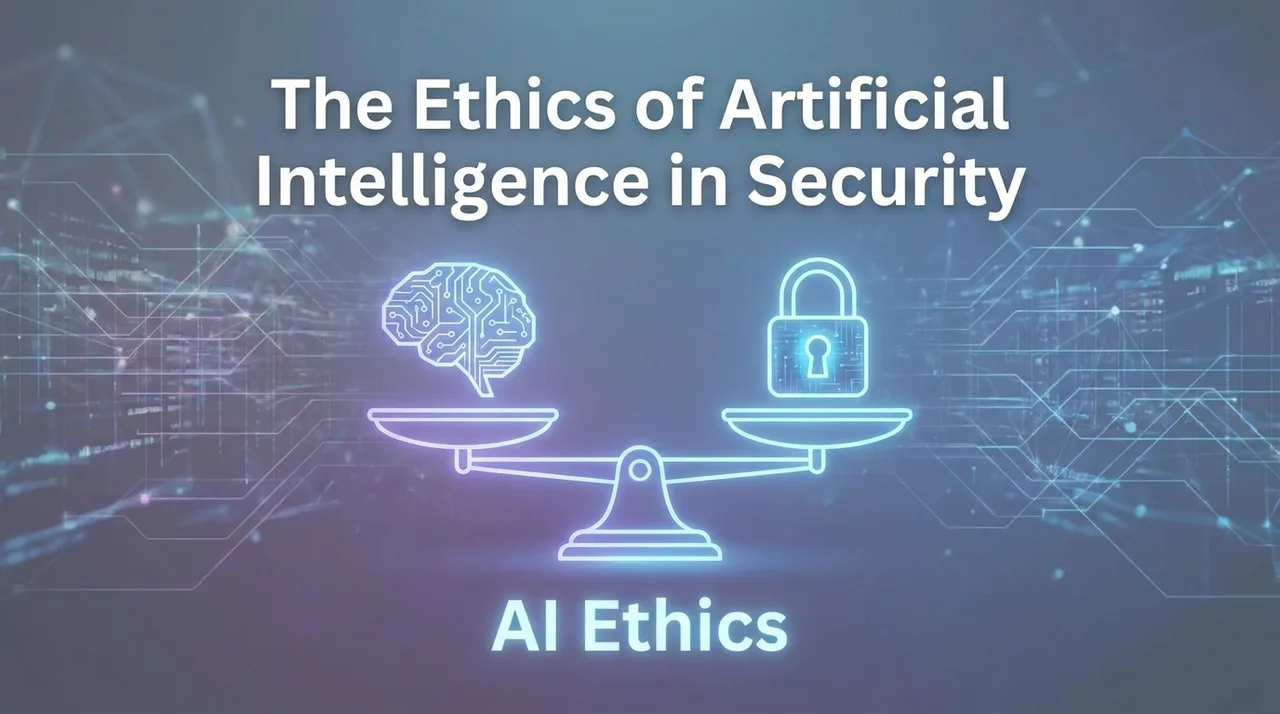
In 2026, Artificial Intelligence is no longer just a "tool" for cybersecurity; it is the core engine of our defense. AI identifies threats, blocks malicious traffic, and even writes patches for new vulnerabilities. But as we hand the "keys to the kingdom" to automated algorithms, we must ask ourselves: just because an AI can make a decision, should it?
The intersection of AI and security has created a brand-new field of study: The Ethics of AI in Security. This is not just a philosophical debate; it is a critical business and human rights issue. From algorithmic bias that targets specific demographics to the lack of accountability when an autonomous system "breaks" a critical network, the ethical challenges are massive.
In this guide, we will explore the core ethical dilemmas facing the security industry in 2026:
- Algorithmic Bias and Discrimination in Threat Detection
- The "Black Box" Problem: Explainability and Trust
- Accountability: Who is Responsible When the AI Fails?
- The Weaponization of AI: Defense vs. Offense
- The Role of Human Oversight (HITL) in Autonomous Defense
Dilemma 1: Algorithmic Bias and Discrimination
AI models are only as good as the data they are trained on. If that data contains historical human biases, the AI will learn and "scale" those biases.
Bias in "User Behavior Analytics"
In cybersecurity, AI is often used to flag "unusual behavior." However, if the AI is trained on data that unfairly associates specific geographic regions or cultural habits with "risk," it may begin to flag innocent employees based on their background rather than their actions. In 2026, organizations must perform "Bias Audits" on their security AI to ensure they aren't creating a digital version of structural discrimination.
Dilemma 2: The "Black Box" Problem
One of the biggest ethical hurdles is that advanced AI (like Deep Learning) can be a "Black Box." It makes a decision, but it cannot explain why.
Trust vs. Visibility
If an AI security tool decides to block a critical $1 million transaction because it "feels suspicious," the business needs to know why. If the AI cannot explain its reasoning, it is difficult for humans to trust it. The field of "Explainable AI" (XAI) is trying to solve this by creating models that can provide a natural-language explanation for every decision they make. In 2026, "Explainability" is becoming a legal requirement for security software.
Dilemma 3: Accountability and Responsibility
If a human security guard makes a mistake, we know who to hold responsible. But who is responsible when an autonomous AI system makes a catastrophic error?
The Legal Vacuum
Is it the software developer who wrote the code? The data scientist who trained the model? Or the company that deployed it? Currently, the legal framework is struggling to keep up. Ethics dictates that we must maintain "Ultimate Human Accountability," meaning that a human being must always have the "Big Red Button" to override an AI as well as the ultimate legal responsibility for the AI's actions.
Dilemma 4: The Weaponization of AI
The same AI that protects a bank from a hacker can be used by the hacker to attack the bank.
The Arms Race
In 2026, we are seeing the rise of "Malicious AI" that can mutate its own code to bypass firewalls or create hyper-realistic deepfakes for social engineering. The ethical question is: should defensive researchers publish their findings about how to build powerful security AI, knowing that attackers will read those papers and build offensive counterparts? The industry is moving toward "Responsible Disclosure" for AI models, similar to how we handle software vulnerabilities today.
The Future of AI Autonomy: The "Sovereign Defense" Paradox
As we move toward 2027, we face a final ethical paradox: if we don't give our AI the power to act autonomously, we will lose to attackers whose AI has already been given that power.
The "Speed Gap"
A human analyst takes minutes to respond to an alert. A malicious AI can compromise a network in milliseconds. If we require a "Human-in-the-Loop" for every defensive action, our defense will always be too slow. The ethical dilemma is whether we should build "Sovereign Defensive AI" that can change its own firewall rules and shut down servers without human permission. It is a choice between a "Slow, Human-Controlled Defense" that is doomed to fail, or a "Fast, Autonomous Defense" that we might not be able to control.
Dilemma 5: The Impact on the Cybersecurity Workforce
One of the most immediate ethical concerns is the replacement of human jobs with automated systems.
De-skilling the Industry
As AI takes over the "Tier 1" tasks of log reading and basic alert triage, there is a risk that the next generation of security professionals will never learn the fundamentals. If an entry-level analyst doesn't spend time looking at raw logs because the AI does it for them, they may not develop the "gut instinct" needed to handle a complex crisis where the AI fails. We have an ethical obligation to ensure that AI is a "Teacher," not just a "Replacement."
Global AI Governance Frameworks
In 2026, we are finally seeing the emergence of international laws governing the use of AI in security.
The EU AI Act and Beyond
The European Union's AI Act has set the global standard, categorizing security AI as "High Risk." This requires companies to provide detailed documentation on how their models were trained, how they handle bias, and what level of human oversight is in place. Similar frameworks are being adopted in the US and Asia, creating a "Global Baseline" for ethical AI. For a cybersecurity firm in 2026, compliance is no longer just about protecting data; it's about proving the "morality" of your code.
Case Study: The AI That Fired the Wrong Employee
In early 2025, a mid-sized tech company implemented an autonomous "Insider Threat Detection" system. The system was designed to automatically revoke the access of any employee it deemed to be a high risk of exfiltrating data.
One Monday morning, a senior developer found themselves locked out of every system, including the office building itself. The AI had flagged them because they had downloaded 200GB of data over the weekend. What the AI didn't "know" (because it lacked context) was that the developer had been authorized by the CTO to perform a one-time migration of a legacy database during the off-hours.
Because the system was "Fully Autonomous" with no human-in-the-loop for the final decision, the developer was effectively "digitally fired" without a single human reviewing the case. This incident led to a massive lawsuit and highlights the ethical danger of removing human judgment from high-stakes security decisions.
Conclusion
Artificial Intelligence is the greatest weapon we have against cybercrime, but it is a double-edged sword. This ai security ethics guide emphasizes that the most secure organizations in 2026 won't be those with the "smartest" AI, but those with the most "ethical" AI.
We must build security systems that are transparent, accountable, and unbiased. Technology without ethics is simply a more efficient way to make mistakes. As we move into an increasingly automated future, our primary goal must be to ensure that AI serves the human interest, providing security that is not only powerful but also just. In 2026, the human element is not the "weakest link"; it is the "moral compass" that keeps the machine on the right path.
Frequently Asked Questions
Yes. AI doesn't have "opinions," but it is a pattern-matching machine. If it is given a dataset where most "insider threats" happened to be contractors rather than full-time employees, it may "learn" that being a contractor is a risk factor. This leads to the unfair profiling of contractors, even if their behavior is perfectly safe.