Introduction
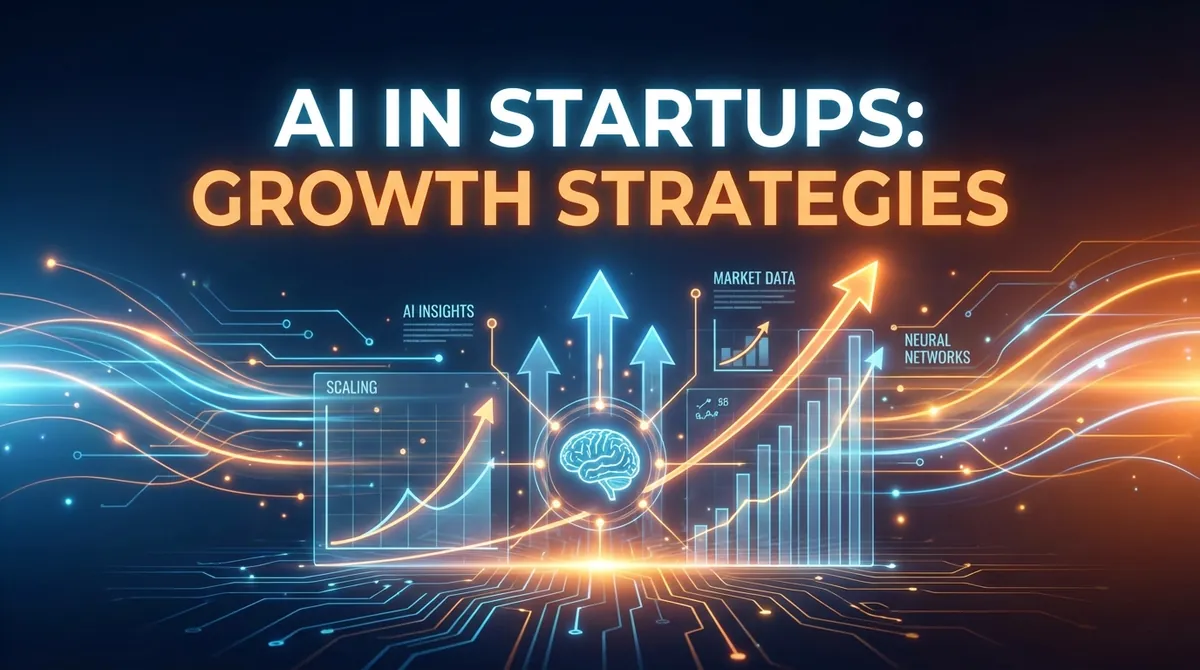
In the high-stakes world of venture-backed startups, speed is the ultimate currency. In 2026, the traditional startup playbook has been rewritten by Artificial Intelligence. The ability to achieve product-market fit, scale user acquisition, and optimize operational costs no longer depends solely on the size of the engineering team or the depth of the marketing budget — it depends on the sophistication of the startup's AI strategy.
AI has transitioned from being a "feature" to becoming the core engine of the modern startup. Startups that leverage AI effectively can achieve in months what used to take years, disrupting established incumbents with agility and precision. However, this rapid growth path is fraught with unique technical challenges and significant cybersecurity risks that can derail a promising venture if not managed from day one.
This article explores how startups can weaponize AI for exponential growth in 2026, details specific strategies for various stages of the startup lifecycle, and outlines the essential security framework required to protect a startup's most valuable asset: its proprietary AI and data.
1. AI-Powered Product-Led Growth (PLG)
Product-Led Growth (PLG) has become the dominant strategy for startups in 2026, and AI is its most powerful catalyst. PLG relies on the product itself to drive acquisition, expansion, and retention.
Hyper-Personalised User Onboarding
First impressions are everything. AI allows startups to deliver bespoke onboarding experiences for every user. By analyzing a user's initial interactions and intent, AI can dynamically adjust the interface, highlight relevant features, and provide context-aware tutorials, significantly reducing "time to value" and churn.
AI-Driven Feature Recommendation
Similar to how Netflix recommends shows, B2B and SaaS startups use AI to suggest features or workflows that a specific user hasn't tried yet but is likely to find valuable. This drives deep product engagement and creates natural "upsell" opportunities into higher-tier plans without the need for aggressive sales interventions.
Predictive Churn Reduction
AI models can identify "unhappy" user patterns long before the user actually cancels their subscription. High-growth startups use these insights to trigger automated "re-engagement" workflows — perhaps offering a targeted discount, a personalized training session, or a new feature preview to keep the user within the ecosystem.
2. Scaling Marketing and Sales with AI
For a startup, "Growth" often translates to efficient customer acquisition cost (CAC) management. AI allows startups to run marketing and sales operations that are both massive in scale and intimate in personalization.
Programmatic SEO at Scale
High-growth startups use AI to generate thousands of high-quality, SEO-optimized landing pages targeting niche keywords. By identifying underserved search queries and generating authoritative content to match, startups can drive massive amounts of organic traffic with minimal human editorial overhead.
AI-Enhanced Outbound Sales
The era of generic "cold emailing" is over. AI agents now research prospects in seconds, analyzing their LinkedIn profiles, company earnings reports, and recent news to craft highly personalized outreach messages. This drastically improves response rates and allows a single SDR (Sales Development Representative) to perform the work of an entire traditional sales pod.
Real-Time Market and Competitor Intelligence
AI tools continuously monitor competitor pricing, feature releases, and customer sentiment across social media and review sites. This allows startups to pivot their messaging or pricing in real-time, staying one step ahead of larger, slower-moving competitors.
3. Fundraising in the AI Era
Founders in 2026 are using AI not just to build their products, but to secure the capital required to scale them.
AI-Driven Pitch Deck Optimization
Startups use AI to analyze successful pitch decks in their niche, identifying the narrative structures, data visualizations, and "trigger words" that resonate with specific Venture Capital (VC) firms. AI can even simulate "investor Q&A" sessions, helping founders prepare for the toughest technical and financial questions.
Targeting the Right Investors
Rather than a "spray and pray" approach to fundraising, startups use AI to map the entire VC landscape. AI identifies which investors have recently backed similar companies, who has "dry powder" (available capital) to deploy, and which partner at a firm is most likely to champion a specific type of technology.
4. Cyber Security: Protecting the Growth Engine
For a startup, a major data breach or a compromise of their proprietary AI models isn't just a PR headache — it's often a terminal event. Investors in 2026 conduct rigorous "Security Due Diligence" before writing a check.
Protecting Intellectual Property (IP)
A startup's proprietary training data and model weights are its competitive moat. If an attacker gains access to your model parameters (Model Extraction Attack), they can effectively clone your entire product for a fraction of the cost. Startups must implement strict encryption, access logs, and "API rate limiting" to prevent automated model theft.
Securing the Data Pipeline
Startups often rely on third-party data to train their models. If this data is "poisoned" (Data Poisoning Attack) by a competitor or a malicious actor, the resulting AI model will be flawed, potentially making biased or harmful decisions that ruin the brand's reputation and invite regulatory scrutiny.
"Shift Left" Security Culture
In the "move fast and break things" culture of a startup, security is often an afterthought. However, high-growth startups in 2026 adopt a "Shift Left" approach — integrating security checks directly into the code development and AI training pipeline. It is much cheaper to fix a vulnerability during development than it is to patch an active breach in a production environment.
Short Summary
AI is the primary growth engine for startups in 2026, enabling rapid product-market fit through personalized onboarding, efficient scaling via automated marketing, and strategic fundraising through data-driven investor targeting. However, the speed of AI-driven growth must be balanced with a robust "Security First" approach. Protecting proprietary IP, securing data pipelines, and building a culture of early-stage cybersecurity is essential for any startup aiming to survive the transition from "disruptor" to "market leader."
Conclusion
The window of opportunity for startups to use AI as a differentiator is closing as AI becomes the baseline for all business infrastructure. The winners of 2026 and beyond will be the founders who don't just "add AI" to their product, but who use AI to fundamentally rethink how software is built, sold, and secured. Speed is vital, but sustainable growth is built on the twin pillars of technical innovation and rigorous security.
Frequently Asked Questions
With the power of AI coding assistants and automation, we are seeing "One-Person Unicorns" — startups achieving multi-million dollar valuations with just a founder and an array of AI agents handling everything from engineering to customer service.