Introduction
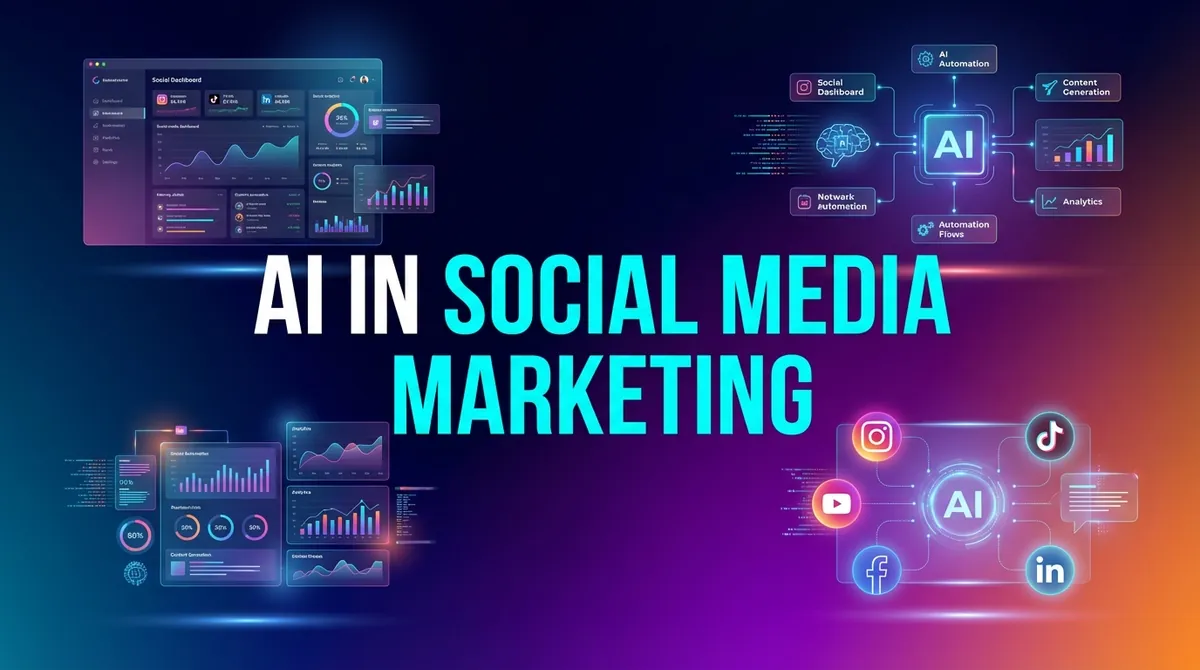
In 2026, the global social media landscape is powered by a massive, invisible intelligence. Artificial Intelligence is the engine behind everything we experience on our feeds—from the algorithms that curate our content to the bots that manage our customer service and the tools that creators use to produce viral videos. For brands and influencers, "Social Media Management" has evolved from a manual job of "posting and replying" to a high-tech discipline of "AI Orchestration" and "Digital Trust Management."
However, as social media becomes an AI-driven environment, it has also become the primary breeding ground for "Industrial-Scale Deception." The same technology that allows a brand to reach millions of people instantly is also being used to spread perfectly realistic deepfakes, launch massive bot-driven "Cancel Culture" campaigns, and perform surgical-grade social engineering attacks. In 2026, the success of a social media strategy depends not just on your "Engagement Rate," but on your "Security Integrity."
This comprehensive guide explores the state of AI in social media management in 2026, analyzes the tools powering the digital town square, and provides the essential cybersecurity protocols required to protect your brand and your community from the dark side of the AI social web.
1. The Proactive AI Social Media Manager
Autonomous Content Sourcing and Distribution
The role of the social media manager has shifted to high-level strategy. AI in 2026 handles the "Trivialities." It monitors global news and cultural trends in real-time, identifying the perfect moment to post relevant content. It can automatically "re-purpose" a single video into a dozen different formats for TikTok, Instagram, and LinkedIn, optimizing the captions and hashtags for each platform's specific algorithm.
Sentient-Level Community Engagement
Social media is a conversation, not a broadcast. AI agents can now handle the vast majority of routine community engagement—answering questions, providing product support (as discussed in our customer service guide), and even joining in on playful "Brand Twitter" banter with a consistent personality and brand voice. This allows brands to maintain a 24/7 presence without a massive 24/7 staff.
2. Advanced Sentiment Analysis and Crisis Management
In 2026, "Sentiment Analysis" is no longer just about detecting "Good" or "Bad" words. AI models can now detect subtle shifts in the "Vibe" of a community. They can identify the earliest signs of a building PR crisis, such as a sudden influx of negative comments about a specific product feature or an emerging meme that misinterprets a brand message. This "Early Warning System" allows brands to respond with a personalized, human statement before the issue goes viral.
3. The Influencer and the "AI Digital Twin"
The biggest trend of 2026 is the "AI Influencer." Many human influencers now use "AI Digital Twins"—perfect digital representations of themselves that can host live-streams 24/7, reply to thousands of DMs simultaneously, and even record "personalized" video messages for fans at scale. This allows creators to build massive digital empires while maintaining their own personal privacy and sanity.
4. Cyber Security: Protecting the Digital Town Square
The "Engagement" of social media is also its greatest security vulnerability.
AI-Powered Account Takeover (ATO)
In 2026, attackers use "Adversarial AI" to bypass two-factor authentication and perform brute-force attacks on high-value social media accounts. Once they take over a brand account, they can launch a "Trust Attack"—using the brand's verified status to promote a crypto-scam or post a fake "Corporate Apology" that tanks the company's stock. Multi-Factor Authentication (MFA) and "Hardware Security Keys" are now non-negotiable for anyone managing a social presence.
The Deepfake Misinformation War
Attackers can use AI to flood a social platform with deepfake videos of a brand's products "failing" or its employees behaving badly. To combat this, social media managers in 2026 use "Media Forensics" tools that flag AI-generated content automatically and work with platforms to implement "Content Authenticity" labels. Protecting your "Search Interest" from being diverted by deepfakes is a daily security task.
Social Engineering via LinkedIn/DMs
Attackers use AI to create perfectly realistic "Professional Personas" on LinkedIn. They use these fake identities to "connect" with a brand's employees, build rapport over months, and then deliver a malicious link or ask for sensitive internal information. "Employee Security Awareness" training in 2026 must focus on the "Uncanny Valley" of AI social profiles—the subtle signs that a person might not be real.
Short Summary
AI is the primary engine of social media management in 2026, enabling autonomous content distribution, sentient-level community engagement, and predictive crisis management. These tools allow brands to maintain a 24/7 presence at a global scale. However, the social media environment is also a prime target for AI-powered account takeovers, deepfake misinformation campaigns, and surgical social engineering. Organizations must implement hardware security keys, utilize media forensics to identify deepfakes, and prioritize "Digital Trust" to preserve brand integrity in the AI-driven digital town square.
Conclusion
Social media in 2026 is a mirror of the world—complex, intelligent, and occasionally deceptive. As we use AI to amplify our message and connect with our community, we must also be the guardians of that connection. The most successful social media managers of the future will be those who can move at the speed of the algorithm while never compromising the security and authenticity of their voice.
Frequently Asked Questions
Yes. AI in 2026 is highly sophisticated and can handle routine "Support" and "General Engagement" comments with ease. However, for "Complex Complaints" or "Cultural Nuances," the AI is trained to instantly flag the comment for a human manager to review and respond to personally.