Introduction
In 2026, Artificial Intelligence has become an indispensable "Second Opinion" for physicians around the world. The integration of AI into healthcare diagnosis represents one of the most successful and impactful applications of machine learning in human history. By processing massive amounts of medical imaging, genomic data, and patient history at speeds impossible for a human, AI is helping doctors identify diseases earlier, with higher accuracy, and at a lower cost than ever before.
However, the "Intelligence" of modern medicine is built on a foundation of incredibly sensitive personal data. As hospitals and clinics transition to AI-driven diagnostic ecosystems, they have become prime targets for highly sophisticated cyberattacks. In the healthcare sector of 2026, the boundary between "Medical Safety" and "Cybersecurity" has disappeared. A breach that alters a diagnostic model or delays a patient's scan result is no longer just a data issue—it is a life-threatening medical emergency.
This article explores the cutting-edge applications of AI in healthcare diagnosis in 2026, analyzes the technologies driving this medical revolution, and emphasizes the critical cybersecurity protocols required to protect the "Digital Lifeblood" of modern medicine.
1. AI at the Forefront of Medical Diagnosis
AI in Radiology and Medical Imaging
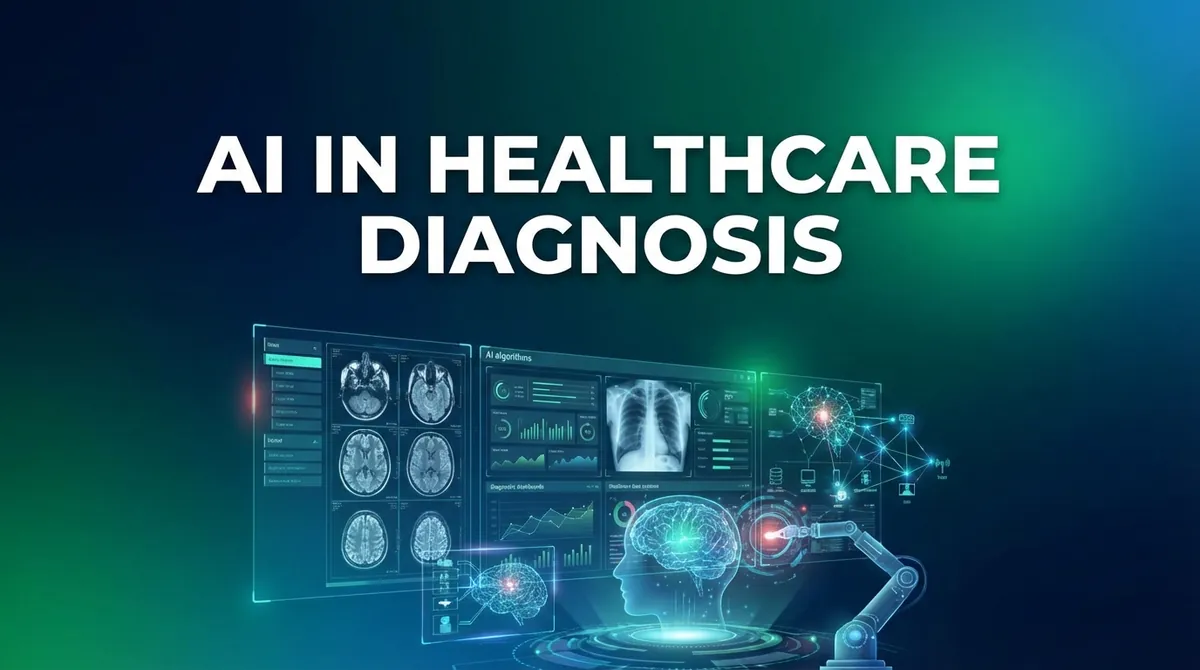
Radiology is the field most transformed by AI in 2026. AI algorithms now perform an initial "Screening" of almost every X-ray, CT scan, and MRI. These systems can identify microscopic anomalies—early-stage tumors, subtle bone fractures, or signs of cardiovascular disease—that might be missed by a tired human eye. The AI acts as a "Prioritization Engine," surfacing the most urgent and complex cases for the radiologist to review immediately.
Pathology and Digital Diagnostics
AI has digitized the pathology lab. Using high-resolution digital scans of tissue samples, AI models can identify cancerous cells and differentiate between various sub-types of disease with superhuman precision. In 2026, AI also assists in "Liquid Biopsies," analyzing a single drop of blood for the "circulating tumor DNA" that indicates the earliest stages of cancer.
AI-Driven Genomic Analysis
The era of "Precision Medicine" has arrived. AI models now analyze a patient's entire genetic code in minutes, identifying the specific mutations that make them susceptible to certain diseases or predicting how they will respond to a particular medication. This allows for bespoke diagnostic and treatment plans tailored to an individual's unique biological makeup.
2. Real-Time Patient Monitoring and Early Warning Systems
Beyond the hospital walls, AI-powered wearables (watches, rings, and even smart fabrics) provide continuous 24/7 health monitoring. In 2026, these devices use AI to detect subtle changes in heart rate variability, blood oxygen, and sleep patterns. They can provide an "Early Warning" for heart attacks, strokes, or the onset of sepsis days before symptoms become severe, prompting the user to seek medical help while the condition is still easily treatable.
3. The Ethical "Black Box" Challenge
A major topic of debate in 2026 is "AI Interpretability." If an AI model diagnoses a patient with a rare condition, the doctor needs to know why the AI arrived at that conclusion. Healthcare is moving toward "Explainable AI" (XAI) frameworks, which provide a visual or textual explanation of the features the model used to make its decision, ensuring that human doctors remain the ultimate decision-makers in the diagnostic process.
4. Cyber Security: Protecting the Heart of Healthcare
As medical data becomes the "Gold" of the 21st century, the stakes for healthcare cybersecurity have never been higher.
Medical Ransomware and "Diagnostic Delays"
In 2026, ransomware attacks on hospitals go beyond locking files. Attackers can disable the AI systems that power ICUs or the diagnostic tools required for surgeries. A "Delay-of-Service" attack in a busy hospital can have lethal consequences. Protecting medical networks requires "Isolated Recovery Environments" and AI-driven "Intrusion Prevention" that can stop a ransomware strain before it can encrypt a single patient record.
The Threat of "Diagnostic Poisoning"
If an attacker can subtly manipulate the data used to train a diagnostic AI, they can introduce "blind spots." For example, they could teach an AI to ignore a specific type of tumor in a specific population. This "Data Poisoning" is a particularly insidious threat because it doesn't cause a crash; it causes a "silent failure" of medical accuracy that can go unnoticed for years.
Protecting Patient Privacy in the "Cloud Era"
Most medical AI systems run in the cloud to access the massive computing power required for complex analysis. This creates a risk of sensitive patient data "leaking" during transmission or storage. Healthcare organizations in 2026 must use "Privacy-Preserving AI" techniques like "Federated Learning" or "Homomorphic Encryption," where the AI can learn from the data without the data ever being "seen" or "opened" by the cloud provider.
Short Summary
AI is the primary "Second Opinion" in global healthcare in 2026, providing superhuman accuracy in radiology, pathology, and genomic analysis. These tools enable earlier disease detection and truly personalized medicine. However, the reliance on sensitive health data creates a massive cyber attack surface. Hospitals face lethal threats from system-disabling ransomware and "diagnostic poisoning" that can subtly degrade the accuracy of medical models. Securing the healthcare future requires a rigorous "Security-First" approach, utilizing "Privacy-Preserving AI" and "Isolated Recovery" systems to protect both data and human lives.
Conclusion
The marriage of AI and healthcare diagnosis is a miracle of 2026, saving countless lives through earlier and more accurate interventions. But this miracle is a fragile one. As we embrace the power of medical AI, we must match our ingenuity in diagnosis with an equal fervor for security. The future of medicine belongs to the doctors who use AI with skill, and the security professionals who protect those systems with unshakeable vigilance.
Frequently Asked Questions
No. AI is a "diagnostic assistant" that excels at processing data. However, it lacks the "human context," emotional intelligence, and ethical judgment of a trained physician. In 2026, the consensus is that "AI will not replace doctors, but doctors who use AI will replace those who don't."