Introduction
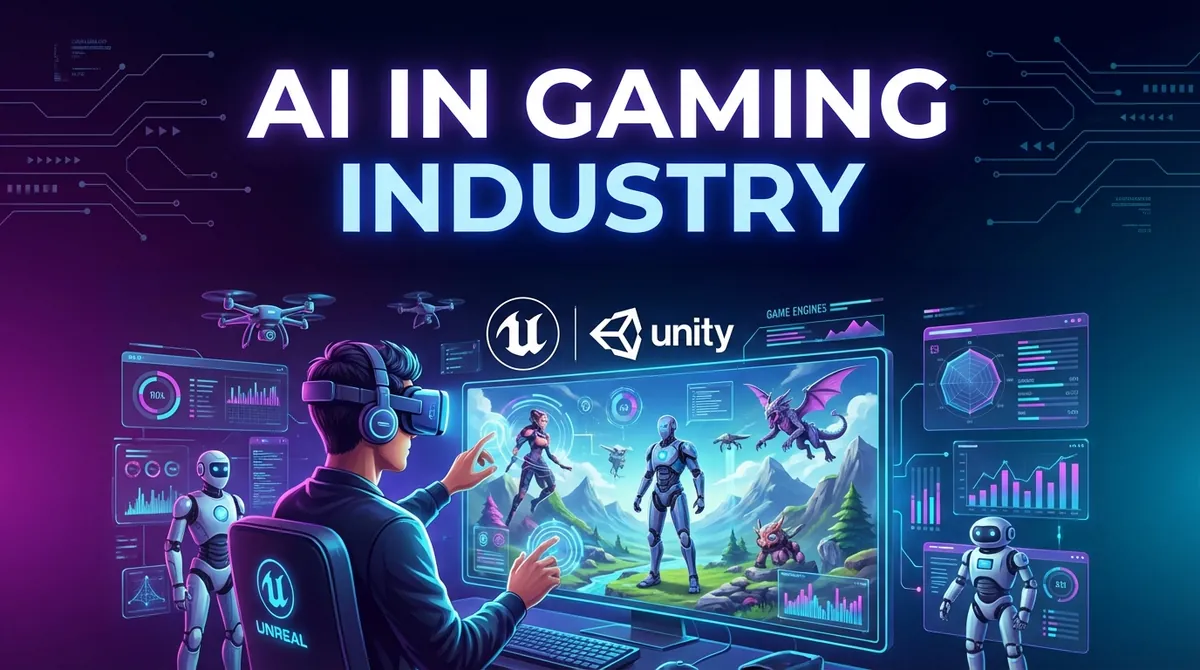
In 2026, the video game industry is undergoing its most profound technical evolution since the shift from 2D to 3D. Artificial Intelligence has moved from being a simple "set of rules" for enemies to becoming a foundational creative and operational engine. We are entering the era of "Infinite Gaming," where AI can generate photorealistic, sprawling worlds on the fly, populate them with intelligent, conversational characters (NPCs), and balance complex game mechanics in real-time to provide a bespoke experience for every player.
However, the "AI-First" gaming landscape is also a playground for high-tech hackers and cyber-criminals. Modern gaming involves massive financial ecosystems (microtransactions, NFTs, virtual economies) and a wealth of personal data. In 2026, the battle against "Cheaters" has evolved into an AI-powered arms race, and the theft of virtual assets has become a billion-dollar criminal enterprise. Protecting the digital integrity of the gaming experience is now a critical cybersecurity challenge for developers and players alike.
This comprehensive guide explores the primary applications of AI in gaming in 2026, analyzes the technologies driving the shift toward "Generative Play," and examines the essential cybersecurity frameworks required to protect the global gaming community from digital exploitation.
1. Generative World-Building and Gameplay
Procedural Content Generation (PCG) 2.0
In 2026, AI doesn't just "help" build levels; it generates entire universes. "Generative World Engines" can create photorealistic landscapes, cities, and dungeons that are unique for every player. These systems take into account the player's level, playstyle, and past choices, ensuring that the game world is always challenging, surprising, and perfectly paced.
Intelligent and Conversational NPCs
The static, pre-written dialogue of the past is gone. In 2026, Non-Player Characters (NPCs) are powered by Large Language Models. A player can speak to an NPC in natural language, and the character will respond with context-aware, emotionally intelligent dialogue. These NPCs have their own "memories" and "personalities," and their relationship with the player evolves based on every interaction, making the game world feel truly alive.
2. Technical Optimization and Cloud Gaming
AI-Powered Rendering and Latency Reduction
AI is the key to achieving 8K, 120FPS gaming on modest hardware. Technologies like NVIDIA's DLSS 5.0 and AMD's FSR 4.0 use AI to "re-construct" high-resolution images from lower-resolution renders in real-time. In the world of "Cloud Gaming," AI predicts a player's next move and "pre-renders" the frame, virtually eliminating the input latency that plagued early streaming services.
Personalized Difficulty and Balance
Games in 2026 use "Dynamic Difficulty Adjustment" (DDA). The AI monitors the player's performance—their reaction times, accuracy, and even their heart rate (via wearable integration). If the player is struggling, the AI subtly lowers the difficulty; if they are breezing through, the AI creates more complex challenges, ensuring that every player stays in the "Flow Zone."
3. The Metaverse and Persistent Virtual Economies
In 2026, games are no longer isolated experiences; they are persistent social spaces. AI manages these "Metaverse" environments, moderating millions of simultaneous interactions to prevent toxic behavior and ensuring that the virtual economy (trading of skins, land, and assets) remains stable and inflation-free.
4. Cyber Security: The Battle for Fair Play
As gaming becomes a massive economic sector, it becomes a top target for professional attackers.
The Rise of AI Cheat-Bots
The most persistent threat in 2026 is the "AI Cheat-Bot." These are sophisticated external scripts that use computer vision and AI to play a game with superhuman precision, bypassing traditional "anti-cheat" software. Developers respond with "Behavioral Anti-Cheat" AI, which can identify the microscopic "unnatural" movements and patterns that indicate a machine is playing, rather than a human.
Virtual Asset Theft and "Marketplace" Fraud
High-value virtual items—rare skins, digital real estate, and in-game currency—are the "New Gold." Attackers use AI-powered phishing and "Account Takeover" (ATO) attacks to steal these assets and sell them on the dark web. Securities like "Hardware Keys" and "Biometric Transaction Signing" are now standard for high-level gaming accounts.
Short Summary
AI is the primary engine of the gaming industry in 2026, enabling generative world-building, conversational NPCs, and AI-optimized cloud rendering. These technologies allow for hyper-personalized and highly immersive play. However, the rise of AI cheat-bots, the theft of high-value virtual assets, and competitive DDoS attacks create severe cybersecurity risks. Protecting the gaming ecosystem requires behavioral AI anti-cheat systems, biometric transaction security, and resilient edge network architectures to maintain a fair and safe environment for the global gaming community.
Conclusion
Gaming in 2026 is a triumph of imagination and technological power. But the "Fun" of the game depends on the "Integrity" of the system. As we build more intelligent and complex virtual worlds, we must ensure that they are protected from those who would use technology to cheat, steal, and disrupt. The successful gaming leaders of the future will be those who can build worlds that are as secure as they are beautiful.
Frequently Asked Questions
Yes. NPCs in 2026 use integrated LLMs to engage in natural language conversation. You can ask them about the game world, their backstory, or even just have a casual chat. The AI understands the game's lore and will stay "in character" throughout the interaction.