Introduction
In 2026, the "Digital Marketing Agency" has been reborn as an "AI Orchestration Hub." The traditional model of large teams of junior specialists performing manual tasks—buying ads, writing copy, and analyzing spreadsheets—has been swept away by Artificial Intelligence. Modern agencies are now lean, high-tech organizations where human experts "Prompt" and "Govern" massive networks of autonomous AI agents. We have entered the era of "Agile Agency Intelligence," where speed-to-market and hyper-optimization are the only metrics that matter.
However, the change in operations has shifted the risk profile. Agencies in 2026 are the "Custodians" of the digital lives of dozens, or even hundreds, of clients. They handle a massive "Data Mesh" of proprietary strategy, consumer PII (Personally Identifiable Information), and billions of dollars in ad spend. This makes agencies a "High-Value Single Point of Failure." A breach at a major agency doesn't just damage one company; it can compromise an entire portfolio of global brands. Protecting the "Multi-Tenant" digital environment is the ultimate cybersecurity challenge for the 2026 agency.
This comprehensive guide explores the transformation of digital marketing agencies in 2026, analyzes the technologies driving the automation revolution, and identifies the critical cybersecurity protocols required to safeguard client data and maintain the trust that defines the agency-client relationship.
1. The Autonomous Agency: Operations and Production
AI-First Creative Production
In 2026, agencies use "Generative Content Factories." Instead of spending weeks on a single campaign, an agency can generate 10,000 unique variations of an ad—personalized for different demographics, languages, and contexts—in a single afternoon. AI handles the image generation, the copy drafting, and the video editing, while the agency's creative directors focus on the "High-Level Narrative" and "Brand Consistency."
Automated Media Buying and Optimization
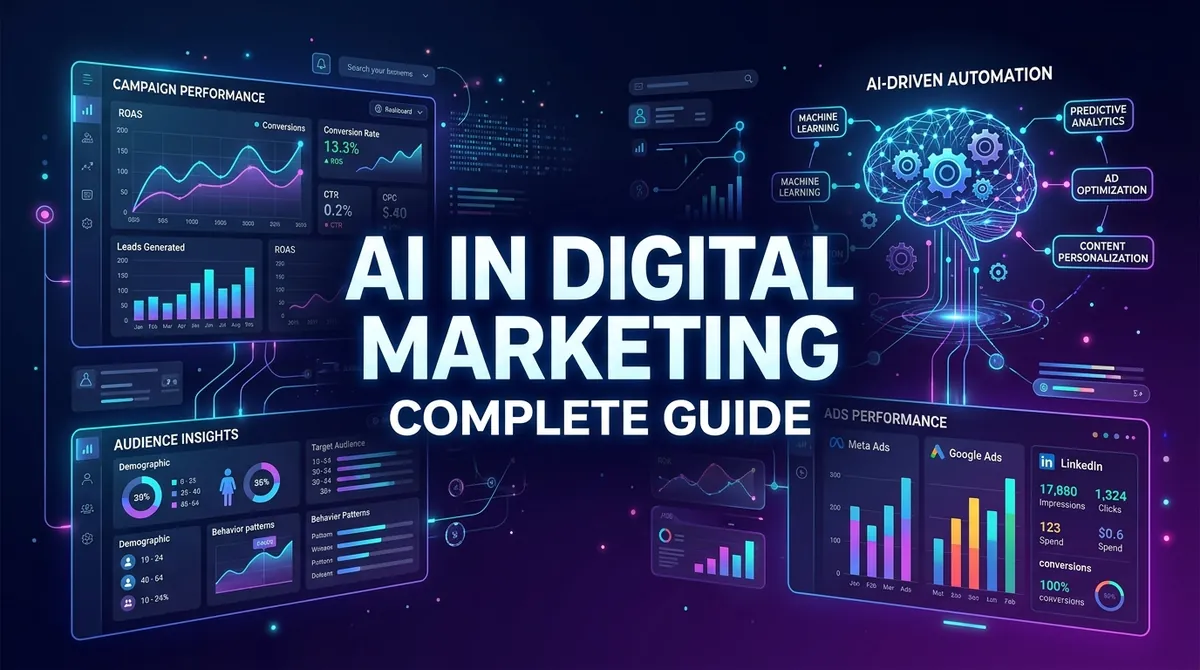
The "Media Buyer" role has been replaced by "Algorithmic Arbitrage." AI agents now manage ad bidding across all platforms (social, search, retail, and VR) in real-time. These agents can adjust budgets every millisecond based on performance, competitor moves, and even external events like weather or news cycles. This ensures that every cent of a client's budget is working toward their specific goal at the highest possible efficiency.
2. Advanced Client Reporting and Strategy
Real-Time Strategy Dashboards
Agency reports in 2026 are not static PDFs; they are "Live Intelligence Streams." Clients can ask a conversational AI—"How is our sentiment shifting among Gen Z in Northern Europe right now?"—and the AI will generate a real-time report complete with 3D visualizations and predictive "What-If" scenarios. This transparency allows for a much closer, data-driven partnership between the agency and the client.
Predictive Campaign Modeling
Before a single dollar is spent, agencies in 2026 use "Synthetic Audiences" to test their strategies. AI models that perfectly mimic the behavior of real consumer segments interact with the proposed campaign, allowing the agency to identify potential pitfalls, optimize the "Hook," and predict the final ROI with uncanny accuracy.
3. The Move Toward Agency "IP" and Proprietary Models
In 2026, the most successful agencies are no longer "Service Providers"; they are "Software and Model Owners." Agencies now develop and train their own "Niche AI Models" tailored to specific industries (e.g., a "Legal Marketing Model" or a "Luxury Fashion Model"). This proprietary intelligence is the new "Secret Sauce" that differentiates elite agencies from the rest of the market.
4. Cyber Security: Protecting the Multi-Client Ecosystem
For an agency, "Data Sovereignty" and "Tenant Isolation" are the cornerstones of survival.
The Risk of "Cross-Client Leakage"
In 2026, the biggest fear is that an agency's AI might unintentionally "Learn" the secrets of Client A and use them to optimize the strategy for Client B (a competitor). Agencies must implement "Isolated AI Compute Clusters" for every major client and use "Privacy-Preserving Machine Learning" techniques to ensure that insights are never leaked across the "Tenant Boundary."
Phishing via "Client Impersonation"
Attackers target agency staff by impersonating a "High-Priority Client" who needs an "Urgent Budget Increase" or wants to "Review Secret Campaign Assets." These AI-generated deepfakes can lead to the unauthorized transfer of funds or the compromise of sensitive credentials. Agencies must implement "Multi-Factor Identity Verification" for all high-value client communications, including video calls.
Managing the "Shadow AI" Problem
Agency employees often use unauthorized AI tools to speed up their work. If an employee pastes a client's trade secret into a public LLM to "summarize" it, that data is now compromised. In 2026, agencies must provide "Safe, Internal AI Playgrounds" for their staff and use "DLP" (Data Loss Prevention) tools that can identify and block the movement of sensitive client data into unauthorized AI environments.
Short Summary
Digital marketing agencies in 2026 have evolved into AI-driven automation hubs, utilizing generative content factories and autonomous media buying to deliver hyper-efficient campaigns. While these tools provide massive scale, the handling of multi-client data creates a significant cybersecurity risk, specifically "Cross-Client Leakage" and "Client Impersonation." Protecting the agency-client trust requires the use of isolated AI compute environments, rigorous data loss prevention (DLP) protocols, and multi-factor identity verification to ensure the sovereignty of every client's sensitive information.
Conclusion
The digital marketing agency of 2026 is faster, smarter, and more strategic than ever before. But the "Value" of an agency is now measured as much by its security as by its creativity. As we use AI to manage the digital futures of our clients, we must be the unshakeable guardians of their data and their trust. The agencies that thrive in the AI era will be those that can orchestrate a symphony of innovation while maintaining a fortress of cybersecurity.
Frequently Asked Questions
Yes. AI "Levelled the Playing Field." A small boutique agency with a highly specialized "Proprietary Model" and a lean team of AI experts can deliver results that rival much larger, legacy organizations. In 2026, it is "Intelligence," not "Headcount," that wins.