Introduction
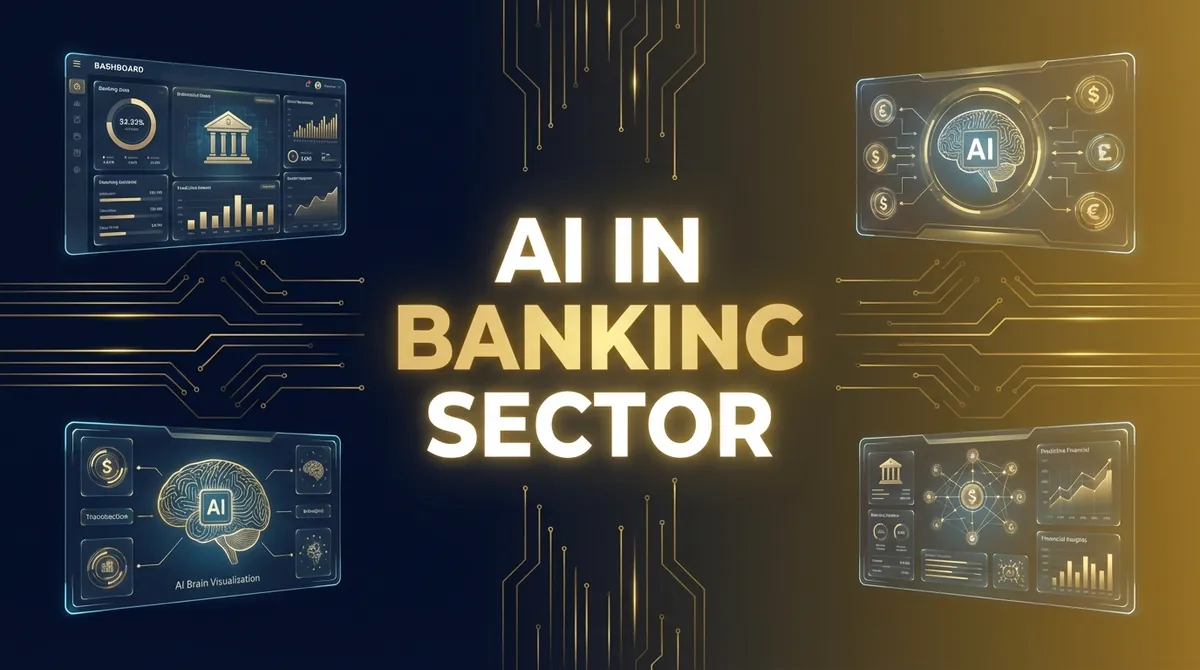
In 2026, the global banking sector has undergone a fundamental architectural shift. Artificial Intelligence is no longer just a "value-added feature" or a customer service chatbot; it has become the core infrastructure of the modern financial institution. Every major banking function—from risk assessment and automated lending to wealth management and high-frequency trading—now operates on a foundation of sophisticated AI models and real-time data processing.
For consumers, AI-powered banking offers a level of personalization and efficiency that was impossible a decade ago. We have moved from "Generic Banking" to "Hyper-Personalized Finance," where an AI "Financial Life Coach" manages your savings, investments, and spending in real-time. However, as the banking sector becomes a massive network of interconnected algorithms and APIs, it has also become the world's most high-stakes cybersecurity battlefield. Protecting the digital integrity of the banking system is no longer just about preventing theft—it is about ensuring global economic stability.
This comprehensive guide explores the primary applications of AI in banking in 2026, analyzes the shift toward "AI-First" financial services, and examines the critical cybersecurity frameworks that protect our money in an age of industrial-scale digital threats.
1. The "AI-First" Banking Experience
Hyper-Personalized Wealth Management
In 2026, wealth management is no longer just for the ultra-wealthy. AI-powered "Robo-Advisors" provide automated, high-fidelity investment strategies for everyone. These models analyze your income, spending habits, risk tolerance, and even life goals (like buying a home in five years) to automatically rebalance your portfolio in real-time as market conditions change. The AI doesn't just "invest"; it "optimizes" your entire financial life across taxes, savings, and debt.
Automated Lending and Credit Scoring
Traditional credit scores (like FICO) are becoming legacy systems. AI-driven banks now use "Alternative Credit Scoring" models that analyze thousands of data points—utility bill payments, social media behavior, educational history, and even the speed of your mobile phone typing—to assess creditworthiness in seconds. This allows for instant loan approvals for millions of people who were previously "underbanked" or lacked a traditional credit history.
Conversational Banking and Voice AI
The mobile app of 2026 is no longer a series of menus; it is a conversation. Most major banks offer "AI Financial Assistants" that you can speak to naturally. You can say, "Hey, how much did I spend on dining out last month?" or "Move $500 to my emergency fund," and the AI executes the task with perfect security and context.
2. Behind the Scenes: AI in Institutional Operations
AI-Powered Risk Management and Stress Testing
Institutional banks use AI to run continuous, real-time "Stress Tests" on their entire balance sheet. Unlike the manual monthly reports of the past, 2026 AI models simulate millions of "What If" scenarios every hour—modeling the impact of interest rate changes, geopolitical events, or sudden market crashes. This allows banks to adjust their capital reserves dynamically, preventing the systemic failures seen in previous decades.
High-Frequency Trading (HFT) and Market Intelligence
AI algorithms now control the vast majority of daily market trades. These models can identify "micro-arbitrage" opportunities in nanoseconds, capitalizing on tiny price discrepancies across global exchanges. AI also monitors social media, news feeds, and satellite imagery to predict market moves before they appear in traditional financial reports.
3. The Future of "Embedded Finance"
In 2026, "Banking" is moving outside of the bank. Through "Embedded Finance" APIs, AI allows any company to offer financial services. When you buy a car, the manufacturer's AI can instantly offer you a tailored loan; when you pay for groceries, an AI can offer you "buy now, pay later" options based on your real-time budget. Banking is becoming a seamless part of every transaction we make.
4. Cyber Security: Defending the Financial Fort
As banking becomes a digital-only experience for many, the "Fortress" must be move from physical vaults to cryptographic ones.
Ransomware and "Systemic" Threats
In 2026, a targeted ransomware attack on a "Systemically Important Financial Institution" (SIFI) could trigger a global financial crisis. Banks now use "AI-Powered Threat Hunting" to identify the subtle signs of an attacker’s presence (APT) months before they launch a strike. They also maintain "Immutable Backups" and "Cyber Vaults" to ensure they can restore operations even if their primary systems are compromised.
The War Against AI-Enhanced Phishing
Attackers use AI to craft "Business Email Compromise" (BEC) attacks that perfectly replicate the language and tone of a bank executive. They also use "Voice Deepfakes" to trick bank employees into authorizing large wire transfers. Banks respond with "Multi-Step Biometric Verification"—requiring FaceID, voice recognition, and behavioral analytics (typing rhythm) to authorize any high-value movement of funds.
API Security and the "Third-Party" Risk
The rise of "Open Banking" means that banks share data with thousands of Fintech apps via APIs. Each of these connections is a potential vulnerability. Banks must implement a "Zero Trust API" framework, where every request from a third-party app is continuously verified for identity, integrity, and authorization level.
Short Summary
AI is the foundational technology of the banking sector in 2026, enabling hyper-personalized wealth management, instant automated lending, and real-time institutional risk management. Financial services are becoming "embedded" into every digital transaction. However, this connectivity creates massive cybersecurity risks, including systemic ransomware threats and AI-enhanced social engineering (BEC). Defending the financial infrastructure requires a "Defense-in-Depth" strategy, utilizing AI-powered threat hunting, multi-step biometric verification, and a Zero Trust framework for all third-party API integrations to maintain global economic trust.
Conclusion
The bank of 2026 is an "Intelligence Entity." It knows its customers better than ever and manages the world's money with unprecedented speed. But this power comes with a monumental responsibility to protect the trust that the global economy is built on. For the banking leaders of 2026, the most important technology is not any specific AI model, but the security and ethics that ensure that AI serves the interests of humanity.
Frequently Asked Questions
AI excels at processing data and identifying patterns across millions of market variables, often outperforming humans in "rational" investment decisions. However, humans still provide the "emotional" guidance and long-term goal setting that AI lacks. The best approach in 2026 is often a Hybrid one.