Introduction
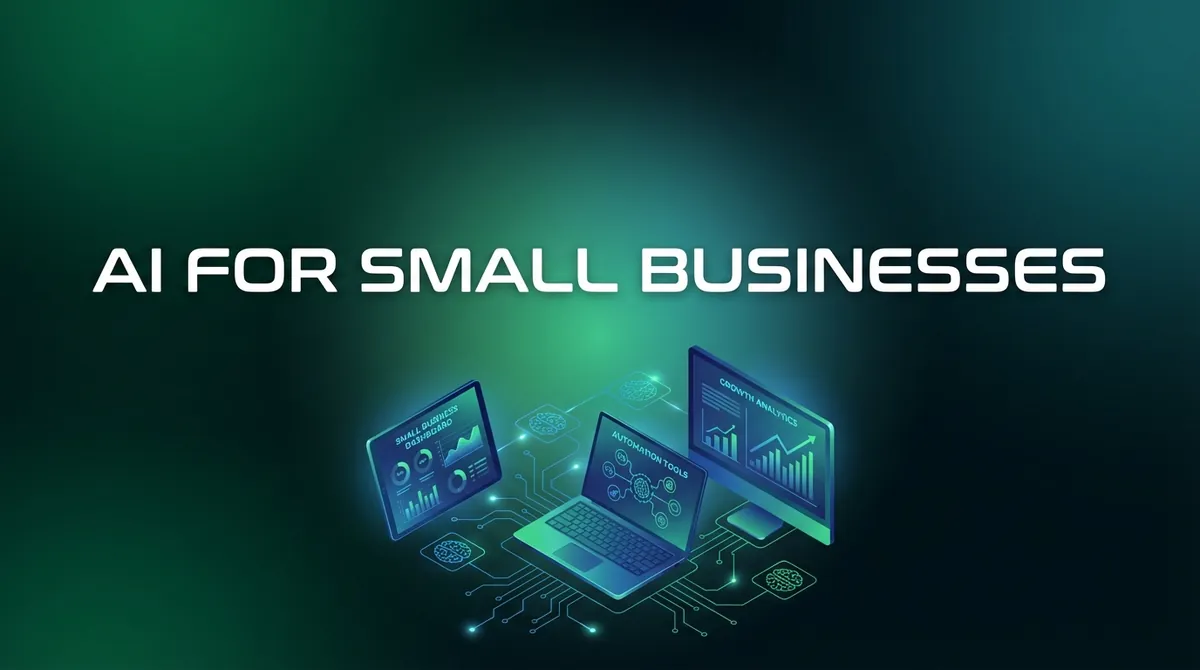
In 2026, Artificial Intelligence is no longer the exclusive playground of multi-billion-dollar tech giants. A fundamental shift in the availability and affordability of AI tools has levelled the playing field, providing small to medium-sized enterprises (SMEs) with the power to compete, innovate, and scale with efficiency that was previously unimaginable.
For the modern small business owner, AI is not a futuristic luxury; it is a pragmatic necessity for survival and growth. From automating repetitive administrative tasks to delivering personalised customer experiences at scale, AI allows small teams to "punch above their weight class," achieving outcomes that would have traditionally required a massive workforce.
This guide explores the transformative role of AI for small businesses in 2026, identifies the most impactful use cases, recommends practical tools for immediate adoption, and highlights the critical cybersecurity responsibilities that come with integrating AI into a small business ecosystem.
1. Why Small Businesses Need AI in 2026
Efficiency and Resource Optimisation
Small businesses are defined by limited resources — time, money, and manpower. AI acts as a 24/7 digital assistant, handling high-volume, low-complexity tasks like data entry, meeting scheduling, and initial customer inquiries. This frees up human staff to focus on high-value creative work, strategic planning, and building deeper client relationships.
Leveling the Competitive Playing Field
Traditionally, large corporations had an advantage in data analysis and customer targeting due to their ability to hire expensive consultancy firms. Today, affordable AI-powered marketing and analytics platforms allow a local boutique or a specialist service provider to analyze market trends and consumer behavior with the same precision as a global brand.
Scalability Without Prohibitive Costs
AI allows a business to scale its operations without a linear increase in headcount. An AI-powered chatbot can handle thousands of customer queries simultaneously, ensuring that a sudden surge in business doesn't lead to a collapse in customer service quality or a massive bill for temporary staffing.
2. Practical AI Applications for SMEs
AI-Driven Marketing and Content Creation
Generating consistent, high-quality content is a major challenge for small businesses. Tools like ChatGPT, Jasper, and Midjourney allow business owners to create social media posts, blog articles, email newsletters, and visual assets in minutes rather than hours. AI SEO tools further ensure that this content is optimized to rank highly in search engine results, driving organic traffic without a massive ad spend.
Intelligent Customer Support
AI chatbots have evolved significantly by 2026. They are no longer simple script-followers; they use natural language processing to understand context, answer complex questions, and even process refunds or bookings. This ensures that small business customers receive instant support at any time of day or night.
Financial Management and Bookkeeping
AI-powered accounting software like Xero and QuickBooks now include automated expense categorisation, invoice chasing, and cash-flow forecasting. These tools identify patterns in spending and predict future financial hurdles, allowing small business owners to make data-driven decisions about investment and growth.
Predictive Inventory Management
For small retail or e-commerce businesses, holding too much or too little stock is a major risk. AI algorithms analyze historical sales data, seasonal trends, and even local weather patterns to predict future demand, helping businesses optimize their inventory levels and reduce waste.
3. Implementing AI: A Step-by-Step Approach
Identify High-Impact "Low-Hanging Fruit"
Don't try to automate everything at once. Start by identifying the single most time-consuming manual task in your business — whether that's answering FAQs, posting on social media, or reconciling receipts. Implement one AI solution to solve that specific problem first.
Focus on Integration
Choose AI tools that "talk" to the software you already use. If your CRM doesn't integrate with your chosen AI chatbot, you'll end up creating more manual work for yourself. Look for tools that offer Zapier or Make.com integrations to ensure a smooth data flow between systems.
Training and Adoption
Even the best AI tool is useless if your team is afraid of it or doesn't know how to use it. Invest time in training staff on how to use AI as a "Co-pilot" rather than viewing it as a replacement for their roles.
4. Cyber Security: Protecting Your Small Business AI
As small businesses adopt AI, they become targets for more sophisticated cyberattacks. Small businesses are often seen as "soft targets" because they lack the massive security budgets of larger firms.
Data Privacy and the AI "Feed"
When using public generative AI tools, never input sensitive business data, trade secrets, or client PII (Personally Identifiable Information). Popular AI models often use input data to further train their systems. For small businesses, using "Enterprise" versions of AI tools is highly recommended as they typically offer better data privacy guarantees.
Phishing and AI-Enhanced Deception
Attackers now use AI to create perfectly written, highly personalised phishing emails that are nearly impossible to distinguish from genuine business communications. Small business owners must implement strict email verification protocols and educate employees on the dangers of AI-generated social engineering.
Secure Remote Access
Since many SMEs use AI tools via the cloud, securing the accounts that access these tools is paramount. Implement Multi-Factor Authentication (MFA) on every business account. A single compromised password can give an attacker access to your entire AI-powered business operation.
Short Summary
AI is the ultimate growth lever for small businesses in 2026, offering unprecedented efficiency in marketing, customer service, and operations. By automating routine tasks and providing deep analytical insights, AI allows SMEs to compete directly with larger enterprises. However, successful adoption requires a strategic approach: starting with high-impact use cases, ensuring software integration, and maintaining a rigorous focus on cybersecurity to protect business data from AI-enhanced threats.
Conclusion
The journey into AI for a small business is a marathon, not a sprint. The goal is to build a "resilient enterprise" that uses technology to enhance human capability, not replace it. Small business owners who embrace AI today will find themselves at a significant advantage, while those who wait may find the gap between themselves and their competitors becoming insurmountable.
Frequently Asked Questions
No. Many powerful AI tools offer "freemium" models or affordable monthly subscriptions (often between $20-$100) that are well within the reach of even the smallest business budgets.